
Blog
How to Choose the Perfect Outdoor Bench for Your Garden
Buying Guide
Your Ultimate Outdoor Bench Buying Guide
An outdoor bench is more than just a place to sit; it’s an invitation to slow down and enjoy the outdoors. Whether you’re looking to create a cozy reading nook or a social hub for gatherings, this guide will help you choose the perfect bench for your needs.
Why an Outdoor Bench is a Must-Have
An outdoor bench is a versatile addition to any garden, patio, or yard. It provides seating for relaxation, conversation, and even dining. Beyond functionality, a well-chosen bench can become a focal point of your landscape, adding charm and character. Whether you have a sprawling lawn or a compact balcony, there’s a bench that fits your space and style.
Key Factors to Consider When Buying an Outdoor Bench
When shopping for an outdoor bench, several factors come into play: material, size, comfort, durability, and maintenance. Understanding these will help you make an informed decision that you’ll be happy with for years.
Material Matters
The material of your bench determines its longevity, appearance, and upkeep. Common options include:
- Wood: Classic and natural, but requires regular sealing or staining to protect against weather.
- Metal: Durable and low-maintenance, but can get hot in the sun and may rust if not coated.
- Plastic/Resin: Lightweight and easy to clean, but may fade or become brittle over time.
- Cast Aluminum: A premium choice that combines elegance with durability. It resists rust and requires minimal care, making it an excellent long-term investment.
Size and Seating Capacity
Consider how many people you need to seat. A two-seater is perfect for intimate spaces, while a larger bench can accommodate more. Measure your area to ensure the bench fits comfortably without overcrowding. Also, think about the bench’s weight—if you plan to move it around, a lighter option might be better.
Comfort and Ergonomics
A bench that looks great but feels uncomfortable won’t get much use. Look for features like contoured seats, backrests, and armrests. If you plan to sit for long periods, consider adding cushions. Some benches are designed with a slight recline for extra relaxation.
Placement: Where to Put Your Outdoor Bench
The location of your bench affects its usability and aesthetics. Place it where you can enjoy the best views, such as under a tree, beside a flower bed, or overlooking a pond. Ensure the ground is level to prevent wobbling. If you’re placing it on a hard surface, consider using floor protectors to avoid scratches.
Creating a Focal Point
A bench can be a striking focal point in your garden. Position it symmetrically with pathways or use it to frame a beautiful vista. Add surrounding plants or decorative elements to enhance its visual appeal.
Maintenance Tips for Longevity
Proper care extends the life of your outdoor bench. Here are some general tips:
- Clean regularly with mild soap and water.
- Apply protective coatings as needed, depending on the material.
- Store or cover during extreme weather conditions.
- Check for loose bolts or screws and tighten periodically.
For metal benches, inspect for any chips in the paint and touch up to prevent rust. For wood, reapply sealant annually.
Style and Design Trends
Outdoor benches come in a variety of styles, from traditional to modern. Choose one that complements your home’s architecture and your garden’s theme. Popular trends include:
- Rustic: Natural wood with a distressed finish.
- Victorian: Ornate metalwork with intricate details.
- Minimalist: Clean lines and simple shapes.
- Floral: Decorative elements like vine or rose motifs.
Don’t be afraid to mix styles—a contemporary bench can add an unexpected twist to a traditional garden.
Budgeting for Your Outdoor Bench
Outdoor benches range from budget-friendly to high-end. Set a budget before you start shopping, but remember that investing in a quality bench can save you money in the long run. A well-made bench can last for decades with proper care, making it a worthwhile purchase.
Final Thoughts
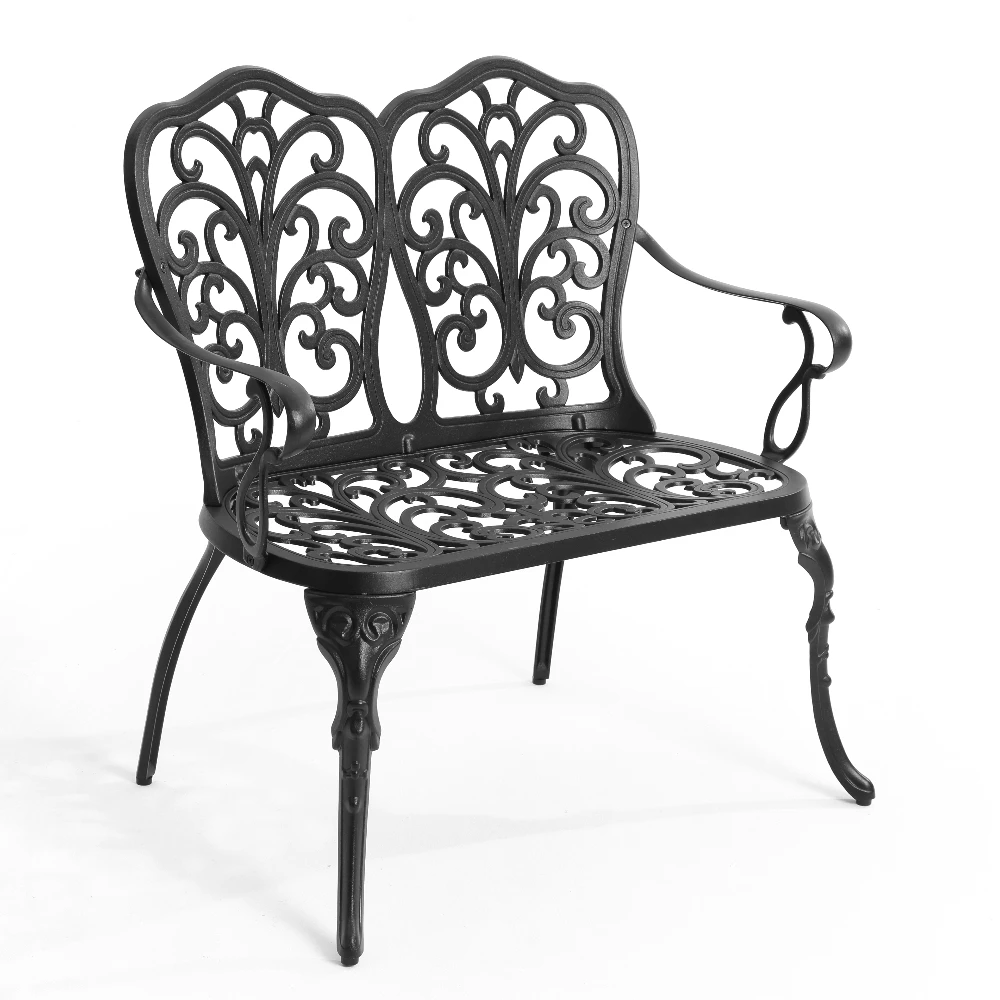
Choosing the right outdoor bench is a personal decision. Take your time, consider your needs, and don’t rush. After all, this is where you’ll be making memories for years to come. If you’re looking for a durable and beautiful option, our Patio Garden Bench Metal Park Bench Cast Aluminum Outdoor Furniture with Floral Rose Black is a wonderful choice that combines style and resilience.
Patio Garden Bench Metal Park Bench Cast Aluminum Outdoor Furniture with Floral Rose Black
For a bench that combines durability with timeless elegance, consider our cast aluminum model with a delicate rose pattern—it’s built to last and adds a romantic touch to any garden.
Frequently asked questions
What is the best material for an outdoor bench?
The best material depends on your needs. Wood offers a classic look but requires maintenance. Metal (like aluminum) is durable and low-maintenance. Plastic is lightweight and affordable. Consider your climate and how much time you want to spend on upkeep.
How do I protect my outdoor bench from weather damage?
Use covers or store the bench indoors during harsh weather. For wood, apply sealant annually. For metal, ensure the paint is intact to prevent rust. For plastic, avoid prolonged exposure to direct sunlight to prevent fading.
Can I leave my outdoor bench outside all year?
Yes, but it’s better to protect it. Most benches are designed for outdoor use, but extreme weather can shorten their lifespan. Use a waterproof cover or move it to a sheltered area during winter or heavy storms.
What size outdoor bench should I buy?
Measure your available space and consider how many people you want to seat. A standard two-seater is about 48-54 inches wide, while a larger bench can be 60 inches or more. Ensure there’s enough clearance around the bench for walking and access.
