
Blog
Metal Filing Cabinet Buying Guide: Choose Right
Office Essentials
The Ultimate Metal Filing Cabinet Guide
A metal filing cabinet is more than just a place to stash documents; it’s the backbone of an organized workspace. Whether you’re outfitting a home office or a corporate suite, the right choice can make all the difference.
Why Choose a Metal Filing Cabinet?
When it comes to storing important documents, a metal filing cabinet offers unmatched durability and fire resistance compared to wood or plastic alternatives. Metal cabinets are built to withstand daily wear and tear, and they provide better protection against pests and moisture. Additionally, they often feature more robust locking mechanisms, ensuring your sensitive files stay secure. For a long-term investment in your office’s organization, metal is a wise choice.
Key Features to Consider
Before you purchase a metal filing cabinet, evaluate these essential features to ensure it meets your needs:
- Size and Capacity: Determine how much filing space you require. Cabinets come in various heights, from two-drawer to five-drawer models. Consider the dimensions of the space where you’ll place it.
- Drawer Configuration: Choose between letter or legal size, or opt for a mix. Some cabinets offer a combination of file and box drawers for versatility.
- Suspension System: Look for ball-bearing slides for smooth, quiet operation, even when fully loaded.
- Locking Mechanism: A central locking bar or individual drawer locks provide different levels of security. If you handle confidential information, prioritize a high-security lock.
- Finish and Style: Metal cabinets come in various colors and powder-coated finishes that resist scratches and chipping. Choose one that complements your office decor.
Vertical vs. Lateral: Which is Right?
Two primary types of metal filing cabinets dominate the market: vertical and lateral. Vertical cabinets are deeper than they are wide, making them ideal for small spaces. They typically hold letter or legal-sized documents in hanging folders. Lateral cabinets, on the other hand, are wider and shallower, offering more filing space per drawer and double as a surface for printers or decor. If you have limited floor space but need ample storage, a metal filing cabinet with a vertical orientation is a smart pick. If you prefer a wider footprint with more versatility, lateral might be your style.
Security and Locking Mechanisms
Protecting sensitive information is crucial in any office. Metal filing cabinets often come with a variety of lock types:
- Standard Key Lock: Simple and effective, but keys can be lost or duplicated.
- Combination Lock: No keys to lose, but you must remember the code.
- Electronic Lock: Offers keypad entry and audit trails, ideal for high-security areas.
- Fire-Resistant Locks: Some cabinets combine fire protection with secure locking.
Consider the level of security you need. For general office use, a standard key lock may suffice, but for sensitive documents, invest in a more advanced system.
Durability and Construction
The gauge of steel used in a metal filing cabinet determines its strength. Thicker steel (lower gauge) is more durable but heavier and more expensive. Look for cabinets with reinforced corners and a powder-coated finish to prevent rust and scratches. Quality construction ensures that the cabinet will last for decades, even with heavy use. Additionally, check the weight capacity of the drawers; a well-built cabinet can hold up to 100 pounds per drawer without sagging.
Styles and Finishes to Match Your Office
Metal filing cabinets aren’t just utilitarian; they can also enhance your office’s aesthetic. Available in a range of colors—from classic black and white to bold red or blue—you can find a cabinet that fits your decor. Some models feature a wood-grain finish that adds warmth while retaining the strength of metal. For a modern look, consider a cabinet with sleek lines and a matte finish. Remember, a metal filing cabinet is a long-term fixture, so choose a style you’ll be happy with for years.
Space Planning Tips
Before you buy, measure your available space and plan the layout. Consider the following:
- Clearance: Ensure drawers can open fully without hitting furniture or walls.
- Weight Distribution: Place the cabinet on a level surface to prevent tipping.
- Accessibility: Position it near your work area for easy access to files.
- Safety: Anchor tall cabinets to the wall to prevent accidents, especially in homes with children.
With careful planning, your new cabinet will integrate seamlessly into your office.
Maintenance and Care
Metal filing cabinets are low-maintenance, but a little care goes a long way. Wipe down surfaces with a damp cloth and mild detergent to remove dust and smudges. Avoid abrasive cleaners that can scratch the finish. Periodically lubricate the drawer slides with a silicone-based spray to keep them operating smoothly. Check the locks occasionally and ensure they function properly. With minimal effort, your metal filing cabinet will remain in top condition.
For more on workspace organization, you can refer to this overview of filing cabinets on Wikipedia.
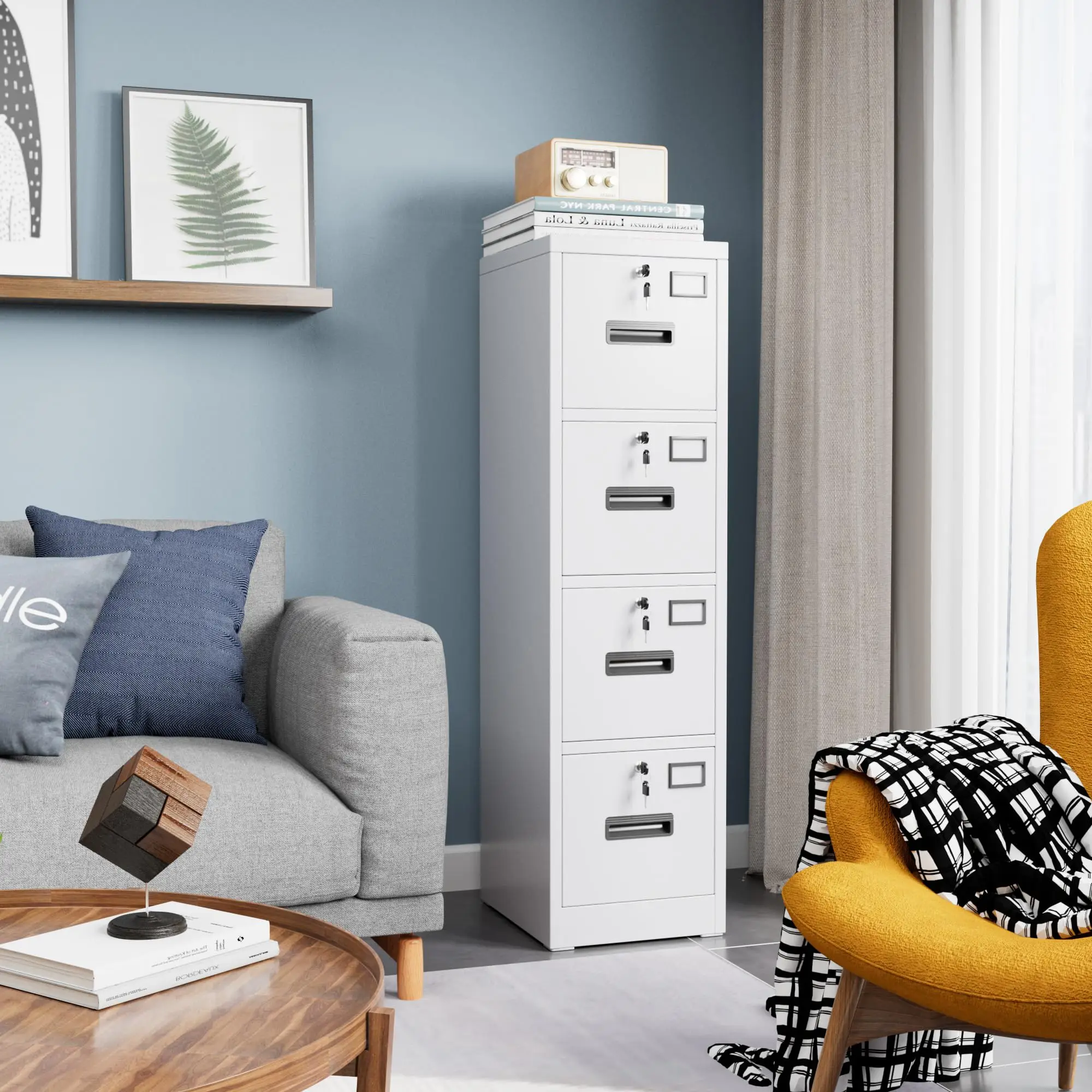
Metal Vertical Office Filing Cabinet 4 Drawers Assembly Required-Name Card Holder for A4 Letter Legal Size 4 Drawer File Cabinet
For a reliable and space-saving option, consider the Metal Vertical Office Filing Cabinet 4 Drawers, which includes a name card holder and fits A4, letter, and legal sizes.
Frequently asked questions
What is the standard depth of a vertical metal filing cabinet?
Vertical filing cabinets typically have a depth of 28 to 30 inches to accommodate letter or legal-sized hanging files.
Can I use a metal filing cabinet for non-document storage?
Absolutely. Many people use them to store office supplies, tools, or craft materials. The drawers are versatile and can be organized with dividers or bins.
How do I prevent a metal filing cabinet from tipping over?
Always place heavier items in the bottom drawers and anchor the cabinet to the wall using anti-tip brackets, especially if you have children or pets.
What should I do if the lock gets stuck?
First, try a graphite lubricant in the keyhole. If that doesn’t work, contact a professional locksmith to avoid damaging the mechanism.
