
Blog
The Ultimate Guide to Choosing a Bamboo Cutting Board
Kitchen Essentials
The Complete Bamboo Cutting Board Guide
A bamboo cutting board is a versatile kitchen tool that combines durability with natural beauty. Whether you’re a seasoned chef or a home cook, understanding the key features of bamboo cutting boards helps you make an informed choice.
Why Choose a Bamboo Cutting Board?
Bamboo cutting boards have gained popularity for their sustainability and strength. Unlike hardwood, bamboo is a grass that regenerates quickly, making it an environmentally friendly option. Its dense grain resists moisture and knife scars, ensuring a longer lifespan than many plastic or wooden alternatives.
Bamboo vs. Other Materials
When comparing bamboo to traditional wood like maple or walnut, bamboo is harder and less porous, which reduces the risk of bacterial growth. Plastic boards are softer and can harbor deep knife grooves, while bamboo’s tight fibers keep the surface smooth. For heavy-duty chopping, a bamboo cutting board is an excellent choice.
Edge Grain vs. End Grain
Edge grain bamboo boards are made by gluing strips flat, offering a durable surface. End grain boards, constructed with bamboo fibers perpendicular to the surface, are gentler on knives but more expensive. Both types provide a stable cutting area.
Caring for Your Bamboo Cutting Board
To maintain your bamboo cutting board, hand wash with mild soap and warm water, then dry immediately. Avoid soaking or placing in the dishwasher, as prolonged moisture can cause warping. Periodically apply food-grade mineral oil to nourish the wood and prevent cracking.
- Wipe with a mixture of vinegar and water for natural sanitizing.
- Use a beeswax conditioner every few months.
- Store in a dry, well-ventilated area.
Size and Thickness Considerations
Choose a board that fits your counter space and cooking needs. A thickness of at least 1.5 inches provides stability and prevents warping. Larger boards are ideal for meal prep, while smaller ones work well for quick tasks. For more on kitchen tools, visit Wikipedia’s cutting board page.
Eco-Friendly Benefits of Bamboo
Bamboo is a renewable resource that grows without pesticides or fertilizers. Choosing a bamboo cutting board supports sustainable forestry and reduces your carbon footprint. It’s a simple switch that makes a difference in your kitchen’s environmental impact.
Design and Aesthetic Appeal
Bamboo cutting boards come in various shapes and finishes, from natural light tones to darker, stained options. Their warm appearance complements any kitchen decor. Some boards feature juice grooves for carving meats or handles for easy transport.
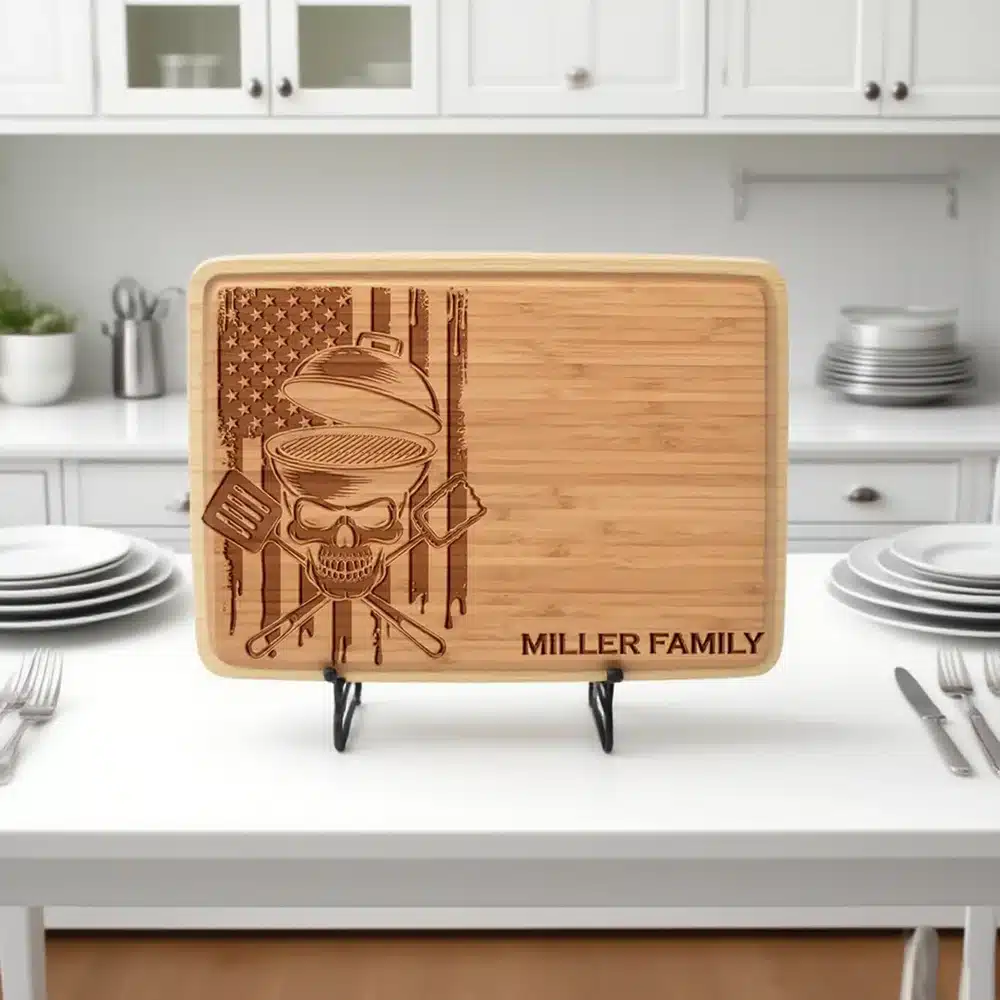
Custom BBQ Cutting Board Skull Cauldron Patriotic America Flag Engraved Bamboo Board Halloween Kitchen Decor Housewarming Gift
For a unique touch, consider the Custom BBQ Cutting Board Skull Cauldron Patriotic America Flag Engraved Bamboo Board, which combines functionality with festive design.
Frequently asked questions
Is bamboo cutting board better than plastic?
Bamboo is generally better for the environment and more durable than plastic. It resists knife marks and bacteria, but requires more care to avoid cracking.
Can bamboo cutting boards dull knives?
Bamboo is harder than many woods, which can slightly dull knives faster. However, proper use and honing maintain blade sharpness.
How often should I oil my bamboo cutting board?
Oil your board once a month or when it looks dry. Use food-grade mineral oil to keep it hydrated and prevent cracks.
Are bamboo cutting boards dishwasher safe?
No, bamboo boards should not be put in the dishwasher. The heat and moisture can cause warping and splitting.
