
Blog
How to Choose the Perfect Bathroom Vanity Cabinets
Buying Guide
Your Complete Guide to Bathroom Vanity Cabinets
Choosing the right bathroom vanity cabinets can transform your daily routine. Whether you’re remodeling or building new, understanding your options is key.
Understanding Bathroom Vanity Cabinets
Bathroom vanity cabinets are more than storage—they set the tone for your space. From sleek modern to classic wood, the choice affects both function and style. Before diving into specifics, consider your bathroom’s layout, plumbing, and your personal aesthetic. A well-chosen vanity can make a small bathroom feel larger or add a touch of luxury to a master suite.
Materials and Durability
The material of your vanity determines its lifespan and look. Solid wood, such as oak or maple, offers durability and timeless appeal. Plywood with a veneer is a cost-effective alternative that resists moisture better than particleboard. For a contemporary feel, consider materials like MDF with a lacquered finish. Always check for water-resistant coatings, especially around the sink area. Learn more about cabinet materials on Wikipedia.
Sizing and Layout Considerations
Measure your space carefully. Standard widths range from 24 to 60 inches, but custom sizes are available for unique layouts. A single-sink vanity typically needs 30 to 36 inches, while double sinks require at least 60 inches. Don’t forget clearance for doors and drawers—allow at least 21 inches of walking space in front. Wall-mounted options can free up floor space and make the room feel airy.
Styles to Match Your Decor
From minimalist to ornate, there’s a style for every taste. Floating vanities create a modern, clean look and are easy to clean underneath. Traditional vanities with raised panel doors and brass hardware add warmth. For a spa-like vibe, consider a vessel sink atop a natural stone counter. The finish—matte, glossy, or wood grain—should complement your other fixtures.
Wall-Mounted vs. Floor-Standing
Wall-mounted vanities are ideal for small bathrooms or powder rooms. They mount directly to the wall, hiding plumbing and creating an illusion of more space. Floor-standing models offer more storage and a sturdy feel, but require stable flooring. Both have their merits; choose based on your renovation goals.
Storage Solutions and Organization
Think about what you need to store. Drawers are great for small items like makeup and toiletries, while cabinets can hold larger bottles and towels. Open shelving adds display space but requires tidiness. Some vanities come with built-in outlets for charging devices. Consider pull-out organizers or tilt-out trays for maximizing every inch.
Installation Tips and Common Mistakes
Proper installation ensures longevity. For wall-mounted units, locate studs and use appropriate anchors. Ensure plumbing rough-ins match the vanity’s cutouts. A common mistake is ignoring vent placement or electrical outlets. Always seal countertops and backsplashes to prevent water damage. If DIY isn’t your strength, hire a professional to avoid costly errors.
Maintenance and Care
Keep your vanity looking new with regular care. Wipe spills immediately, especially on wood. Use a soft cloth and mild cleaner—avoid abrasive pads. Check caulk and seals annually. For hardware, tighten screws if drawers become loose. With proper maintenance, a quality vanity can last decades.
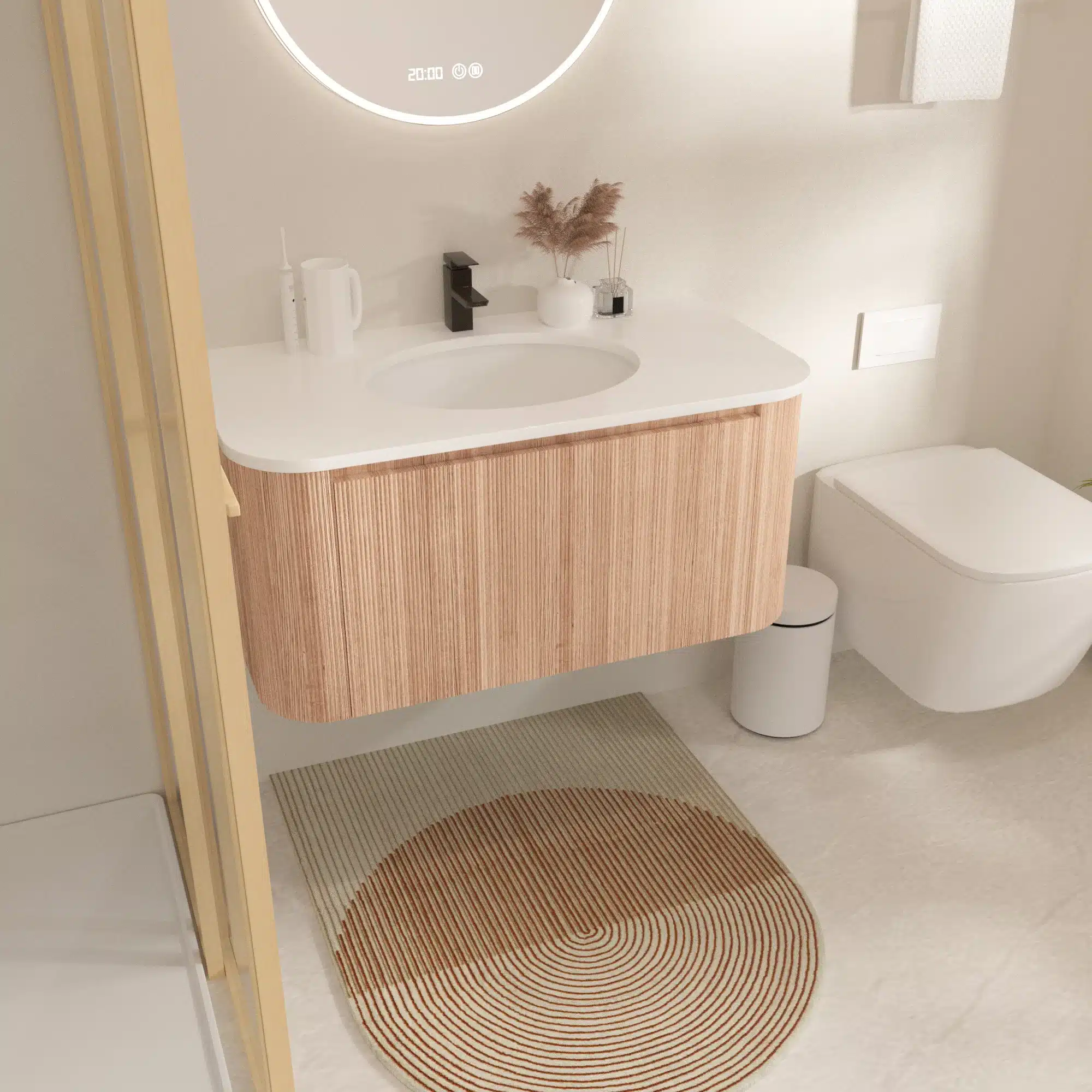
USA Free Shipping Customized Simple Design Wall Mount Bathroom Vanity Cabinets 90cm Round Bathroom Cabinet Vanity With Basin
For a space-saving and customizable option, consider our USA Free Shipping Customized Simple Design Wall Mount Bathroom Vanity Cabinets 90cm Round Bathroom Cabinet Vanity With Basin, which combines style and practicality.
Frequently asked questions
What is the standard height for bathroom vanity cabinets?
Standard height is 32 to 36 inches for the countertop, but comfort-height vanities at 36 inches are popular. For wall-mounted units, height can be adjusted during installation.
Can I install a wall-mounted vanity myself?
Yes, if you’re handy with tools and have a stud finder. Ensure the wall can support the weight and that plumbing lines align. For complex setups, hire a professional.
How do I choose between a single and double sink vanity?
Consider your household size and morning routine. Double sinks are great for couples, but require at least 60 inches of width. Single sinks work for smaller bathrooms or guest rooms.
What is the best material for a bathroom vanity in a humid climate?
Solid wood with a good sealant or plywood with a moisture-resistant veneer are best. Avoid particleboard as it can swell. Marine-grade plywood is an excellent choice for high humidity.