
Blog
The Complete Guide to Floating Bathroom Vanities
Design Guide
Elevate Your Space with a Floating Bathroom Vanity
A floating bathroom vanity can transform the look and feel of your bathroom, offering a sleek, modern aesthetic while maximizing floor space. In this guide, we’ll explore the key considerations for choosing and installing a wall-mounted vanity.
Why Choose a Floating Bathroom Vanity?
A floating bathroom vanity is mounted directly to the wall, leaving the floor beneath open. This design creates an illusion of more space, making it ideal for small bathrooms or powder rooms. The open floor area also simplifies cleaning—no more struggling to mop around cabinet legs. Beyond practicality, a floating vanity adds a contemporary, airy feel that can make your bathroom feel like a spa retreat.
Key Benefits of Wall-Mounted Vanities
Floating vanities offer several advantages over traditional floor-standing models:
- Space Efficiency: By lifting the vanity off the floor, you gain valuable visual square footage. This is especially beneficial in tight layouts.
- Easy Maintenance: With nothing blocking the floor, sweeping and mopping become effortless. You can also access plumbing more easily if repairs are needed.
- Design Flexibility: Floating vanities come in various styles—from minimalist to rustic—and can be paired with different countertop materials and sink types.
- Accessibility: The open space underneath can accommodate a stool or small storage bin, and it’s easier for wheelchair users to approach the sink.
Materials and Durability: What to Look For
When selecting a floating bathroom vanity, consider the material’s resistance to moisture and daily wear. Popular choices include solid wood (like oak or walnut), plywood with a veneer, and engineered materials like MDF with a waterproof coating. Plywood, in particular, offers excellent stability and resistance to warping when properly sealed. For a balance of durability and style, look for vanities with soft-close hinges and dovetail drawer construction.
Installation Tips for a Secure Mount
Proper installation is crucial for a floating vanity since it bears the weight of the cabinet, countertop, and sink. Here are some guidelines:
- Locate Studs: Always anchor the vanity to wall studs using heavy-duty brackets or a mounting rail. Never rely solely on drywall anchors for support.
- Level Carefully: Use a level to ensure the vanity is perfectly horizontal. An uneven mount can cause doors or drawers to misalign.
- Consider Plumbing: Plan the drain and water supply lines before installation. Some vanities come with pre-drilled holes, but you may need to adjust the rough-in.
- Seal Edges: Apply silicone caulk along the top edge where the vanity meets the wall to prevent water seepage.
For more detailed instructions, refer to this Wikipedia article on bathroom cabinets for general installation principles.
Styling Your Floating Vanity
Floating bathroom vanities pair beautifully with various design aesthetics. For a minimalist look, choose a sleek, handleless cabinet with a quartz countertop and an undermount sink. If you prefer warmth, a wood-toned vanity with a vessel sink and open shelving can create a natural spa vibe. Mirrors and lighting also play a role—consider a backlit mirror above the vanity to enhance the floating effect.
Storage Solutions in a Floating Vanity
Contrary to popular belief, floating vanities can offer ample storage. Look for models with deep drawers, pull-out shelves, or integrated cabinets. Drawers with dividers keep toiletries organized, while open shelving below can display rolled towels or decorative baskets. Some vanities even include a sensor light, adding both function and ambiance.
Maintenance and Care
To keep your floating bathroom vanity looking its best, wipe spills immediately and avoid harsh cleaners that can damage the finish. Use a soft cloth and mild soap for daily cleaning. Periodically check the mounting hardware to ensure it remains tight. With proper care, a quality vanity can last for years without issues.
Floating Vanity vs. Traditional Vanity
While traditional vanities sit on the floor and often provide more storage, floating vanities win in terms of style and perceived space. If you have a small bathroom or want a modern upgrade, the floating design is a clear winner. However, for large master baths where storage is paramount, a hybrid approach (a floating double vanity) might work best. Assess your needs and room dimensions before deciding.
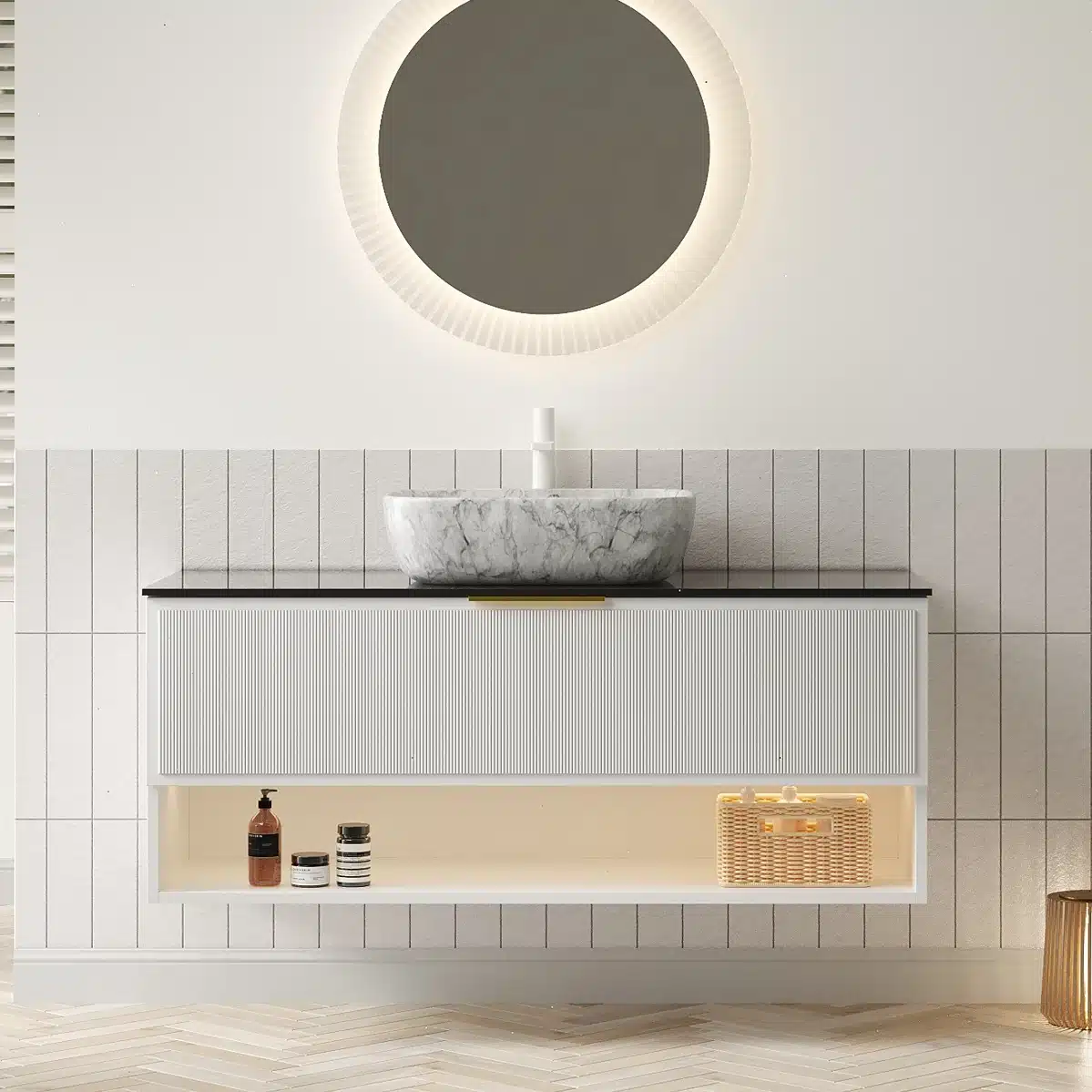
48″ Bathroom Vanity with Sink, Floating Plywood Storage Cabinet, 2 Pinstripe Drawers&Shelf, Sensor Light
For a ready-to-install option, consider the 48″ Bathroom Vanity with Sink, Floating Plywood Storage Cabinet, 2 Pinstripe Drawers & Shelf, Sensor Light, which combines style and function in one package.
Frequently asked questions
Can a floating bathroom vanity support a heavy countertop?
Yes, if properly installed with brackets anchored to wall studs. Most quality floating vanities can support stone or quartz countertops. Always check the manufacturer’s weight capacity.
Is it difficult to install a floating vanity?
Moderate. It requires basic carpentry skills and tools like a level and stud finder. If you’re not comfortable, hire a professional. The key is securing it to studs.
What is the ideal height for a floating vanity?
Standard height is 30-34 inches, similar to traditional vanities. Consider the users’ needs; for accessibility, 32-34 inches is common. The floor clearance should be at least 6 inches.
Can I add more storage to a floating vanity?
Yes, many floating vanities have drawers and cabinets. You can also add wall-mounted shelves or a medicine cabinet above for extra storage.