
Blog
The Best Kitchen Knife Set for Everyday Cooking
Knife Guide
Find Your Best Kitchen Knife Set Today
Looking for the best kitchen knife set can feel overwhelming, but it doesn’t have to be. A good set transforms meal prep from a chore into a pleasure.
Why a Good Knife Set Matters
A reliable knife set is the backbone of any kitchen. Whether you’re dicing onions or filleting fish, the right blade reduces effort and improves precision. A mismatched collection of dull knives leads to frustration and uneven cuts. Investing in a cohesive set ensures every tool has a purpose and a comfortable feel in your hand.
When shopping for the best kitchen knife set, focus on balance, steel quality, and handle design. A well-balanced knife feels like an extension of your arm. High-carbon stainless steel holds an edge longer and resists rust. Handles made from synthetic materials like polypropylene offer a secure grip even when wet.
Key Features to Look For
Not all knife sets are created equal. Here are the essential features to consider:
- Blade Material: High-carbon stainless steel is the gold standard for sharpness and durability.
- Handle Comfort: Ergonomic, non-slip handles reduce fatigue during prolonged use.
- Knife Types Included: A chef’s knife, paring knife, serrated bread knife, and utility knife cover 90% of tasks.
- Storage: A block or roll protects blades and keeps your counter organized.
For a deeper dive into knife anatomy, check out this Wikipedia article on kitchen knives.
Knife Types You Actually Need
Most home cooks get by with four to six knives. A chef’s knife (8–10 inches) handles chopping, slicing, and mincing. A paring knife (3–4 inches) is perfect for peeling and detail work. A serrated bread knife (8 inches) cuts through crusty loaves without crushing them. A utility knife (5–7 inches) bridges the gap between chef and paring knives. Some sets also include a Santoku or a slicing knife for specialized tasks.
When evaluating the best kitchen knife set, check that these core blades are present and made from quality steel. Avoid sets with dozens of knives you’ll never use—they often sacrifice quality for quantity.
Chef’s Knife
This is your workhorse. Look for a blade that’s wide enough to allow knuckle clearance. A full tang (metal extending through the handle) adds balance and strength.
Paring Knife
Ideal for precise cuts. A straight edge works well for most tasks; a serrated edge helps with tomatoes and citrus.
Handle and Ergonomics
Your knife handle should feel natural in your grip. Many modern sets use synthetic materials that are lightweight and slip-resistant. Wooden handles look classic but require more maintenance and can become slippery. Metal handles are durable but can be cold and heavy. Test the weight and balance before purchasing—the knife should pivot comfortably between your thumb and forefinger.
Ergonomic handles with a slight curve reduce strain on your wrist and palm. If you have arthritis or hand fatigue, look for a set with cushioned or contoured handles.
Storage Solutions
A good storage system protects your knives and keeps your kitchen safe and tidy. Wooden blocks are classic but can collect crumbs. Magnetic strips save counter space and display your blades, but they require wall mounting. In-drawer organizers keep knives out of sight and away from children. Some sets come with a storage bucket or roll that’s easy to store in a cabinet.
Consider your kitchen layout. If counter space is limited, a compact block or a magnetic strip may be the best kitchen knife set storage for you.
Caring for Your Knife Set
To keep your knives performing their best, follow a few simple rules: hand wash with mild soap and dry immediately—dishwashers dull blades and damage handles. Hone regularly with a steel to realign the edge, and sharpen professionally or with a whetstone once or twice a year. Store knives in a block or on a strip to prevent nicks and accidents.
With proper care, a quality set can last a lifetime. Avoid cutting on glass or stone surfaces; use wood or plastic cutting boards instead.
Finding the Right Set for Your Budget
Knife sets range from budget-friendly to professional-grade. At the lower end, expect softer steel that requires frequent sharpening. Mid-range sets often offer a good balance of performance and price, with high-carbon stainless steel and comfortable handles. High-end sets may feature Damascus steel or ergonomic handles, but they come with a premium price.
Focus on the quality of the core knives rather than the number of pieces. A well-made 7-piece set can outperform a 20-piece set with inferior blades.
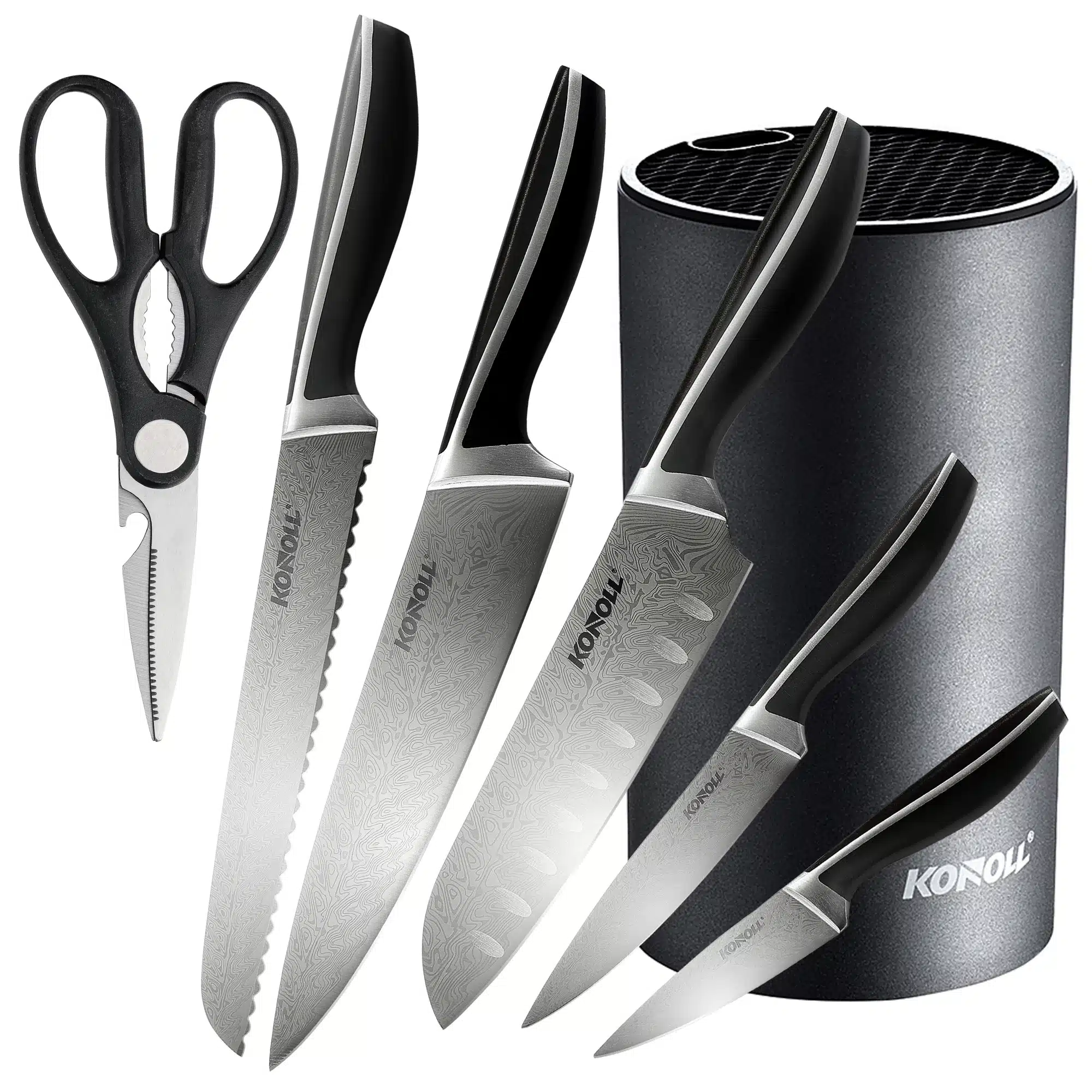
7-Piece Professional Kitchen Cooking Knife Japanese Kitchen Knife Set with Storage Bucket
For a balanced combination of quality and value, the 7-Piece Professional Kitchen Cooking Knife Japanese Kitchen Knife Set with Storage Bucket offers a thoughtful selection of blades with comfortable handles and convenient storage.
Frequently asked questions
How many knives do I really need in a set?
Most home cooks need 4 to 6 knives: a chef’s knife, paring knife, serrated bread knife, utility knife, and optionally a Santoku or boning knife. A 7-piece set covers these essentials plus extras like shears or a sharpening rod.
What is the best blade material for kitchen knives?
High-carbon stainless steel is widely considered the best for home use. It holds a sharp edge, resists corrosion, and is easier to sharpen than harder steels. Avoid low-carbon stainless steels that dull quickly.
Should I buy a knife block or a magnetic strip?
It depends on your counter space and safety preferences. Blocks are convenient but can collect bacteria. Magnetic strips save space and keep knives visible, but require secure wall mounting. In-drawer organizers offer a hidden, safe option.
How do I maintain my knife set?
Hand wash with warm water and mild soap, then dry immediately. Use a honing steel weekly to realign the edge, and sharpen with a whetstone or professional service every 6–12 months. Store in a block, strip, or sheath to protect blades.
