
Blog
Damascus Steel Knife Set: A Buyer’s Guide to Quality
Buying Guide
Choosing Your Perfect Damascus Steel Knife Set
A Damascus steel knife set brings beauty and performance to your kitchen. Whether you’re a home cook or a professional, understanding what makes these knives special helps you choose the right set for your needs.
Understanding Damascus Steel
Damascus steel is known for its distinctive wavy patterns, created by forging layers of different steels together. This process results in a blade that is both hard and flexible, offering excellent edge retention and sharpness. The pattern is not just decorative—it’s a sign of quality craftsmanship.
Key Materials in Damascus Knives
The core of a Damascus blade is typically a high-carbon steel, which holds a sharp edge well. The outer layers are often stainless steel, providing corrosion resistance. Look for sets that specify the core steel (e.g., VG-10, 440C) and the number of layers. More layers can indicate a finer pattern, but quality matters more than count.
Stainless vs. Carbon Steel
Stainless Damascus is easier to maintain and resistant to rust, while carbon steel can achieve a sharper edge but requires more care. Most kitchen sets use stainless Damascus for practicality.
- Check for a balanced composition: hard core for edge, softer outer for toughness.
- Avoid sets that don’t disclose steel types—transparency is key.
Pattern Types and Aesthetics
The pattern on Damascus steel is created by the layering and etching process. Common patterns include twist, raindrop, and ladder. While purely visual, the pattern should be consistent and well-defined. A good pattern indicates careful forging.
Don’t be swayed by overly dramatic patterns; subtle, uniform designs often reflect higher quality.
Handle Comfort and Durability
A knife’s handle is as important as the blade. Look for ergonomic designs that reduce fatigue during prolonged use. Materials like stabilized wood, micarta, or G-10 offer durability and grip. Full tang construction (the blade extends through the handle) provides balance and strength.
Handle Shapes
Western-style handles are contoured for a secure grip, while Japanese-style (wa) handles are straight and lighter. Choose based on your comfort.
- Test the handle weight and balance if possible.
- Ensure the handle is securely attached—no wobble.
Knife Types in a Set
A comprehensive set should include essential knives: chef’s knife (8-inch), paring knife, bread knife, utility knife, and perhaps a santoku or carving knife. Steak knives are a bonus. Avoid sets with redundant or low-use knives.
Check the blade length and shape for each knife—they should suit your cooking style.
Maintenance and Care
Damascus steel requires proper care to preserve its beauty and performance. Hand wash and dry immediately; avoid dishwashers. Regular honing with a ceramic rod maintains the edge, and occasional sharpening keeps it keen. Store knives in a block or magnetic strip to prevent nicks.
Some sets include a sharpening rod—a valuable addition.
Budget and Value
Damascus steel knife sets range from affordable to high-end. Decide on a budget and prioritize quality over quantity. A smaller set of well-made knives is better than a large set of mediocre ones. Look for sets that offer a warranty, indicating manufacturer confidence.
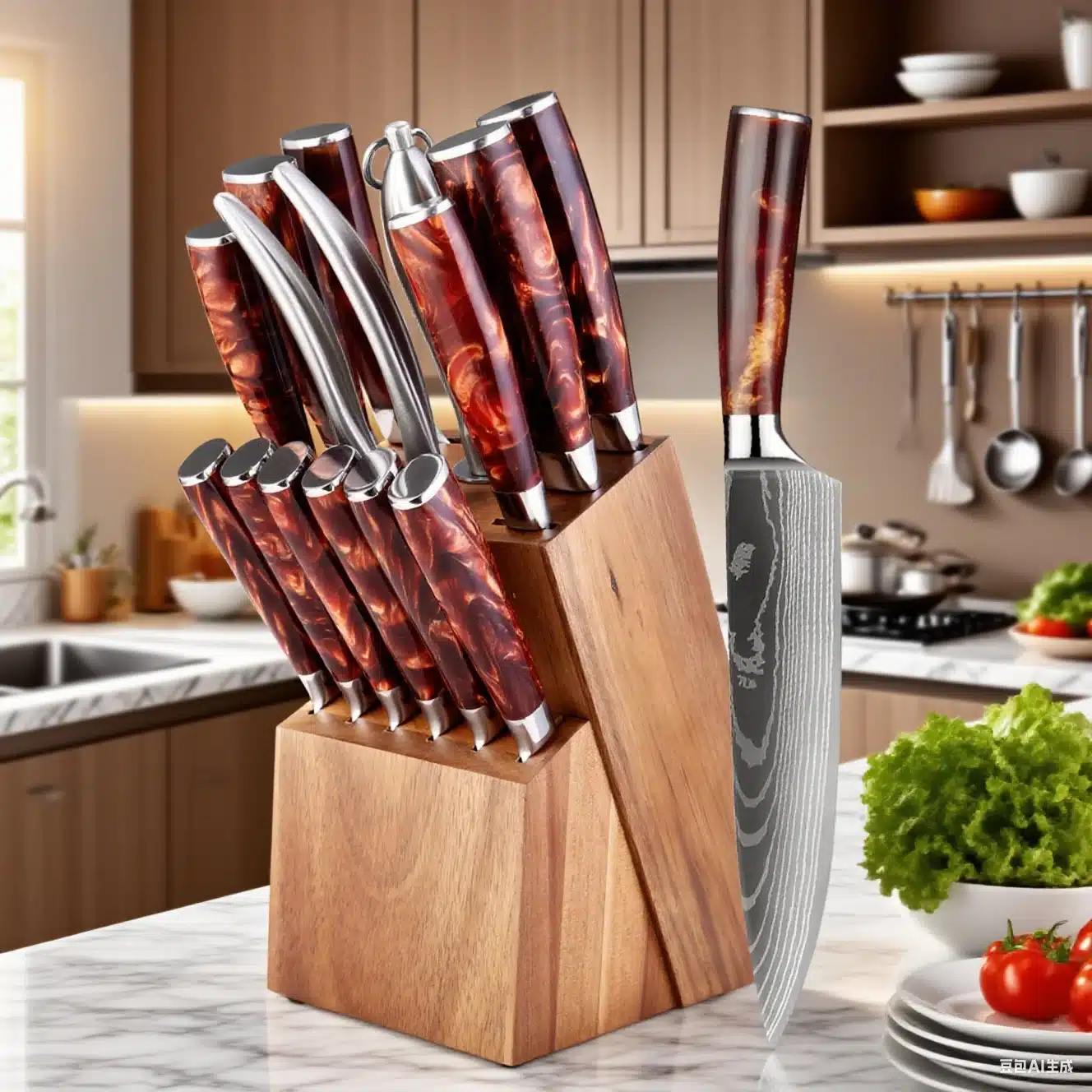
XITUO Kitchen Knife Set 15PCS With Wooden Block,Laser Damascus Pattern Steel Professional Chef Knife,With Scissor Sharpening Rod
For a reliable all-in-one option, the XITUO Kitchen Knife Set 15PCS with Wooden Block offers a laser Damascus pattern, professional chef knife, and included scissor sharpening rod for everyday convenience.
Frequently asked questions
What is the difference between real and laser-etched Damascus patterns?
Real Damascus is forged by layering and folding different steels, resulting in a unique pattern that goes through the blade. Laser-etched patterns are surface-deep and purely decorative, offering no performance benefit.
How many layers should a good Damascus knife have?
Quality varies; typical ranges are 32 to 200+ layers. More layers can create finer patterns, but the steel type and forging process matter more. Avoid knives with vague claims about layers.
Can I put Damascus knives in the dishwasher?
No. Dishwashers can damage the blade edge, handle, and pattern due to harsh detergents and heat. Always hand wash and dry immediately.
What is the best way to sharpen a Damascus knife?
Use whetstones or diamond stones for best results. Avoid electric sharpeners that can overheat and damage the blade. Honing with a ceramic rod between sharpenings maintains the edge.
