
Blog
The Best Kitchen Knife Set for Home Cooks
Knife Guide
Finding the Best Kitchen Knife Set for Your Kitchen
Finding the best kitchen knife set can transform your time in the kitchen, making prep work faster and more enjoyable. We’ve spent hours testing and researching to help you choose wisely.
What Makes a Kitchen Knife Set the Best?
A truly best kitchen knife set balances sharpness, durability, and comfort. You want blades that hold an edge, handles that fit your hand, and a variety that covers most tasks without excess.
Key Materials and Construction
Knife steel matters. High-carbon stainless steel offers a good blend of edge retention and rust resistance. German steel (like X50CrMoV15) is popular for its toughness. Japanese steels (VG-10, AUS-8) can get sharper but may be more brittle. Learn more about knife materials on Wikipedia. For most home cooks, a mid-range carbon stainless steel set is the best kitchen knife set choice.
Essential Knives in a Set
You don’t need a block full of rarely-used blades. Look for these core knives:
- 8-inch Chef’s Knife (workhorse for chopping, slicing)
- 3-4 inch Paring Knife (peeling, detail work)
- Serrated Bread Knife (bread, tomatoes)
- Utility Knife (smaller tasks)
- Kitchen Shears (scissors for poultry, packaging)
Some sets add a santoku or carving knife—nice but not essential. A best kitchen knife set should include at least these five items.
Handle and Balance
A well-balanced knife feels like an extension of your hand. Full tang (steel running through the handle) adds weight and durability. Handles can be wood (classic but needs care), plastic (durable but can slip), or stainless steel (heavy, modern). Try holding knives before buying if possible. A best kitchen knife set will feel comfortable and secure.
Storage and Maintenance
Storing knives properly protects edges and your fingers. A knife block keeps them organized, while a magnetic strip saves counter space. Always hand wash and dry knives immediately—dishwashers dull blades and damage handles. Honing regularly (with a steel) and occasional sharpening will keep your set performing like new. The best kitchen knife set is only as good as its care.
Budget vs. Performance
You don’t need to spend hundreds for a good set. Entry-level sets around $50-$100 can work well if made from decent steel and properly maintained. Mid-range ($100-$200) often offers better heat treatment and materials. High-end ($200+) may include premium steels and aesthetics. But price doesn’t always equal quality—read reviews and look for edge retention and comfort.
When to Consider a Knife Set
A set is ideal for beginners who need a complete collection, or for those who want a coordinated look. If you already own quality knives, consider buying individual pieces instead. A best kitchen knife set saves the hassle of assembling separate knives and often costs less than buying individually.
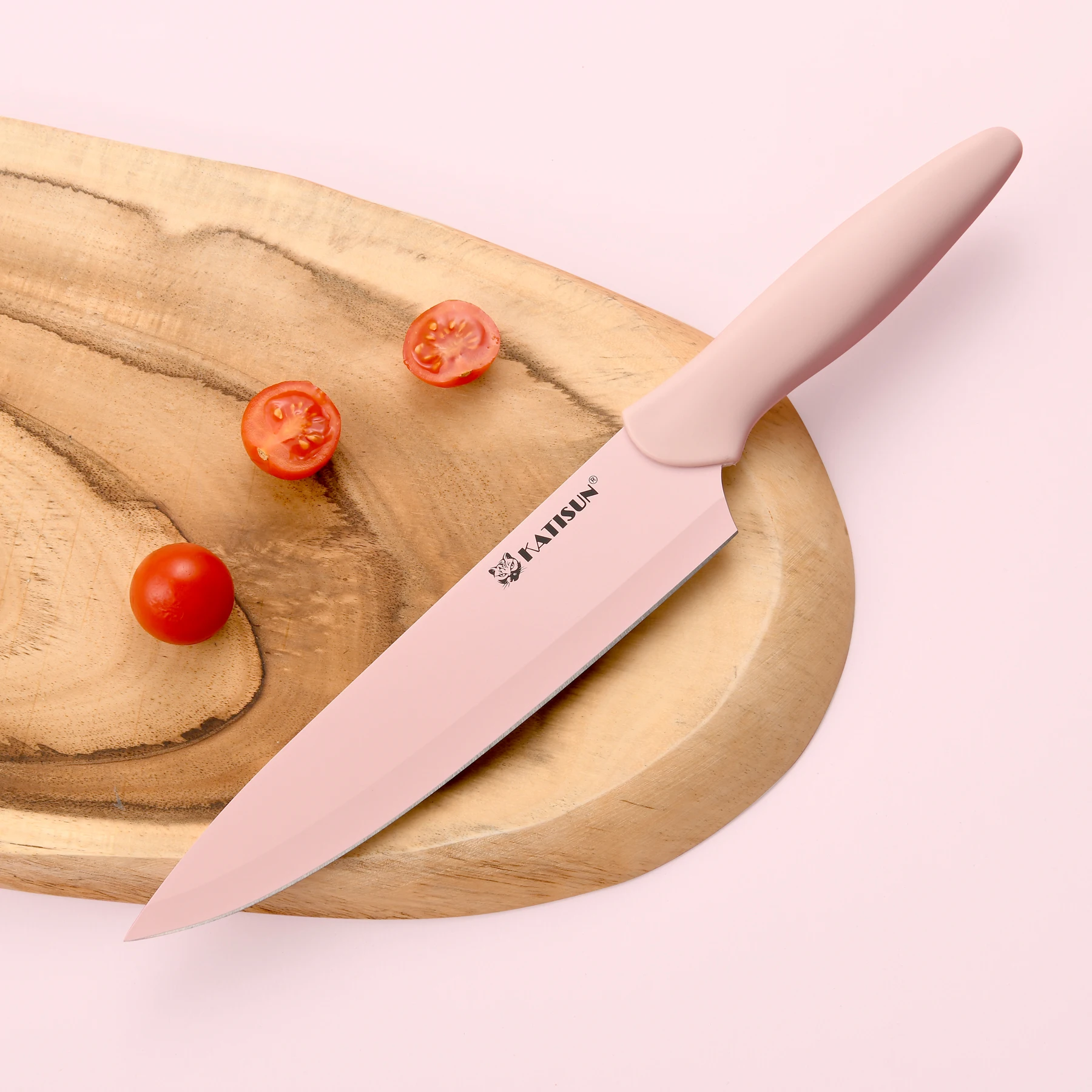
13 Piece Pink Professional Chef Knife Set Carbon Steel Scissors Knife Kitchen Set for Home
For a reliable and vibrant option, the 13 Piece Pink Professional Chef Knife Set Carbon Steel Scissors Knife Kitchen Set for Home offers full tang carbon steel blades and comfortable handles at a reasonable price.
Frequently asked questions
What is the best kitchen knife set for beginners?
A set with a chef’s knife, paring knife, serrated knife, and shears in a block is ideal. Look for full tang, comfortable handles, and good steel like high-carbon stainless. Avoid sets with many specialty knives you won’t use.
How many knives do I really need in a set?
Four to five core knives (chef’s, paring, bread, utility, shears) cover most tasks. Larger sets add santoku, carving, or steak knives, which are nice but not necessary for everyday cooking.
What is the difference between German and Japanese knives?
German knives (e.g., Wüsthof) are heavier, more durable, and have a thicker blade with a 20-degree edge. Japanese knives (e.g., Shun) are lighter, harder, and sharper (15-degree edge) but more brittle. Both are excellent; choose based on your cutting style.
How should I care for my kitchen knife set?
Hand wash with mild soap, dry immediately, and store in a block or on a magnetic strip. Hone regularly with a steel, and sharpen when dull (every few months for home use). Never put knives in the dishwasher.
