
Blog
Best Knife Block Set: A Practical Guide to Choosing Yours
Kitchen Essentials
Find Your Best Knife Block Set
Finding the best knife block set for your kitchen can feel overwhelming with so many options, but understanding a few key factors will simplify your decision.
Why a Knife Block Set Matters
A good knife block set is more than just a collection of blades—it’s an investment in your cooking experience. A well-organized set keeps your knives sharp, safe, and within reach, making meal prep smoother. Whether you’re a home cook or a budding chef, the right set can elevate your kitchen routine.
Key Factors to Consider
Blade Material and Quality
Look for high-carbon stainless steel blades—they hold an edge longer and resist rust. Full tang construction (where the blade extends through the handle) offers better balance and durability. Avoid sets with hollow handles or low-grade steel.
Knife Types Included
A versatile set typically includes an 8-inch chef’s knife, a bread knife, a utility knife, and a paring knife. Some sets add kitchen shears or a honing steel. Think about what you cook most and choose accordingly.
Storage and Safety
Knife blocks come in wood, bamboo, acrylic, or magnetic designs. Wooden blocks are classic but can trap moisture; bamboo is eco-friendly; magnetic strips save counter space. Ensure the block has a built-in sharpener if you prefer convenience.
Matching Your Cutting Style
Consider the weight and handle shape: ergonomic handles reduce fatigue, while heavier knives provide more momentum for chopping. Test the grip if possible—your comfort matters for frequent use.
Caring for Your Knife Block Set
Hand wash knives and dry them immediately—dishwashers can dull blades and damage handles. Regularly oil wooden blocks to prevent cracking. Sharpen knives every few months to maintain performance. A good set can last decades with proper care.
Budget vs. Value
You don’t need to spend a fortune for quality. Mid-range sets often offer the best balance of performance and price. Look for sets that include essential knives without unnecessary extras. Remember, a sharp knife is safer than a dull one—so prioritize blade quality over quantity.
What to Watch Out For
Avoid sets with serrated blades that can’t be resharpened, or those with plastic handles that may crack. Also, beware of blocks that are too tight—they can scratch blades when inserting. A well-designed block should hold knives securely without forcing them.
Final Thoughts
Choosing the best knife block set comes down to your cooking habits and preferences. Focus on blade quality, comfort, and storage that fits your space. A thoughtful purchase will serve you well for years.
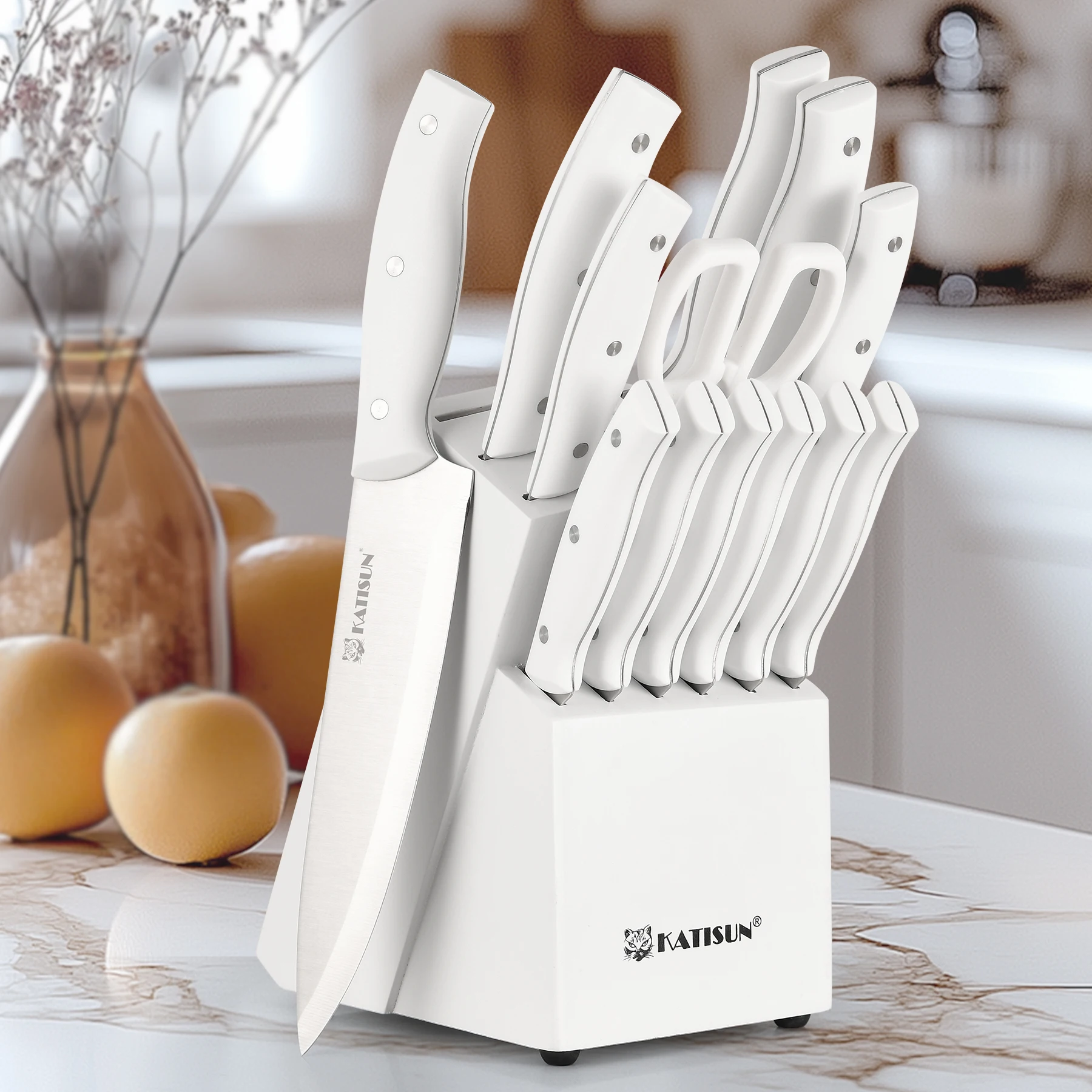
White 15 Pieces Carbon Steel Kitchen Knife Set with Knife Holder Inner Sharpener Kitchen Scissors
For a reliable all-in-one solution, consider the White 15 Pieces Carbon Steel Kitchen Knife Set with Knife Holder Inner Sharpener Kitchen Scissors—it covers the essentials with a built-in sharpener for easy maintenance.
Frequently asked questions
How many knives do I really need in a block set?
Most home cooks do fine with 5-8 knives: a chef’s knife, bread knife, utility knife, paring knife, and maybe a santoku or serrated knife. More isn’t always better—quality over quantity.
Is a knife block with a built-in sharpener worth it?
It can be convenient for quick touch-ups, but built-in sharpeners often remove more metal than necessary. For best results, use a separate honing steel and occasional professional sharpening.
What’s the best material for a knife block?
Hardwood or bamboo blocks are durable and gentle on blades. Acrylic blocks let you see the knives but can scratch. Magnetic strips save space but require careful placement to avoid accidents.
How often should I sharpen my knives?
Hone with a steel before each use for edge alignment. Sharpen every 2-3 months for regular home use, or more often if you cook daily. Signs of dullness include difficulty slicing tomatoes or onions.
