
Blog
Choosing the Perfect Stainless Steel Ladle for Your Kitchen
Buying Guide
How to Choose the Best Stainless Steel Ladle
A stainless steel ladle is a kitchen essential, but with so many options, how do you pick the right one? Let’s break down what matters.
Why Stainless Steel?
Stainless steel is the gold standard for kitchen utensils. It’s resistant to rust, corrosion, and staining, making it ideal for everyday use. Unlike plastic or wood, it won’t absorb odors or bacteria. Plus, it’s dishwasher safe — a huge time-saver.
One thing to note: not all stainless steel is created equal. Look for 18/8 or 18/10 stainless steel, which indicates 18% chromium and 8% or 10% nickel. This composition ensures strength and shine.
Size Matters: Ladle Capacity
Ladles come in various sizes, typically 1 to 6 ounces. A 2-ounce ladle is perfect for individual portions of soup or sauce. For family meals or stews, a 4-ounce ladle is more practical. Think about what you cook most often.
For precise serving:
- Small (1-2 oz): for sauces, gravies, or condiments
- Medium (3-4 oz): for soups, chili, or punch
- Large (5-6 oz): for stocks, large batches, or when you need to move liquids quickly
Pro tip: if you often cook for crowds, go a size larger than you think.
Handle Design: Comfort and Control
A ladle’s handle can make or break your cooking experience. Long handles (around 12 inches) keep your hands away from heat and splatter — essential for deep pots. Short handles (around 8 inches) offer more control for delicate tasks like plating sauce.
Look for handles with an ergonomic curve or a comfortable grip. Some handles have a hole at the end for hanging storage. Make sure the handle is securely welded — no wobbly parts.
Solid vs. Slotted Ladles: What’s the Difference?
Solid ladles are best for liquids like soup, punch, or sauce. They hold the full volume without dripping. Slotted ladles have holes or slots, perfect for straining solids from liquids — think dumplings from broth or vegetables from stock.
Many kitchens benefit from having both. If you only have room for one, consider a solid ladle with a small pouring lip on the side for controlled pouring.
Edge and Shape: Pouring Precision
The lip or spout of a ladle affects how cleanly it pours. A sharp, defined edge reduces drips. Some ladles have a pointed spout for precise pouring into small containers. Others have a rounded bowl that’s better for stirring.
Also consider the depth of the bowl: a deep bowl holds more but may be harder to scoop from a shallow pot. A shallow bowl is easier to use in wide pans.
Weight and Balance: The Feel Factor
Heavy ladles feel sturdy but can tire your wrist. Lightweight ladles are easier to handle but may feel flimsy. The sweet spot is a balanced ladle that feels substantial without being heavy.
Test the balance by holding the handle: the bowl should not tip forward or backward. A well-balanced ladle makes serving effortless.
Care and Maintenance: Keeping Your Ladle Shiny
Stainless steel is low maintenance, but it can show water spots or fingerprints. To keep it looking new, hand dry after washing. Avoid abrasive cleaners that scratch the surface. If you notice discoloration from heat, a stainless steel cleaner can restore the shine.
Most importantly, never leave a stainless steel ladle in a hot pot for extended periods — it can get too hot to handle.
Our Recommendation: A Versatile Choice
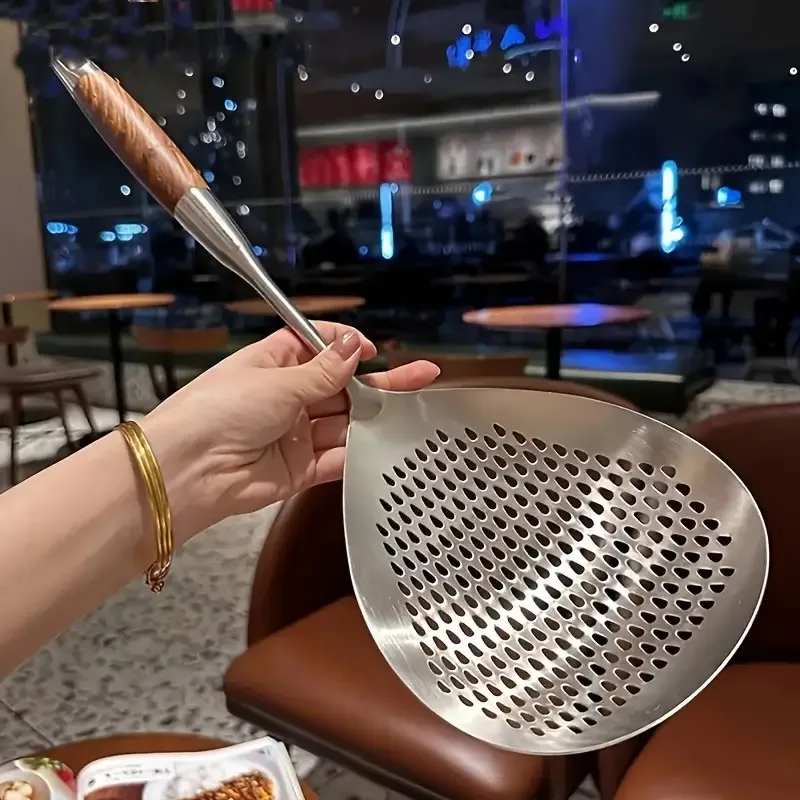
If you’re looking for a multi-purpose tool that handles straining and serving, consider the Stainless Steel Spider Strainer Skimmer Ladle for Cooking and Frying. It combines a wire mesh strainer with a long handle, perfect for retrieving pasta, dumplings, or fried foods from hot oil or water. It’s a clever addition to any kitchen.
Stainless Steel Spider Strainer Skimmer Ladle for Cooking and Frying, Kitchen Utensils Wire Strainer Pasta Spoon
For a versatile tool that both strains and serves, the Stainless Steel Spider Strainer Skimmer Ladle is a smart choice for pasta, frying, and more.
Frequently asked questions
What is the best size for a stainless steel ladle?
The best size depends on your needs. For everyday soup or sauce, a 2-ounce ladle works well. For family meals, a 4-ounce ladle is more practical. Consider what you cook most often.
Can I use stainless steel ladles on nonstick pans?
Yes, but be careful. Stainless steel can scratch nonstick coatings if you scrape the pan. Use gentle stirring motions and avoid banging the ladle against the pan.
How do I clean a stainless steel ladle?
Most stainless steel ladles are dishwasher safe. For hand washing, use warm soapy water and a soft sponge. Dry immediately to prevent water spots.
What is the difference between a solid and a slotted ladle?
A solid ladle is best for liquids like soup or sauce. A slotted ladle has holes that allow liquid to drain, making it ideal for serving solids from a liquid, such as vegetables from broth.
