Follow us on Instagram @goldomallc
Free shipping on orders over $53 USD
Handcrafted with love
New home décor collection available now
Use code GOLDOMA15 for 15 % off
Follow us on Instagram @goldomallc
Free shipping on orders over $53 USD
Handcrafted with love
New home décor collection available now
Use code GOLDOMA15 for 15 % off


The Ultimate Console Table Buying Guide
Furniture Guide
How to Choose the Perfect Console Table
A console table is more than just a surface—it’s a statement piece that can transform your entryway, living room, or hallway. Whether you need a spot for keys and mail or a stage for your favorite decor, this guide helps you pick the right one.
Space-Saving Versatile Entryway Essential
What Is a Console Table?
A console table is a long, narrow table typically placed against a wall. Unlike dining or coffee tables, it’s designed for tight spaces like hallways, entryways, or behind a sofa. The key feature is its slim depth, usually 12–18 inches, which allows it to fit where other furniture can’t. Historically, console tables originated in 17th-century France, where they were used as decorative pieces in grand halls. Today, they serve both form and function, providing a surface for decor, storage, or daily essentials.
Types of Console Tables
Console tables come in various styles to suit different aesthetics. Here’s a quick overview:
- Traditional: Ornate details, curved legs, and rich wood finishes. Perfect for classic or formal interiors.
- Modern: Clean lines, minimal ornamentation, and materials like metal, glass, or veneer. Ideal for contemporary spaces.
- Industrial: A mix of wood and metal, often with a raw or distressed look. Adds an edgy, urban vibe.
- Rustic: Reclaimed wood, live edges, and earthy tones. Great for farmhouse or cabin styles.
- Floating: Wall-mounted with no legs, creating a sleek, space-saving appearance.
Each type has its own charm. Your choice should reflect your room’s decor and your functional needs.
Materials and Durability
The material of your console table affects its look, feel, and longevity. Common options include:
- Solid Wood: Durable and timeless, but can be heavy and expensive. Requires periodic maintenance.
- Wood Veneer: A thin layer of real wood over engineered wood. Offers the look of solid wood at a lower cost and with better stability. Our recommended table uses pine veneer.
- Metal: Strong and modern, often used for legs or frames. Can be powder-coated for durability.
- Glass: Light and airy, but prone to fingerprints and scratches. Best for low-traffic areas.
- Engineered Wood: Affordable and stable, but may not have the same premium feel as solid wood or veneer.
Consider the room’s humidity and traffic. For example, a solid wood table might warp in a damp hallway, while a metal or veneer option is more resilient.
Dimensions and Placement
Size matters when choosing a console table. Measure your space carefully. The table should be at least as long as the wall it sits against, but not so long that it overwhelms the room. Standard heights are 28–32 inches, matching most sofas and entryway counters. Depth is critical: 12–16 inches for narrow hallways, 16–20 inches for larger spaces. Leave at least 36 inches of walking clearance in front of the table. For entryways, a table with a lower shelf or drawers can corral keys and mail. For behind a sofa, ensure the table is slightly lower than the sofa back (usually 2–4 inches).
Styling Your Console Table
Once you have your console table, styling it makes it shine. Start with a focal point: a large mirror or artwork above the table. Then layer items of varying heights—lamps, vases, books, or sculptures. Use trays to corral small items like keys or remotes. Incorporate natural elements like plants or flowers for freshness. Keep it balanced but not symmetrical. For example, place a lamp on one side and a stack of books on the other. The goal is to create visual interest without clutter.
Console Table vs. Other Tables
You might wonder how a console table differs from a sofa table, entry table, or credenza. A sofa table is specifically designed to place behind a sofa, often with a lower shelf. An entry table is a general term for any table in an entryway. A credenza is typically wider and has cabinet storage, used in dining rooms or offices. Console tables are the most versatile: they can serve as a sofa table, entry table, or even a narrow desk. Their slim profile makes them ideal for tight spaces where other furniture wouldn’t fit.
Worth a look
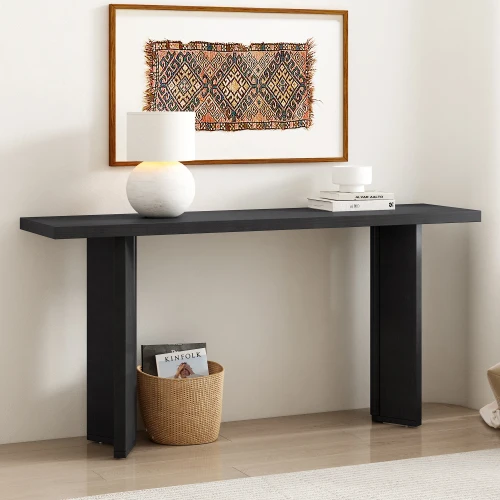
Goldoma Modern Console Table with Pine Veneer and Geometric Legs – 5-Year Warranty
For a blend of modern design and durability, the Goldoma Modern Console Table with Pine Veneer and Geometric Legs offers style and a 5-year warranty.
Frequently asked questions
What is the standard height of a console table?
Most console tables are 28–32 inches tall, which aligns with the height of sofas and entryway counters. However, you can find shorter or taller options for specific needs.
Can a console table be used as a desk?
Yes, a console table can work as a narrow desk if you need a compact workspace. Just ensure the depth is at least 16 inches to accommodate a laptop and mouse comfortably.
How do I clean a wood veneer console table?
Dust regularly with a soft cloth. For spills, wipe immediately with a slightly damp cloth and dry thoroughly. Avoid harsh chemicals or abrasive cleaners that can damage the veneer.
What is the best material for a console table in a high-traffic area?
For high-traffic areas like entryways, choose a durable material like metal or engineered wood with a veneer. These resist scratches and moisture better than solid wood.