
Blog
Choosing Disposable Plastic Bowls: A Practical Guide
Buying Guide
Find the Best Disposable Plastic Bowls for You
When you need disposable plastic bowls for a party or event, the options can be overwhelming. This guide helps you choose the right ones.
Why Choose Disposable Plastic Bowls?
Disposable plastic bowls offer convenience for gatherings, picnics, and quick meals. They save cleanup time and reduce the risk of breakage compared to glass or ceramic. However, not all disposable plastic bowls are created equal. Understanding their features helps you make a smart purchase.
For instance, heavy-duty options can handle hot soups and salads without leaking. Some are even microwave-safe. Always check the product specifications to ensure they meet your needs. Learn more about disposable food packaging on Wikipedia.
Materials: What Are Disposable Plastic Bowls Made Of?
Most disposable plastic bowls are made from polypropylene (PP) or polystyrene (PS). PP is more heat-resistant and flexible, making it suitable for hot foods. PS is rigid and often used for cold items. Some bowls are made from recycled plastics or bioplastics, which are better for the environment.
If you prioritize sustainability, look for bowls labeled as recyclable or made from post-consumer waste. However, remember that even recyclable plastics require proper disposal. Always check local recycling guidelines.
Key Material Properties
- Polypropylene (PP): Microwave-safe, durable, and resistant to heat up to 200°F.
- Polystyrene (PS): Lightweight, clear, but not heat-resistant; best for cold foods.
- Bioplastics: Plant-based, compostable under industrial conditions, but not always backyard compostable.
Size and Capacity: Matching Bowls to Your Needs
Disposable plastic bowls come in various sizes, from small 4-ounce cups to large 32-ounce bowls. Consider what you’ll serve: soups, salads, desserts, or snacks. For example, a 12-ounce bowl works well for a hearty soup, while a 7-ounce bowl is ideal for ice cream.
Also, think about the portion sizes for your guests. If you’re hosting a buffet, having a mix of sizes can be practical. Heavy-duty bowls often have a higher weight capacity, so they won’t collapse under heavy foods.
Durability and Strength: What to Look For
Not all disposable plastic bowls are flimsy. High-quality options are designed to be sturdy and leak-resistant. Look for terms like ‘heavy-duty’ or ‘extra-strong’ in product descriptions. Thicker walls and reinforced rims reduce the chance of cracking.
Additionally, check if the bowls are suitable for hot liquids. Some disposable plastic bowls can withstand temperatures up to 220°F, making them safe for hot soups. Always follow the manufacturer’s guidelines.
Environmental Considerations: Reducing Waste
While disposable plastic bowls are convenient, they contribute to plastic waste. To minimize your environmental impact, choose bowls that are recyclable or made from renewable resources. You can also reuse some sturdy bowls for crafts or storage.
Another option is to combine disposable bowls with compostable utensils and napkins. Many brands now offer eco-friendly lines. Remember that proper disposal is key—rinse and sort your waste correctly.
Where to Use Disposable Plastic Bowls
These bowls are perfect for parties, picnics, camping, and food trucks. They eliminate the need for dishwashing and are lightweight to carry. For formal events, opt for high-end designs that mimic ceramic or glass.
In commercial settings, like restaurants or catering services, disposable plastic bowls save labor costs. However, always check local regulations regarding single-use plastics, as some areas have restrictions.
Comparing Disposable Plastic Bowls to Alternatives
Paper bowls are compostable but can become soggy. Glass bowls are reusable but breakable. Bamboo or palm leaf bowls are eco-friendly but more expensive. Disposable plastic bowls strike a balance between cost, durability, and convenience.
For most events, plastic bowls are the most practical choice. They are affordable, available in bulk, and come in various designs. If you’re concerned about aesthetics, many brands offer elegant patterns and colors.
How to Choose the Best Disposable Plastic Bowls
Start by listing your needs: type of food, number of guests, and budget. Then, compare product reviews and ratings. Look for bowls that are BPA-free and food-safe. If you need a specific size or design, check the product details carefully.
Finally, consider buying a sample pack to test quality before ordering in bulk. A reputable seller will provide clear specifications and customer support. Remember, the best disposable plastic bowls are those that meet your specific requirements without compromising on quality.
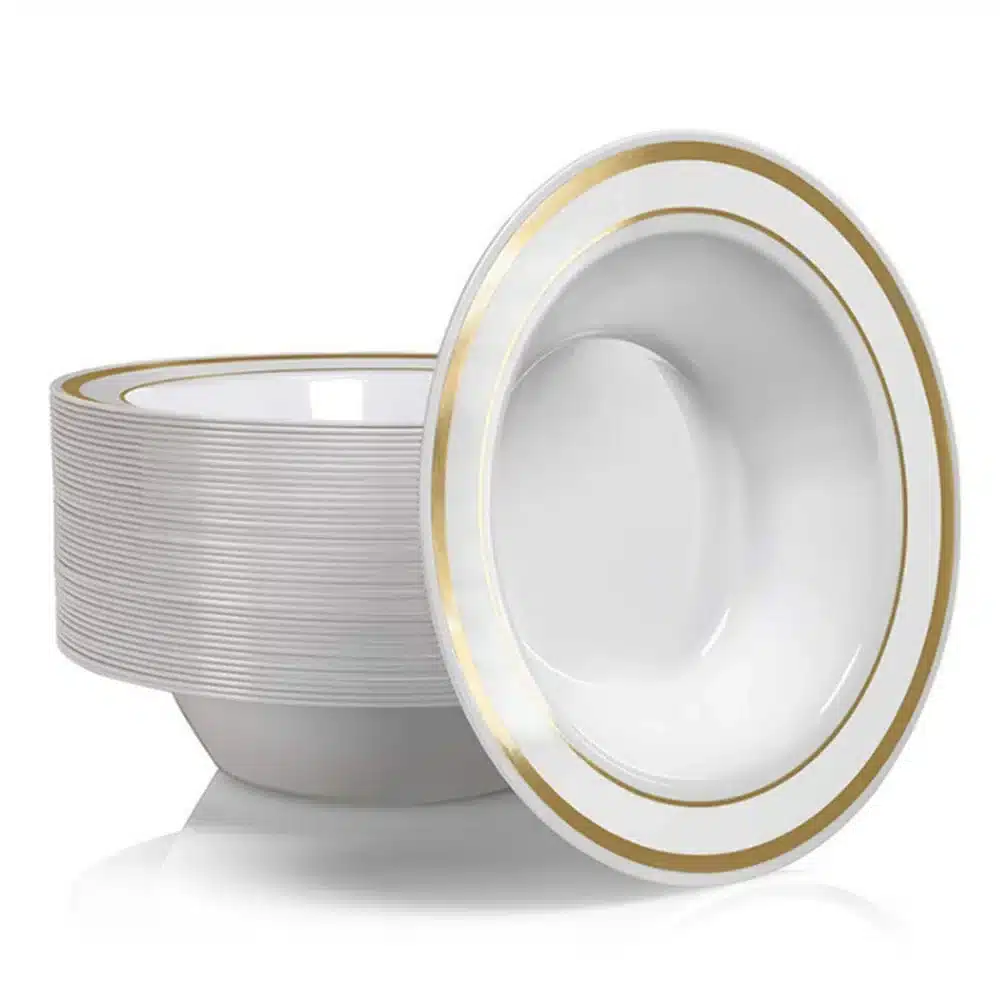
20PCS Disposable Tableware Plastic Salad Soup Bowl High-end Heavy Duty Phnom Penh Banquet Disposable Dessert Plate
For a reliable option, consider the 20PCS Disposable Tableware Plastic Salad Soup Bowl High-end Heavy Duty Phnom Penh Banquet Disposable Dessert Plate, which combines elegance with strength.
Frequently asked questions
Can disposable plastic bowls be used for hot food?
Yes, but only if they are labeled as microwave-safe or heat-resistant. Check the temperature rating; some can handle up to 220°F. Avoid using PS bowls for hot liquids as they may warp.
Are disposable plastic bowls recyclable?
It depends on the type of plastic. PP (polypropylene) is widely recyclable, while PS (polystyrene) is less commonly accepted. Always check local recycling guidelines and look for recycling symbols.
What size disposable plastic bowl should I get for soup?
For a standard soup serving, an 8-12 ounce bowl is ideal. For larger portions or stews, consider 16-20 ounce bowls. Heavy-duty options prevent leaks.
How can I reduce waste when using disposable plastic bowls?
Choose recyclable or compostable options. Reuse sturdy bowls for non-food purposes. Also, combine with reusable utensils and napkins to minimize overall waste.
