
Blog
How to Choose the Perfect Floating Bathroom Vanity
Buying Guide
Your Guide to the Floating Bathroom Vanity
A floating bathroom vanity is a stylish and space-saving choice for modern bathrooms. By mounting directly to the wall, it creates an airy feel and makes cleaning a breeze.
Why Choose a Floating Bathroom Vanity?
A floating bathroom vanity offers several advantages over traditional floor-standing models. First, it visually opens up the room by exposing the floor, making even small bathrooms appear larger. Second, it simplifies cleaning—no more struggling to mop around legs or baseboards. Third, it provides a sleek, contemporary look that complements various decor styles, from minimalist to Scandinavian.
Additionally, wall-mounted vanities can be installed at any height, accommodating users of different statures or accessibility needs. The hidden plumbing also reduces visual clutter, contributing to a clean, streamlined aesthetic.
Key Considerations Before Buying
Before purchasing a floating bathroom vanity, consider the following factors:
- Wall Strength: Ensure your wall can support the weight. Solid studs or reinforced blocking are often required.
- Plumbing Access: Plan for accessible shut-off valves and drain connections, as they’ll be behind the vanity.
- Size and Layout: Measure your space carefully. A floating vanity should be proportionate to the room and leave enough clearance for doors and traffic.
- Storage Needs: Decide how much storage you require—drawers, shelves, or a combination.
- Material and Finish: Choose a durable, water-resistant material like solid wood, plywood, or engineered stone. Finish should match your overall design.
Materials and Durability
The material of your floating bathroom vanity determines its longevity and appearance. Popular options include:
- Solid Wood: Warm and timeless but requires sealing against moisture.
- Plywood: More stable than particle board; often used in high-quality vanities.
- MDF with Veneer: Budget-friendly but less moisture-resistant.
- Stone or Concrete: Luxurious and durable, but heavy—needs strong wall support.
- Acrylic or Resin: Lightweight, seamless, and easy to clean; ideal for integrated sinks.
For a balance of style and practicality, look for vanities with a natural woodgrain finish that adds warmth without sacrificing durability.
Installation Tips for a Floating Vanity
Installing a floating bathroom vanity requires careful planning. Here are some steps:
- Locate wall studs and mark positions. Use a stud finder for accuracy.
- Install a mounting bracket or ledger board to support the vanity temporarily during installation.
- Secure the vanity to the wall with heavy-duty screws into studs. Use toggle bolts if studs are not available, but ensure the wall can bear the load.
- Connect plumbing: supply lines, drain, and P-trap. Consider using a flexible drain pipe for easier alignment.
- Seal any gaps between the vanity and wall with silicone caulk to prevent water damage.
- If your vanity has an integrated sink, ensure proper sealing around the basin.
Always consult a professional if you’re unsure about wall strength or plumbing connections. For more on wall mounting, see this Wikipedia article on wall mounting.
Design Styles and Trends
Floating bathroom vanities come in a variety of styles to suit any aesthetic:
- Minimalist: Clean lines, handleless drawers, and a monochrome palette.
- Scandinavian: Light wood tones, simple shapes, and natural textures.
- Industrial: Dark metals, concrete or stone tops, and exposed pipes.
- Modern Farmhouse: Reclaimed wood, apron-front sinks, and vintage hardware.
- Contemporary: High-gloss finishes, geometric shapes, and integrated lighting.
When selecting a style, consider your existing bathroom decor. A floating vanity can serve as a focal point or blend seamlessly into the background.
Space Planning and Measurements
Proper measurements are crucial for a successful installation. Follow these guidelines:
- Height: Standard vanity height is 30–36 inches from floor to top. For comfort, choose a height that suits the primary users.
- Depth: Most floating vanities are 18–22 inches deep. Ensure enough clearance for the sink and faucet.
- Width: Common widths range from 24 to 60 inches. Consider the number of sinks and storage needed.
- Clearance: Leave at least 2–3 inches of space on each side for easy cleaning and visual balance.
- Toe Kick: While floating vanities don’t have a toe kick, you may want to leave a small gap (1–2 inches) at the bottom for airflow.
Use painter’s tape to outline the vanity on the wall before purchasing to visualize the scale.
Maintenance and Care
To keep your floating bathroom vanity looking its best:
- Wipe spills immediately to prevent water damage, especially near seams and edges.
- Use mild soap and water for regular cleaning; avoid abrasive cleaners.
- Check caulk and seals annually; reapply if cracked or missing.
- For wood vanities, apply a sealant or wax every year to protect against humidity.
- Tighten any loose hardware or mounting screws as needed.
With proper care, a quality floating vanity can last for decades.
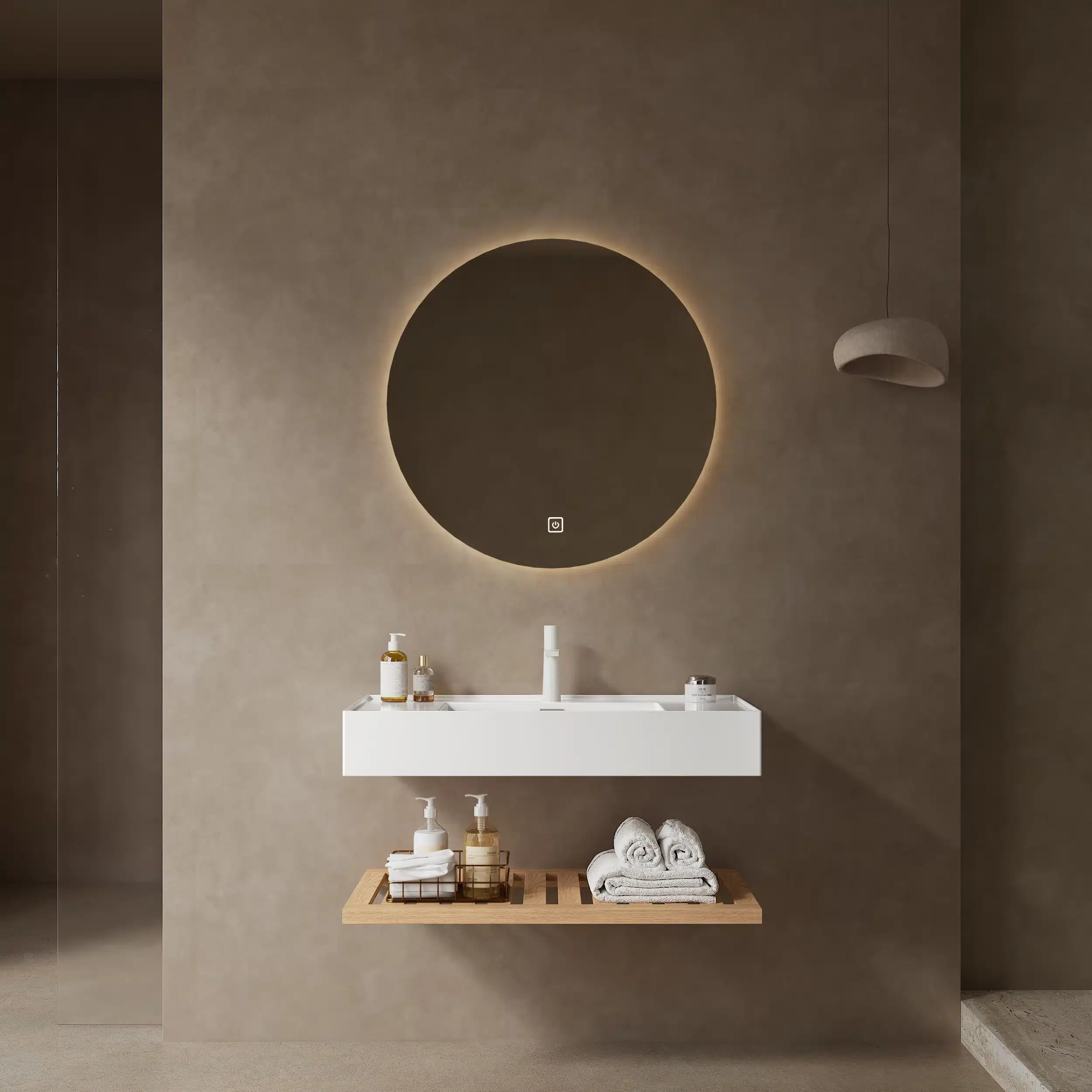
36″ Bathroom Vanity with Vessel Sink, Wall-Mounted Floating White Rectangular Acrylic Integrated Basin Natural Woodgrain Color
For a seamless blend of style and function, consider the 36″ Bathroom Vanity with Vessel Sink, Wall-Mounted Floating White Rectangular Acrylic Integrated Basin in Natural Woodgrain Color—an elegant choice that simplifies installation and maintenance.
Frequently asked questions
Can a floating vanity be installed on any wall?
No, it requires a wall that can support the weight, typically with studs or reinforced blocking. Tile or drywall alone is insufficient. Consult a professional if unsure.
How much weight can a floating vanity hold?
It depends on the wall mount and construction. Most can hold 150–300 pounds, but check the manufacturer’s specifications. Proper installation into studs is essential.
Do floating vanities have less storage?
Not necessarily. Many models offer drawers, shelves, or cabinets. However, the storage depth may be limited by the wall mount. Choose a design that meets your needs.
Are floating vanities hard to clean underneath?
On the contrary, they are easier to clean because there are no legs or base to navigate. You can mop or sweep directly under the vanity.