
Blog
Floating Bathroom Vanity: Style, Space & Smart Design
Design Guide
Your Complete Floating Bathroom Vanity Guide
A floating bathroom vanity is a game-changer for modern bathrooms, offering both style and practicality. This guide will help you choose the perfect one for your space.
Why Choose a Floating Bathroom Vanity?
A floating bathroom vanity mounts directly to the wall, leaving the floor clear. This design creates an illusion of more space, making it ideal for small bathrooms. It also simplifies cleaning—no more awkward reaching around legs or baseboards. Plus, the streamlined look adds a contemporary touch that can elevate your entire bathroom aesthetic.
Beyond aesthetics, a floating vanity offers practical benefits. The open floor space can be used for a small stool, a scale, or even a decorative basket. Some models include hidden storage or integrated lighting, adding both form and function. For more on the history of bathroom design, see Wikipedia’s bathroom article.
Styles of Floating Bathroom Vanities
Floating vanities come in various styles, from minimalist to rustic. Modern designs often feature clean lines, high-gloss finishes, and integrated sinks. For a warmer look, wood tones like maple or walnut add natural texture. If you prefer industrial, consider metal accents and concrete countertops.
When selecting a style, think about your existing bathroom decor. A floating vanity can act as a focal point or blend seamlessly. For example, a sleek white vanity works well in a spa-like bathroom, while a dark wood vanity adds drama to a monochrome scheme.
Materials Matter: Wood, Stone & More
The material of your floating bathroom vanity affects durability, maintenance, and look. Solid birch wood, like in our recommended model, offers strength and a beautiful grain. Plywood is a cost-effective alternative, while MDF is less durable but budget-friendly.
Countertops are equally important. Sintered stone, such as the 12mm surface in our featured vanity, is stain-resistant and easy to clean. Other options include quartz, marble, or solid surface. Each has its pros and cons: marble is elegant but porous, while quartz is durable but can be pricey.
Comparing Countertop Materials
- Sintered Stone: Non-porous, heat-resistant, scratch-resistant.
- Quartz: Durable, low maintenance, wide color range.
- Marble: Timeless beauty, requires sealing, prone to etching.
- Solid Surface: Seamless look, repairable, less heat resistant.
Installation Tips for Your Floating Vanity
Installing a floating vanity requires careful planning. First, ensure your wall can support the weight—studs must be located and reinforced if needed. Most vanities come with a mounting bracket or cleat system. Always use a level to avoid tilting.
Consider plumbing: you may need to relocate drain and water supply lines to match the vanity’s cutouts. It’s often best to hire a professional unless you’re experienced with DIY plumbing. Also, think about the height—standard is 32-36 inches from the floor, but adjust based on user needs.
Storage Solutions in Floating Vanities
Contrary to belief, floating vanities can offer ample storage. Many models include drawers, shelves, or cabinets. Deep drawers are great for toiletries, while open shelves display towels or baskets. Some designs feature a mix of closed and open storage for versatility.
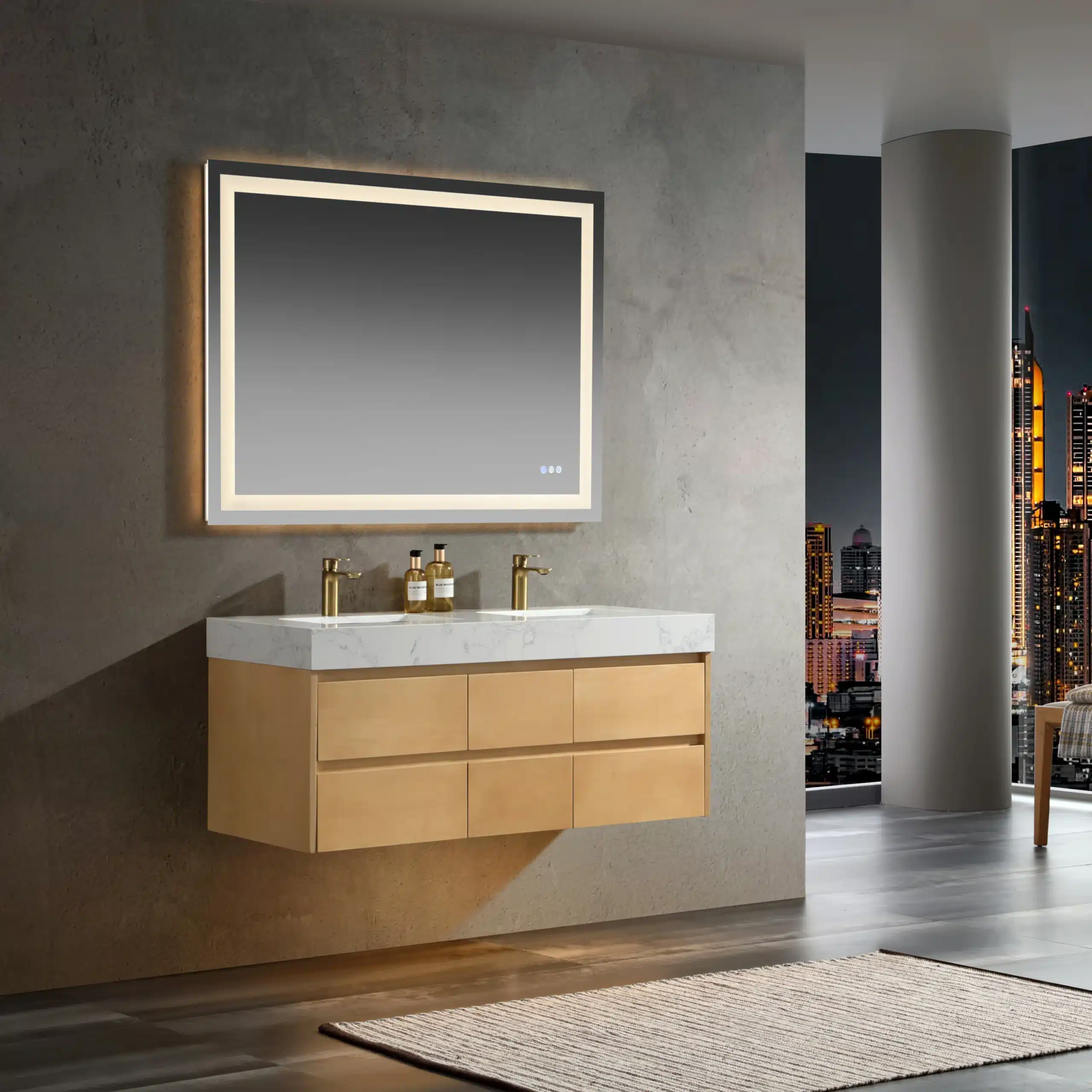
When choosing, consider what you need to store. If you have many small items, opt for a vanity with multiple drawers. For larger items like hairdryers, a cabinet with a door works better. Our Double Sink 48 Inch Maple Floating Bathroom Vanity includes spacious drawers and a sleek sintered stone top.
Double Sink vs. Single Sink: Which to Choose?
A double sink vanity is ideal for shared bathrooms, allowing two people to use the space simultaneously. It also provides extra counter space. However, it requires a wider wall area—typically 60 inches or more. A 48-inch double sink vanity, like our recommended model, fits well in medium-sized bathrooms.
Single sink vanities work for smaller bathrooms or powder rooms. They are more compact and often more affordable. Consider your daily routine: if you often share the bathroom, a double sink can reduce morning conflicts.
Lighting and Mirror Pairing
Complement your floating vanity with proper lighting and mirrors. Install sconces on either side of the mirror for even facial lighting, or use a lighted mirror for a sleek look. The mirror should be proportionate to the vanity—width similar or slightly less than the vanity.
LED mirrors with anti-fog features are popular. They provide bright, energy-efficient light and a modern touch. For a cohesive design, match the mirror frame finish to your vanity hardware.
Eco-Friendly and Sustainable Choices
Many floating vanities are made from sustainable materials like bamboo or FSC-certified wood. Our featured vanity uses solid birch wood, a renewable resource. Sintered stone countertops are also eco-friendly as they are made from natural minerals and require less energy to produce than some alternatives.
When shopping, look for low-VOC finishes and responsibly sourced materials. A sustainable vanity not only helps the planet but also contributes to healthier indoor air quality.
Maintenance and Care
To keep your floating vanity looking new, clean it regularly with a soft cloth and mild detergent. Avoid abrasive cleaners that can scratch the surface. For sintered stone, wipe up spills promptly to prevent staining.
Check the mounting hardware annually to ensure it’s secure. If you notice any loosening, tighten the screws. Also, inspect for water damage around the sink area—caulk can prevent moisture from seeping into the wood.
Double Sink 48 Inch Maple Floating Bathroom Vanity Solid Birch Wood 12mm Sintered Stone US Stock Homein
For a durable and stylish option, consider the Double Sink 48 Inch Maple Floating Bathroom Vanity with solid birch wood and sintered stone top, available at Homein.
Frequently asked questions
Can a floating bathroom vanity support a heavy stone countertop?
Yes, if properly installed with sturdy wall brackets and anchored into wall studs. Many vanities are designed to support heavy materials like sintered stone or quartz.
Is a floating vanity suitable for a family bathroom?
Absolutely. With ample storage options and durable materials, floating vanities work well for families. A double sink model can help manage morning routines.
How do I clean a sintered stone countertop?
Use a soft cloth with mild soap and water. Avoid harsh chemicals or abrasive pads. Sintered stone is non-porous, so it resists stains and is easy to maintain.
What is the standard height for a floating vanity?
The typical height is 32 to 36 inches from the floor. However, you can customize it based on your needs, especially if used by people of different heights.