
Blog
The Ultimate Japanese Chef Knife Buying Guide
Knife Guide
Find Your Perfect Japanese Chef Knife
A Japanese chef knife is more than a tool—it’s an extension of your hand, crafted with centuries of tradition. Whether you’re a home cook or a professional, choosing the right blade transforms your time in the kitchen.
Why a Japanese Chef Knife?
Japanese chef knives are renowned for their exceptional sharpness, lightweight design, and precise edge geometry. Unlike Western knives, which are typically heavier and thicker, Japanese blades are forged from harder steel (often 60-64 HRC), allowing for a finer edge that stays sharper longer. The trade-off is that they require more careful handling—no prying or twisting—but the payoff is effortless slicing through vegetables, fish, and boneless meats.
Traditional Japanese knife-making techniques, such as folding and lamination, create blades that are both beautiful and functional. The hard core steel is sandwiched between softer layers, giving the knife strength and flexibility while reducing brittleness. This is why many chefs consider a Japanese chef knife an essential investment in their craft.
Types of Japanese Chef Knives
Understanding the different blade shapes helps you pick the right tool for your cooking style. Here are the most common types:
- Gyuto: The Japanese version of a Western chef’s knife, versatile for chopping, slicing, and dicing. Typically 180-270mm long.
- Santoku: A multi-purpose knife with a flat edge and sheepsfoot tip, ideal for slicing, dicing, and mincing. Usually 165-180mm.
- Nakiri: A vegetable knife with a straight edge and square tip, perfect for push-cutting greens and root vegetables.
- Deba: A heavy, thick-spined knife for filleting fish and breaking down poultry. Not for general use.
- Yanagiba: A long, single-bevel slicer for raw fish (sashimi) and sushi preparation.
For most home cooks, a Santoku or Gyuto is the best starting point, as they handle 90% of kitchen tasks with ease.
Steel Types: What Makes a Great Blade?
The steel used in a Japanese chef knife determines its hardness, edge retention, and ease of sharpening. Common options include:
- High Carbon Steel (e.g., Shirogami, Aogami): Extremely hard (62-65 HRC), takes a razor edge, but rusts easily. Requires immediate drying and occasional oiling.
- Stainless Steel (e.g., VG-10, AUS-8): More corrosion-resistant, slightly softer (58-61 HRC), easier to maintain but may not hold an edge as long.
- Damascus Steel: A layered pattern created by folding different steels, combining hardness with flexibility. The wavy pattern also reduces food sticking. Many Japanese chef knives feature a Damascus finish for both aesthetics and performance.
For a balance of performance and low maintenance, a stainless Damascus blade is an excellent choice for most home cooks.
Handle Materials and Ergonomics
The handle affects comfort, grip, and balance. Traditional Japanese handles (Wa-style) are often octagonal or oval, made from magnolia wood or pakka wood, and lighter than Western-style handles. Western handles (Yo-style) are typically contoured synthetic or wood, providing a more familiar grip. Burlwood handles are prized for their unique grain patterns and durability, offering both beauty and a secure hold even when wet. When choosing, consider the knife’s weight distribution: a well-balanced knife should pivot naturally at the pinch grip.
How to Maintain Your Japanese Chef Knife
Proper care extends the life of your blade. Follow these tips:
- Hand wash only: Never put a Japanese chef knife in the dishwasher. Wash with mild soap and dry immediately.
- Use the right cutting board: Wood or soft plastic boards are best. Avoid glass, stone, or ceramic, which dull edges quickly.
- Hone regularly: A ceramic or leather strop can realign the edge between sharpenings. For Damascus blades, a honing rod with a fine grit is ideal.
- Sharpen properly: Use water stones (1000-6000 grit) and maintain the original angle (typically 15 degrees per side for double-bevel knives).
- Store safely: A knife block, magnetic strip, or blade guard prevents nicks and accidents.
For more on knife steel science, see Wikipedia’s Japanese kitchen knife article.
Choosing the Right Knife for Your Kitchen
Consider your cooking habits: if you frequently prepare vegetables, a Nakiri or Santoku is ideal. If you work with large cuts of meat or fish, a Gyuto or Deba may suit you better. For a versatile, all-purpose blade that excels at everything from slicing onions to portioning chicken, a Santoku is a top recommendation. Look for a knife with a comfortable handle, a balanced weight, and a blade length of 7-8 inches (around 180mm). Damascus steel adds visual appeal and often improves food release. Ultimately, the best Japanese chef knife is one that feels like a natural extension of your hand.
Budget and Value Considerations
Japanese chef knives range from $50 to over $500. Entry-level knives (e.g., Tojiro, Fujiwara) offer good performance for the price. Mid-range knives ($100-$200) often feature better steel and fit-and-finish. High-end knives (over $300) use premium materials and artisan craftsmanship. For most home cooks, a mid-range knife with a stainless Damascus blade and a comfortable handle provides the best balance of quality and cost. Remember that a sharp knife is safer than a dull one—invest in a good knife and maintain it well.
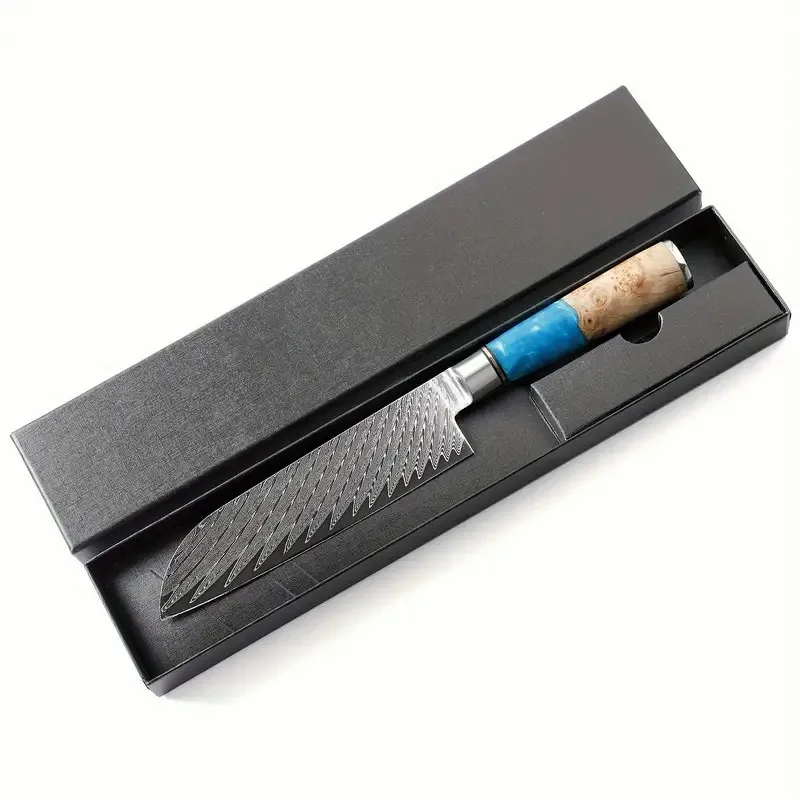
IOKO Japanese Style Chef Knife 67 Layers Damascus Steel 7 Inch Burlwood Kitchen Sushi Santoku Sashimi Santoku Chef Knife
For a reliable, beautifully crafted option, consider the IOKO Japanese Style Chef Knife 67 Layers Damascus Steel 7 Inch Burlwood Kitchen Sushi Santoku Sashimi Santoku Chef Knife, which combines traditional aesthetics with modern performance.
Frequently asked questions
What is the best Japanese chef knife for beginners?
For beginners, a Santoku knife is often recommended due to its versatile shape and manageable size. Look for one with a stainless steel blade for easier maintenance, like a VG-10 or AUS-8 core. A knife with a Western-style handle may feel more familiar if you’re used to European knives.
How often should I sharpen a Japanese chef knife?
It depends on usage. For home cooks, sharpening every 1-3 months is typical, with honing every few uses. If you notice the knife struggling to cut through a tomato skin or paper, it’s time to sharpen.
Can I use a Japanese chef knife on bones or frozen food?
No. Japanese chef knives are designed for soft ingredients like vegetables, fish, and boneless meat. Using them on bones, frozen food, or hard squash can chip the blade. Use a cleaver or heavy-duty knife for such tasks.
What is the difference between Damascus and non-Damascus steel?
Damascus steel features a layered pattern created by forge-welding different steels. This can improve toughness and create a beautiful aesthetic, but the performance is similar to non-Damascus blades with the same core steel. The main advantage is visual appeal and sometimes better food release.
