
Blog
The Ultimate Molecular Gastronomy Kit Buying Guide
Buying Guide
Your Guide to the Perfect Molecular Gastronomy Kit
A molecular gastronomy kit opens up a world of culinary creativity, allowing you to transform familiar ingredients into surprising textures and forms. Whether you’re a curious home cook or an aspiring chef, this guide will help you find the right tools to start your journey.
What Is a Molecular Gastronomy Kit?
A molecular gastronomy kit typically includes specialized tools and ingredients for techniques like spherification, gelification, foaming, and emulsification. These kits range from basic sets for beginners to advanced collections for professionals. The core idea is to apply scientific principles to cooking, resulting in dishes that surprise and delight. If you’re new, look for a kit that includes a recipe booklet or access to online tutorials.
Essential Components of a Good Kit
When evaluating a molecular gastronomy kit, consider what’s included. Most kits contain:
- Sodium alginate and calcium lactate – for spherification
- Agar-agar – for gelification
- Soy lecithin – for foams
- Measuring spoons and syringes – for precision
- Molds or shaping tools – for creating pearls, spheres, or other shapes
Some kits also include a molecular gastronomy cookbook or access to video tutorials. For more on the science, check out this Wikipedia article.
How to Choose a Molecular Gastronomy Kit for Your Skill Level
If you’re a beginner, a basic molecular gastronomy kit with pre-measured ingredients and simple recipes is ideal. Look for kits that focus on spherification and foams, as these are the most straightforward techniques. For intermediate cooks, consider a kit with a wider variety of texturizers and more complex tools like a digital scale and immersion circulator. Advanced kits often include ingredients for reverse spherification, cold oil spherification, and edible films.
Key Features to Look For
- Ingredient quality – Food-grade, fresh ingredients matter.
- Tool durability – Stainless steel or BPA-free plastic is best.
- Instruction clarity – Step-by-step guides are crucial for success.
Top Techniques to Try with Your Kit
Once you have a molecular gastronomy kit, you can explore several techniques. Spherification creates liquid-filled spheres that burst in your mouth. Gelification turns liquids into firm gels, perfect for desserts or savory jellies. Foams and airs add lightness and flavor to dishes. Emulsification creates stable mixtures like vinaigrettes or mayonnaise with unusual textures. Each technique requires practice, but the results are impressive.
Common Mistakes and How to Avoid Them
One common mistake is using tap water, which can contain minerals that interfere with spherification. Always use distilled water. Another is not measuring ingredients precisely – molecular gastronomy is a science, so accuracy is key. Also, don’t rush; some techniques require patience, like letting gels set fully. Finally, clean your tools thoroughly between uses to avoid cross-contamination of flavors.
Beyond the Kit: Additional Tools You Might Need
While a molecular gastronomy kit covers the basics, some recipes benefit from additional equipment. A digital scale ensures exact measurements. An immersion circulator (sous vide) helps with precise temperature control. A vacuum sealer can be used for marinating or creating foams. A smoking gun adds smoky flavors to dishes. These tools expand your culinary possibilities but aren’t necessary to start.
Where to Start: Simple Recipes for Beginners
Begin with classic spherification: make balsamic vinegar pearls to garnish salads or caprese. Try a basic foam using soy lecithin and fruit juice. Make agar-agar noodles from fruit puree. These recipes are forgiving and teach fundamental skills. As you gain confidence, experiment with reverse spherification for thicker liquids like yogurt or chocolate.
How to Store and Maintain Your Kit
Store ingredients in a cool, dry place away from sunlight. Keep powders in airtight containers to prevent clumping. Wash tools immediately after use, as residues can harden. Silicone molds can be boiled to sanitize. Proper care ensures your molecular gastronomy kit lasts and performs well.
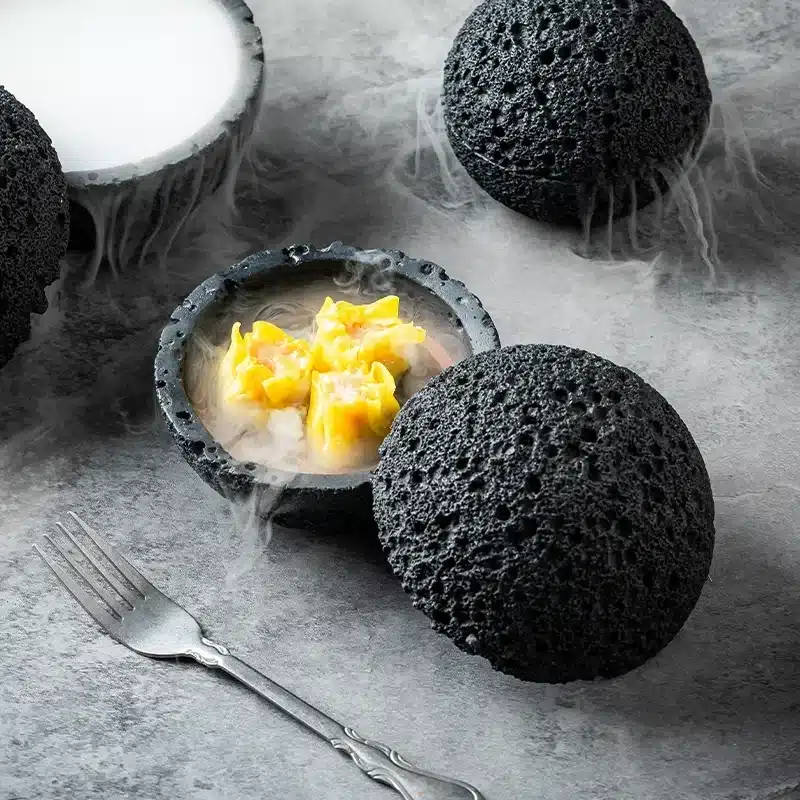
Planet Bowl Molecular Cuisine Creativity Imitation Volcano Stone Ball Place Round Smoke Cup Black Tableware
For a unique presentation, consider the Planet Bowl Molecular Cuisine Creativity Imitation Volcano Stone Ball Place Round Smoke Cup Black Tableware, which adds a dramatic touch to your molecular gastronomy creations.
Frequently asked questions
What is the best molecular gastronomy kit for beginners?
A basic kit with sodium alginate, calcium lactate, agar-agar, and soy lecithin, plus a recipe booklet, is ideal. Look for one that includes clear instructions and simple recipes to build confidence.
Can I use a molecular gastronomy kit without prior experience?
Yes, many kits are designed for beginners. Start with techniques like spherification and foams, which are relatively easy. Follow the instructions carefully and practice to improve.
How long do ingredients in a molecular gastronomy kit last?
Sealed ingredients can last 1-2 years if stored properly in a cool, dry place. Once opened, use them within 6 months for best results. Check for clumping or discoloration before use.
What recipes can I make with a molecular gastronomy kit?
You can make balsamic vinegar pearls, fruit caviar, foams, gels, edible films, and more. Many kits include recipes for cocktails, desserts, and savory dishes.
