
Blog
The Ultimate Molecular Gastronomy Kit Buying Guide
Culinary Science
Find Your Perfect Molecular Gastronomy Kit
A molecular gastronomy kit can transform your kitchen into a lab of flavor and texture. Whether you’re a curious home cook or an aspiring chef, these tools unlock a world of culinary creativity.
What Is a Molecular Gastronomy Kit?
A molecular gastronomy kit typically includes essentials like sodium alginate, calcium lactate, lecithin, and sometimes a precision scale and syringes. These components allow you to perform techniques such as spherification, gelification, and emulsification. The science behind molecular gastronomy explores the physical and chemical transformations of ingredients, turning liquids into spheres or foams.
Key Components of a Good Kit
Look for kits that include at least the basics: sodium alginate, calcium chloride or lactate, soy lecithin, and agar-agar. Some advanced kits also feature xanthan gum, maltodextrin, and a syringe set. A decent molecular gastronomy kit should also come with a measuring spoon set and a recipe booklet to get you started.
- Spherification agents – sodium alginate and calcium salts for creating caviar-like pearls.
- Gelling agents – agar-agar or gelatin for firm gels.
- Emulsifiers – soy lecithin for stable foams and airs.
- Thickeners – xanthan gum for suspensions and thick sauces.
How to Choose Your Molecular Gastronomy Kit
Consider your skill level. Beginners should opt for a starter kit with pre-measured ingredients and clear instructions. More experienced cooks might prefer a kit with bulk ingredients and advanced tools like a vacuum sealer or a whipping siphon. Also, check the shelf life of the components—some have a limited lifespan.
Essential Tools Beyond the Kit
You’ll likely need a digital scale (accurate to 0.1g), a blender or immersion blender, and a set of fine-mesh strainers. A molecular gastronomy kit often omits these, so budget accordingly.
Top Techniques to Try First
Spherification is the most iconic technique: turn juice into pearls that burst in your mouth. Foams are also beginner-friendly—just add lecithin to a liquid and blend. Gels using agar-agar are great for making fruit caviar or firm jellies. A good molecular gastronomy kit will guide you through these.
- Basic spherification: liquid + sodium alginate, dropped into calcium bath.
- Reverse spherification: calcium-rich liquids dropped into alginate bath.
- Cold foams: use soy lecithin for stable, airy foams.
- Hot gels: agar-agar sets at room temperature.
Common Mistakes and How to Avoid Them
Using tap water with high mineral content can affect results—use distilled or filtered water. Over-blending can incorporate too much air, ruining texture. Always measure precisely; a molecular gastronomy kit’s success hinges on accuracy. If a recipe fails, troubleshoot by checking pH and temperature.
Storage and Shelf Life of Ingredients
Store hydrocolloids in a cool, dry place away from sunlight. Most have a shelf life of 1-2 years if unopened. Once opened, use within 6 months for best results. Some kits include ingredients that are less stable, so check the packaging. Proper storage ensures your molecular gastronomy kit lasts.
Elevate Your Presentation
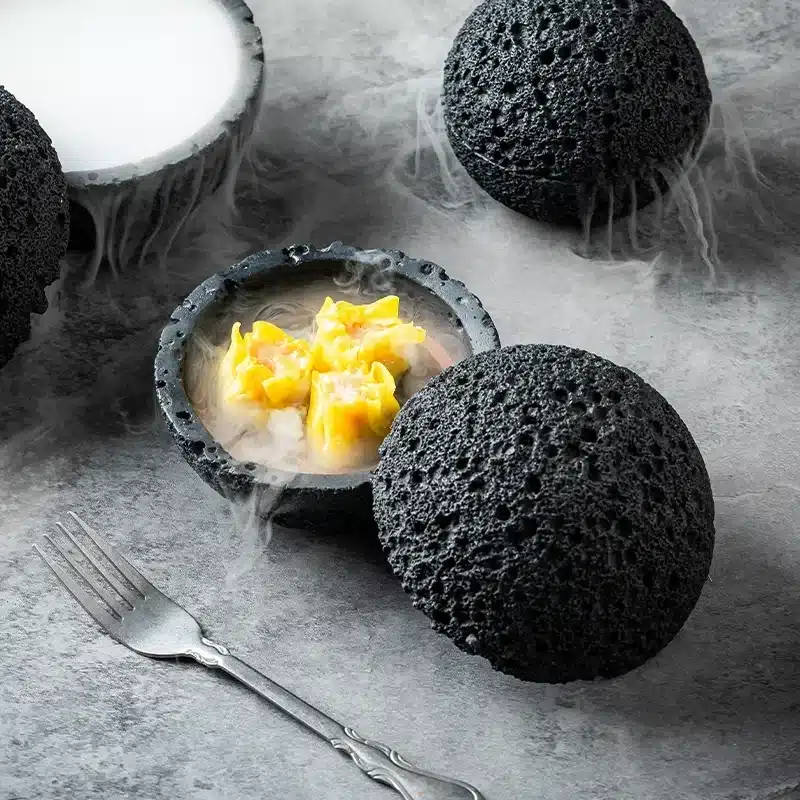
Plating matters. Use unique serving pieces to complement your creations. For instance, the Planet Bowl Molecular Cuisine Creativity Imitation Volcano Stone Ball Place Round Smoke Cup Black Tableware adds a dramatic, stone-like touch that enhances the visual appeal of your molecular gastronomy dishes.
Planet Bowl Molecular Cuisine Creativity Imitation Volcano Stone Ball Place Round Smoke Cup Black Tableware
For an artistic presentation, consider the Planet Bowl Molecular Cuisine Creativity Imitation Volcano Stone Ball Place Round Smoke Cup Black Tableware, which complements your molecular gastronomy creations with a dramatic, stone-like aesthetic.
Frequently asked questions
What is the best molecular gastronomy kit for beginners?
Look for a kit that includes pre-measured ingredients, a recipe booklet, and basic tools like syringes and spoons. Starter kits from reputable brands are ideal.
Can I use a molecular gastronomy kit for vegan cooking?
Yes, many hydrocolloids like agar-agar and soy lecithin are plant-based. Check the kit’s ingredients to ensure they align with vegan preferences.
How long do the ingredients in a molecular gastronomy kit last?
Unopened, most can last 1-2 years. Once opened, use within 6 months. Store in a cool, dry place for maximum shelf life.
Do I need any additional equipment beyond the kit?
A digital scale accurate to 0.1g, an immersion blender, and fine-mesh strainers are highly recommended. Some kits may include these, but not always.
