
Blog
The Ultimate Molecular Gastronomy Kit Buying Guide
Culinary Science
Find Your Perfect Molecular Gastronomy Kit
A molecular gastronomy kit opens up a world of culinary creativity, allowing you to transform familiar ingredients into stunning textures and forms. Whether you’re a home cook or a professional, the right kit can make all the difference.
What Is a Molecular Gastronomy Kit?
A molecular gastronomy kit typically includes tools and ingredients for techniques like spherification, gelification, and foaming. These kits allow you to create caviar-like spheres, airy foams, and solid gels from liquids, turning everyday dishes into artistic presentations. The science behind these transformations is fascinating—for instance, spherification relies on sodium alginate reacting with calcium ions to form a thin gel membrane around a liquid center.
When you invest in a molecular gastronomy kit, you’re not just buying gadgets; you’re gaining access to a new dimension of cooking. The best kits include clear instructions, high-quality ingredients, and versatile tools that can be used repeatedly. Some kits focus on specific techniques, while others offer a broad range of possibilities.
If you’re curious about the science, this Wikipedia article provides an excellent overview of molecular gastronomy’s principles and history.
Key Components of a Molecular Gastronomy Kit
A comprehensive molecular gastronomy kit should include several essential items. First, you’ll need spherification agents like sodium alginate and calcium lactate. These create the iconic caviar-like pearls that burst with flavor. Second, gelling agents such as agar-agar or gelatin allow you to make firm gels from liquids, perfect for creating edible sheets or cubes. Third, emulsifiers like soy lecithin help stabilize foams and airs, giving dishes a light, ethereal texture.
Beyond ingredients, the kit should contain precision tools: measuring spoons, syringes, and pipettes for accurate dosing. A digital scale is crucial because molecular gastronomy relies on exact ratios. Some kits also include molds, silicone mats, or a whipping siphon for carbonation and foams. The best kits are those that combine quality ingredients with reusable tools, offering good value over time.
Spherification Kits vs. General Kits
Some molecular gastronomy kits specialize in spherification, while others are more general. A spherification-focused kit will include sodium alginate and calcium lactate, plus a syringe and perhaps a small strainer. General kits cover multiple techniques and are better for beginners who want to experiment.
How to Choose the Right Molecular Gastronomy Kit
Selecting a molecular gastronomy kit depends on your skill level and culinary goals. Beginners should look for kits with pre-measured ingredients and detailed, illustrated guides. These take the guesswork out of the process and help you achieve consistent results. Intermediate and advanced cooks may prefer kits with bulk ingredients and professional-grade tools like a digital scale and a whipping siphon.
Consider the quality of ingredients—pure, food-grade materials are non-negotiable. Also, check the variety of recipes included. A good kit will offer at least a dozen recipes, from simple fruit caviar to complex savory gels. Finally, think about value: a kit with reusable tools may cost more upfront but saves money in the long run.
Many enthusiasts start with a basic molecular gastronomy kit and later expand their collection. This approach allows you to master core techniques before investing in specialized equipment.
Techniques You Can Master with a Molecular Gastronomy Kit
With a molecular gastronomy kit, you can explore several transformative techniques. Spherification creates liquid-filled spheres that pop in your mouth—perfect for cocktails or dessert toppings. Gelification turns liquids into solid gels, enabling you to create edible sheets, cubes, or even noodles. Foaming produces stable, airy foams that add texture and flavor to dishes.
Other techniques include emulsification (making stable sauces), powdering (creating powders from liquids using maltodextrin), and carbonation (infusing liquids with CO2 for fizzy effects). A good kit will cover at least three of these techniques, giving you a solid foundation.
Tips for Success
- Always weigh ingredients precisely—molecular gastronomy is a science.
- Use fresh, high-quality liquids for the best flavor.
- Practice patience: some techniques require precise timing and temperature.
- Clean tools immediately after use to prevent residue buildup.
Common Mistakes to Avoid
Even with a molecular gastronomy kit, beginners often make a few common errors. One is using tap water—minerals in tap water can interfere with gel formation. Always use distilled or filtered water. Another mistake is overmixing or undermixing ingredients; follow the kit’s instructions for mixing times. Also, temperature control is critical—some gels set at room temperature, while others require refrigeration.
Don’t be discouraged if your first attempts aren’t perfect. Molecular gastronomy has a learning curve, but each experiment teaches you something new. Keep a notebook to record your ratios and results.
Creative Ideas for Your Molecular Gastronomy Kit
Once you’re comfortable with the basics, the possibilities are endless. Use your molecular gastronomy kit to create cocktail caviar—little spheres of flavored alcohol that burst in the mouth. Make fruit leathers or gel cubes for elegant desserts. Whip up savory foams to top soups or main courses. Even simple dishes like yogurt spheres or balsamic pearls can impress guests.
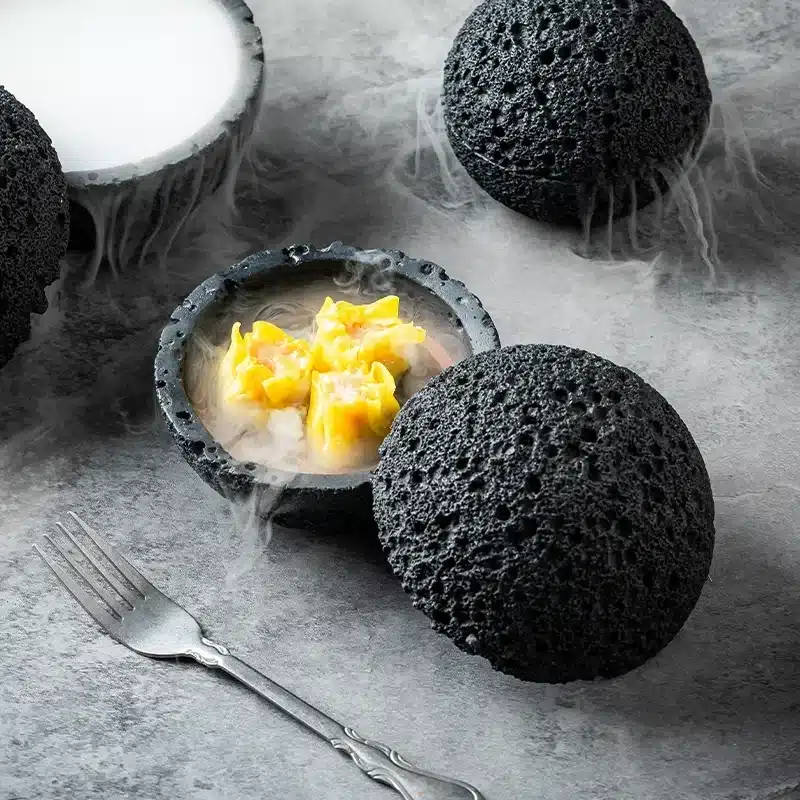
For a dramatic presentation, consider serving your creations on unique tableware. The Planet Bowl Molecular Cuisine Creativity Imitation Volcano Stone Ball Place Round Smoke Cup Black Tableware adds an earthy, volcanic aesthetic that complements the futuristic look of molecular dishes. Its dark, stone-like finish provides a striking contrast to colorful spheres and foams.
Maintaining Your Molecular Gastronomy Kit
To get the most out of your molecular gastronomy kit, proper maintenance is key. Store ingredients in a cool, dry place—some, like sodium alginate, are hygroscopic and must be kept sealed. Clean all tools with warm, soapy water and dry them thoroughly. Syringes and pipettes can be cleaned with a small brush. If your kit includes a whipping siphon, follow the manufacturer’s instructions for cleaning and storage.
Check the expiration dates on ingredients, especially if you don’t use them frequently. Fresh ingredients yield the best results. With care, a molecular gastronomy kit can last for years, providing endless culinary adventures.
Planet Bowl Molecular Cuisine Creativity Imitation Volcano Stone Ball Place Round Smoke Cup Black Tableware
For a dramatic presentation, consider the Planet Bowl Molecular Cuisine Creativity Imitation Volcano Stone Ball Place Round Smoke Cup Black Tableware, which adds an earthy, volcanic aesthetic to your molecular creations.
Frequently asked questions
What is included in a typical molecular gastronomy kit?
A typical kit includes gelling agents like agar-agar, spherification agents (sodium alginate and calcium lactate), emulsifiers such as soy lecithin, and tools like syringes, pipettes, and measuring spoons. Some kits also include a digital scale and recipe book.
Can I use a molecular gastronomy kit as a beginner?
Yes, many kits are designed for beginners and include pre-measured ingredients and step-by-step instructions. Start with simple techniques like spherification before moving to more advanced methods.
How do I clean and store my molecular gastronomy tools?
Wash tools with warm soapy water and dry thoroughly. Store ingredients in a cool, dry place, away from moisture. Syringes and pipettes can be cleaned with a small brush.
What are the most common techniques in molecular gastronomy?
The most common techniques include spherification (making liquid spheres), gelification (turning liquids into gels), foaming (creating stable foams), and emulsification (making stable sauces).
