
Blog
The Ultimate Guide to Choosing a Paella Pan
Buying Guide
Find Your Perfect Paella Pan Today
Choosing the right paella pan is essential for achieving that authentic Spanish flavor at home. Whether you’re a seasoned chef or a curious home cook, this guide will help you find the perfect pan for your needs.
Why the Right Paella Pan Matters
A paella pan is more than just a cooking vessel; it’s the heart of the dish. The wide, shallow design allows rice to cook evenly and develop the coveted socarrat—the crispy bottom layer that paella lovers crave. Using the wrong pan can lead to uneven cooking or burnt rice. That’s why selecting the right one is crucial for success.
Materials: Carbon Steel vs. Stainless Steel vs. Enameled
Each material offers distinct advantages. Carbon steel is traditional and heats quickly, but requires seasoning to prevent rust. Stainless steel is durable, non-reactive, and easy to maintain—ideal for beginners. Enameled pans are colorful and rust-proof, but can be heavy and less responsive to heat changes. For most home cooks, stainless steel provides the best balance of performance and care.
Carbon Steel Paella Pans
These are the classic choice in Spain. They’re lightweight and heat up fast, which is perfect for achieving that high heat needed for socarrat. However, they need to be seasoned like a cast iron skillet and can rust if not dried properly.
Stainless Steel Paella Pans
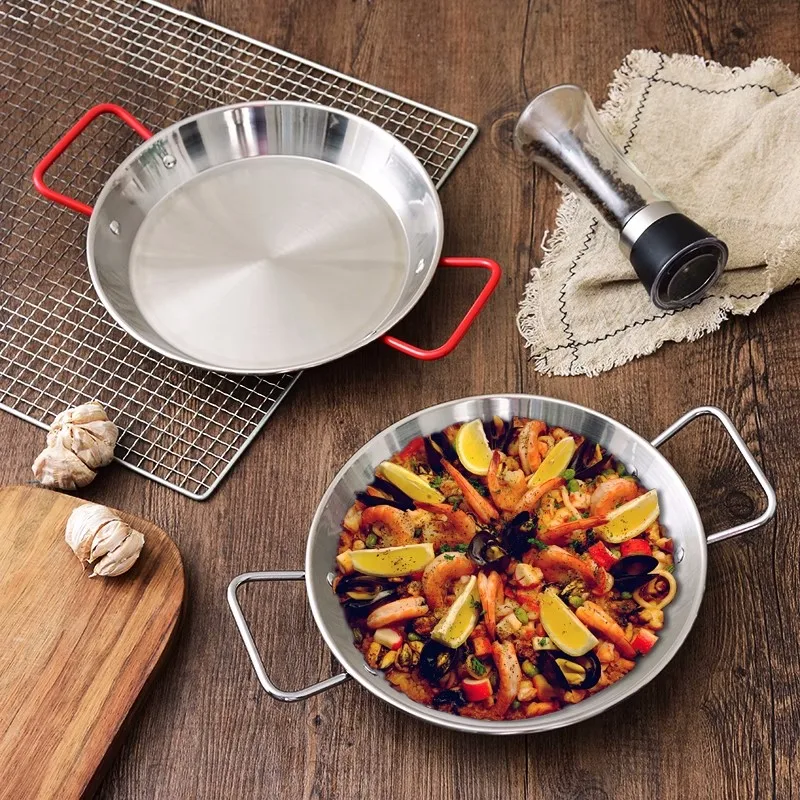
Stainless steel is a fantastic alternative. It won’t react with acidic ingredients like tomatoes or lemon, and it’s dishwasher safe. A quality stainless steel pan with an aluminum or copper core ensures even heat distribution. Our Spanish seafood rice Pot thickened stainless steel Cooking Paella Pan is a great example—it’s built to last and perfect for both stovetop and oven use.
Size and Depth: Finding the Right Fit
Paella pans come in diameters from 10 to 24 inches. For 2-4 people, a 12-inch pan works well. For larger gatherings, go with 16 inches or more. Depth also matters: traditional pans are shallow (about 2 inches), which helps rice cook flat. Deeper pans (3-4 inches) are better for dishes with more liquid, like arroz caldoso. Choose based on your typical serving size and recipe.
Handles: Ease of Use and Safety
Look for sturdy, heat-resistant handles. Many traditional pans have two loop handles (double ears) that make it easy to lift even when hot. Some modern designs feature long handles for better grip. Ensure the handles are securely riveted or welded for safety.
Cooking Tips for Your Paella Pan
- Always preheat the pan over medium heat before adding oil.
- Use a wide spatula to stir the rice gently without breaking the grains.
- Let the paella rest for 5 minutes after cooking to set the socarrat.
- Never soak a carbon steel pan; wipe clean and dry immediately.
For more on paella history and techniques, check out Wikipedia’s paella article.
Care and Maintenance
Carbon steel pans need to be seasoned and hand-washed. Stainless steel pans are more forgiving—most are dishwasher safe, but hand washing extends their life. Avoid metal utensils on non-stick surfaces. Store in a dry place to prevent rust or corrosion.
Spanish seafood rice Pot thickened stainless steel Cooking Paella Pan Lobster Snack Plates Saucepan Dry Pots Double Ears HotPot
For a reliable, versatile option, consider the Spanish seafood rice Pot thickened stainless steel Cooking Paella Pan—it offers excellent heat distribution and easy cleanup.
Frequently asked questions
What size paella pan should I buy for 4 people?
For 4 people, a 12-inch (30 cm) diameter pan is ideal. It provides enough surface area for the rice to spread evenly without overcrowding.
Can I use a paella pan on an induction cooktop?
Yes, but only if the pan is made of magnetic material like stainless steel or carbon steel. Some aluminum pans are not induction-compatible.
How do I season a carbon steel paella pan?
Wash and dry the pan, then heat it with a thin layer of oil until it smokes. Let it cool, then wipe off excess. Repeat 2-3 times for a non-stick surface.
What is socarrat and how do I achieve it?
Socarrat is the crispy, caramelized rice layer at the bottom of paella. To achieve it, increase heat to high during the last few minutes of cooking until you hear a crackling sound, then remove from heat.
