
Blog
The Ultimate Pots and Pans Set Buying Guide
Kitchen Essentials
How to Choose the Perfect Pots and Pans Set
A great pots and pans set is the backbone of any kitchen. Whether you’re a seasoned home cook or just starting out, finding the right cookware can transform your cooking experience.
Why Your Pots and Pans Set Matters
Your cookware is more than just a tool; it’s an investment in your daily meals. A quality pots and pans set ensures even heat distribution, prevents food from sticking, and lasts for years. Think about how often you cook—each meal is an opportunity to enjoy the process with reliable equipment.
Key Materials in Pots and Pans Sets
Cookware comes in various materials, each with pros and cons. Stainless steel is durable and non-reactive, ideal for browning and deglazing. Nonstick pans are perfect for low-fat cooking and delicate foods like eggs. Cast iron retains heat beautifully for slow cooking. Aluminum is lightweight and heats quickly, often used in clad cookware. Learn more about cookware materials on Wikipedia.
Nonstick Cookware
Nonstick coatings, like PTFE or ceramic, make cleanup a breeze. They require gentle care—avoid metal utensils and high heat. A good nonstick set is a game-changer for everyday cooking.
Stainless Steel
Stainless steel is prized for its durability and ability to develop fond for sauces. It’s oven-safe and dishwasher-friendly, though it requires a bit of oil to prevent sticking.
What to Look for in a Pots and Pans Set
When shopping for a pots and pans set, consider the pieces included. A basic set might have a skillet, saucepan, and stockpot. More comprehensive sets add a sauté pan, Dutch oven, or steamer. Think about your cooking habits: do you stir-fry often? Bake? Choose accordingly.
Handle Design and Lid Fit
Ergonomic handles reduce fatigue, and tight-fitting lids lock in moisture. Look for riveted handles that stay cool on the stovetop. Glass lids let you monitor cooking without lifting the lid.
Oven and Stovetop Compatibility
Check if the cookware is oven-safe and compatible with your stovetop—induction requires magnetic bottoms. Most sets work on gas, electric, and ceramic, but induction compatibility varies.
Size and Weight Considerations
Heavy pans provide stability but can be hard to maneuver. Lightweight aluminum is easier to handle but may warp. A medium-weight stainless steel or clad set offers a good balance. Sizes matter: an 8-inch skillet for eggs, a 10-inch for pancakes, and a 12-inch for family meals.
Caring for Your Pots and Pans Set
Proper maintenance extends the life of your cookware. Hand wash nonstick pans with a soft sponge; avoid abrasive cleaners. Season cast iron after each use. Dry stainless steel immediately to prevent water spots. Store with protectors between pans to avoid scratches.
Budget and Value
You don’t need to spend a fortune for a good pots and pans set. Mid-range options often offer the best value: good materials, solid construction, and reasonable price. Look for sets with lifetime warranties. Remember, a set you use daily is worth the investment.
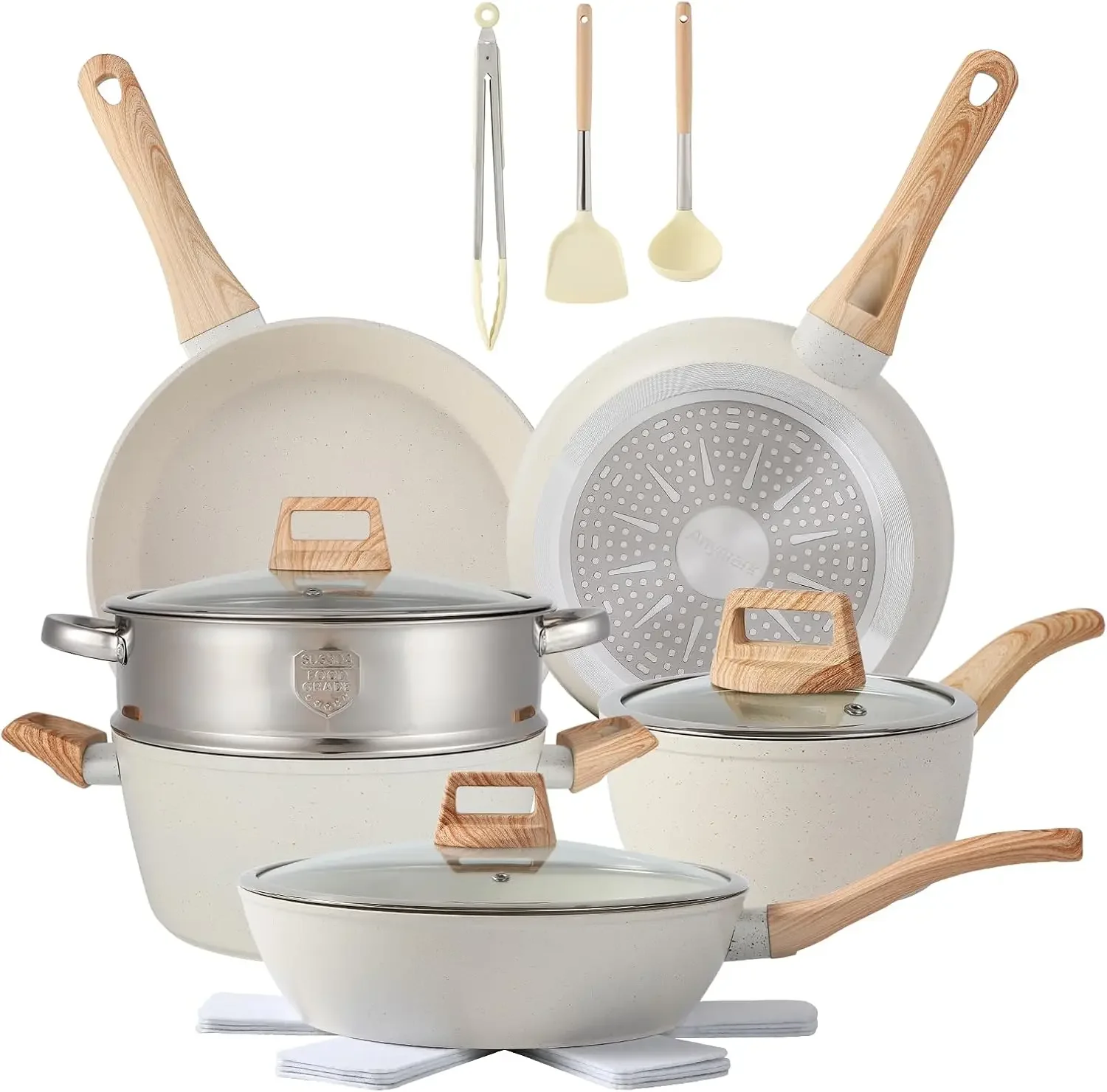
16PCS Pots and Pans Set Non Stick Cookware Set Nonstick with Cooking Set
If you’re looking for a versatile starter set, our 16-piece nonstick option covers all the bases with a sleek design and easy cleanup.
Frequently asked questions
What is the best material for a pots and pans set?
The best material depends on your cooking style. Nonstick is great for low-fat cooking and easy cleanup, while stainless steel offers durability and versatility. Cast iron excels at heat retention, and aluminum heats quickly. Many sets combine materials for balanced performance.
How many pieces should a pots and pans set have?
A typical set includes 8-12 pieces, covering the essentials: a skillet, saucepan, and stockpot. Larger sets add more skillets, a sauté pan, and lids. Consider your kitchen space and cooking needs; a smaller set may suffice for beginners.
Can I use metal utensils on nonstick cookware?
It’s best to avoid metal utensils on nonstick surfaces to prevent scratching. Use silicone, wood, or plastic utensils instead. Even with gentle care, nonstick coatings wear over time, so replace pans when they start to peel.
How do I clean a stainless steel pots and pans set?
Soak stainless steel pans in warm soapy water, then scrub with a non-abrasive sponge. For stubborn stains, use a stainless steel cleaner or a paste of baking soda and water. Avoid steel wool to prevent scratches. Dry immediately to avoid water spots.
