
Blog
Reactive Glaze Dinnerware: A Complete Buying Guide
Buying Guide
Your Guide to Reactive Glaze Dinnerware
Reactive glaze dinnerware offers a unique, handcrafted look that adds character to any table. In this guide, we’ll help you understand the process and choose the best set for your needs.
What Is Reactive Glaze Dinnerware?
Reactive glaze dinnerware is created through a chemical reaction during firing, resulting in one-of-a-kind patterns and colors. Unlike solid glazes, reactive glazes flow and interact, producing variegated surfaces that mimic natural stone or organic textures. This technique adds depth and movement to each piece, making every plate or bowl unique.
Why Choose Reactive Glaze for Your Table?
The appeal of reactive glaze dinnerware lies in its organic beauty. No two pieces are exactly alike, which brings an artisan feel to everyday meals. The subtle variations in color—from deep blues to earthy greens—complement both rustic and modern table settings. Plus, the glaze is durable and food-safe when properly fired.
Key Features to Look For
- Material: Most reactive glaze dinnerware is made from stoneware or porcelain. Stoneware is heavier and more chip-resistant, while porcelain offers a finer, more delicate feel.
- Glaze Quality: Look for a smooth, even finish without bare spots. High-quality reactive glazes should be free of pinholes or cracks.
- Dishwasher & Microwave Safety: Many sets are dishwasher and microwave safe, but always check the manufacturer’s instructions. Avoid abrasive cleaners to preserve the glaze.
- Design: Consider the shape and size. Nordic-inspired shapes with clean lines are popular, as are organic, hand-thrown forms.
Caring for Your Reactive Glaze Dinnerware
To keep your reactive glaze dinnerware looking its best, hand washing is recommended. If you use a dishwasher, choose a gentle cycle and avoid high heat. Stack plates with soft liners between them to prevent scratching. Avoid sudden temperature changes, as they can cause cracking.
Storage Tips
Store cups and bowls separately, and use felt pads on shelves to protect the glaze. With proper care, these pieces can last for years.
How to Style Reactive Glaze Dinnerware
Reactive glaze dinnerware works beautifully with neutral linens and natural materials like wood or bamboo. For a modern look, pair it with matte black cutlery and simple glassware. The varied colors also allow for mix-and-match settings—combine different reactive glaze pieces for an eclectic table. Learn more about ceramic glazes on Wikipedia.
Choosing the Right Set Size
Dinnerware sets typically range from 16 to 20 pieces, serving 4 people. Consider how often you entertain. A 20-piece set includes dinner plates, salad plates, bowls, and mugs—enough for everyday use and small gatherings. If you host larger parties, you may want to buy extra pieces.
Budget Considerations
Prices vary widely based on brand, material, and craftsmanship. Entry-level sets start around $50, while artisan pieces can exceed $200. Reactive glaze dinnerware offers good value for its uniqueness—you’re paying for the artistic process. Set a budget that aligns with how often you’ll use the set.
Common Myths About Reactive Glaze
- Myth: Reactive glaze is not food-safe. Fact: When properly fired, it is safe for food contact.
- Myth: The colors will fade over time. Fact: Reactive glazes are permanent; colors won’t fade with normal use.
- Myth: All reactive glaze dinnerware is handmade. Fact: Many sets are machine-made but finished with reactive glazes to mimic handmade looks.
Remember, reactive glaze dinnerware is about embracing imperfection and celebrating the natural variation that makes each piece special.
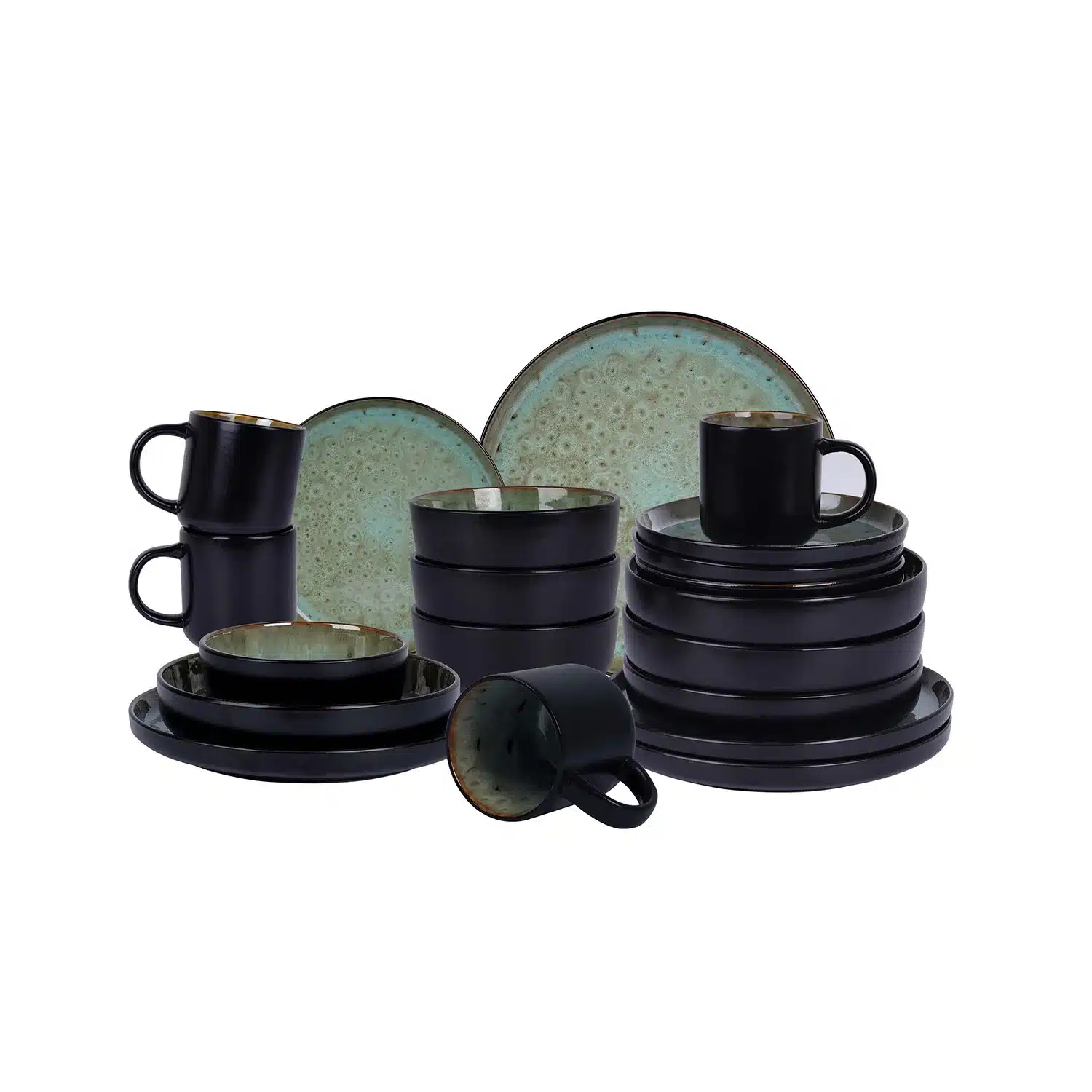
Super September Hot Selling 20 Pcs Reactive Glaze Bubble Green Ceramic Dinnerware Sets Stoneware Nordic Shape Dinner Set
For a stunning example, consider the Super September Hot Selling 20 Pcs Reactive Glaze Bubble Green Ceramic Dinnerware Sets Stoneware Nordic Shape Dinner Set, which offers a beautiful green hue and durable stoneware construction.
Frequently asked questions
Is reactive glaze dinnerware safe for everyday use?
Yes, reactive glaze dinnerware is safe for everyday use when properly fired. Most sets are food-safe, dishwasher-safe, and microwave-safe, but always check the manufacturer’s guidelines.
How do I clean reactive glaze dinnerware?
Hand washing with mild soap is recommended to preserve the glaze. Avoid abrasive sponges and harsh detergents. If using a dishwasher, choose a gentle cycle and dry on low heat.
Can I mix different reactive glaze sets?
Absolutely! Mixing different reactive glaze pieces creates an eclectic, personalized table setting. The varying colors and patterns complement each other beautifully.
What is the difference between reactive glaze and regular glaze?
Reactive glaze undergoes a chemical reaction during firing, creating unique patterns and color variations. Regular glaze produces a uniform, solid color without such variations.
