
Blog
Ultimate Guide to Choosing a Stainless Steel Food Tray
Kitchen Essentials
Find Your Perfect Stainless Steel Food Tray
A stainless steel food tray is a kitchen workhorse, offering durability, easy cleaning, and versatility for baking, serving, and storage. Whether you’re a home cook or a professional chef, choosing the right tray can elevate your culinary experience.
Why Choose a Stainless Steel Food Tray?
Stainless steel is prized for its strength, corrosion resistance, and non-reactive surface, making it ideal for food contact. Unlike aluminum, it won’t warp at high temperatures or react with acidic ingredients. A high-quality stainless steel food tray can last for decades with proper care.
Key Features to Look For
When shopping for a stainless steel food tray, consider gauge (thickness), rim design, and finish. Thicker gauges (18/10 or 304 stainless) provide better heat distribution and durability. Rolled rims add rigidity, while a brushed finish hides scratches better than mirror polish. Some trays come with nonstick coatings, but plain stainless steel is more versatile and eco-friendly.
Gauge Matters
A lower gauge number means thicker steel. For example, 18-gauge is thicker than 20-gauge. Thicker trays resist warping and conduct heat evenly, essential for baking.
Rim Styles
Rolled rims are reinforced and less likely to bend. Some trays have flat rims for easy stacking. Choose based on your storage needs.
Common Uses for a Stainless Steel Food Tray
- Baking cookies, pastries, and bread
- Roasting vegetables and meats
- Serving appetizers or meals
- Organizing kitchen tools or ingredients
- As a drip tray under plants or pet bowls
From oven to table, a stainless steel food tray transitions seamlessly, reducing dishwashing.
Size and Shape Considerations
Standard half-sheet pans (18×13 inches) fit most home ovens. Quarter-sheet pans are great for smaller batches. Consider depth: shallow trays are best for baking, while deeper ones can hold liquids for roasting. For storage, nesting trays save space.
Safety and Maintenance Tips
Stainless steel is dishwasher-safe, but hand washing preserves the finish. Avoid using abrasive cleaners that can scratch. To remove stubborn stains, soak with baking soda paste. Never use bleach or harsh chemicals. For more on stainless steel care, see Wikipedia’s guide on stainless steel maintenance.
Comparing Materials: Stainless vs. Nonstick vs. Aluminum
Nonstick trays are convenient for delicate foods but can scratch and degrade over time. Aluminum heats quickly but can warp and react with acidic foods. A stainless steel food tray offers the best balance of durability, safety, and performance. It’s also recyclable, making it an eco-friendly choice.
How to Choose the Right Tray for Your Needs
Assess your cooking habits: If you bake often, invest in a heavy-gauge half-sheet pan. For serving, consider a tray with handles for easy transport. For storage, opt for a set of nesting trays. Remember, a versatile stainless steel food tray can replace multiple single-use pans.
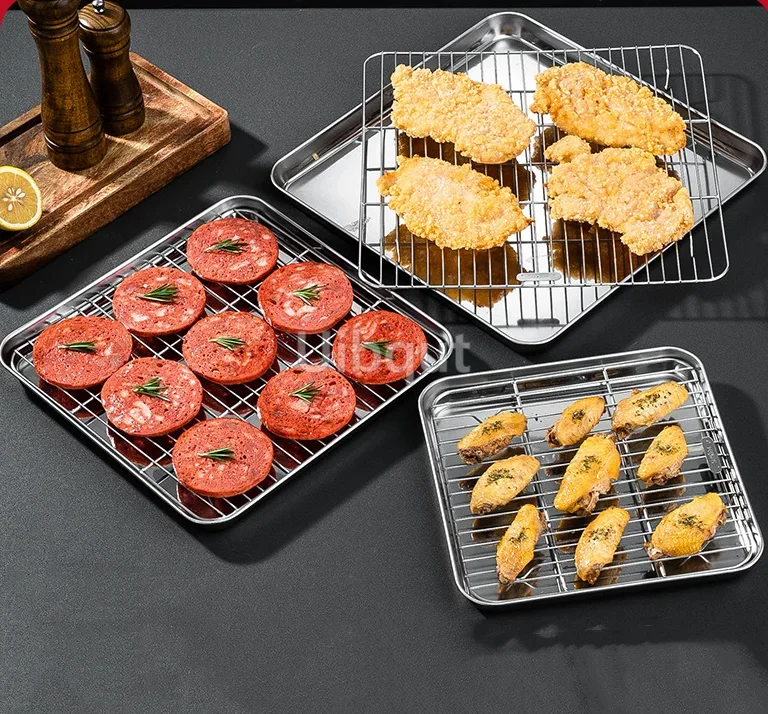
Golden Square Stainless Steel Food Service Tray plate set Nonstick Bakeware Fruit Cookie Bread Plate Kitchen Storage Container
For a reliable everyday option, consider the Golden Square Stainless Steel Food Service Tray plate set, which combines nonstick bakeware convenience with the durability of stainless steel for baking, serving, and storage.
Frequently asked questions
Can I use a stainless steel food tray in the oven?
Yes, most stainless steel food trays are oven-safe up to 500°F (260°C). Check the manufacturer’s specifications, especially for handles or nonstick coatings.
Is stainless steel food tray dishwasher safe?
Generally yes, but hand washing is recommended to maintain the shine and prevent water spots. If using a dishwasher, place the tray securely to avoid banging against other items.
Does stainless steel react with acidic foods?
High-quality stainless steel (like 304 or 18/10) is non-reactive and safe for acidic foods like tomato sauce or lemon juice. Lower grades may leach trace metals, so choose food-grade stainless steel.
How do I remove baked-on stains from my stainless steel food tray?
Sprinkle baking soda over the stain, add a little water to make a paste, let it sit for 15 minutes, then scrub gently with a non-abrasive sponge. For tough stains, simmer with vinegar and water.
