
Blog
The Best Kitchen Knives: A Buyer’s Guide to Sharp Choices
Knife Guide
Best Kitchen Knives for Every Home Cook
Finding the best kitchen knives can transform your cooking experience. Whether you’re a beginner or a seasoned chef, the right blade makes all the difference.
Why a Good Knife Matters
A quality knife is the cornerstone of any kitchen. It makes prep faster, safer, and more enjoyable. Dull knives require more force, increasing the risk of slips and accidents. A sharp, well-balanced knife glides through ingredients, preserving their texture and your fingers. Investing in the best kitchen knives means fewer frustrations and better results, from perfectly diced onions to thinly sliced proteins.
Types of Kitchen Knives You Need
While a block may hold many knives, most home cooks only need a few essential types. Here are the key ones:
- Chef’s Knife (8-10 inches): The workhorse for chopping, slicing, and dicing. Its curved blade allows a rocking motion.
- Paring Knife (3-4 inches): For intricate tasks like peeling, trimming, and coring.
- Bread Knife (8-10 inches): Serrated edge saws through crusty bread and soft tomatoes without crushing.
- Utility Knife (5-7 inches): A middle ground for smaller cutting tasks.
- Santoku Knife (5-7 inches): Japanese-style with a sheepsfoot blade, great for slicing and mincing.
Consider your cooking habits. If you cook a lot of meat, a carving knife or boning knife might be useful. For fish, a flexible fillet knife is handy.
Knife Steel: What to Look For
The steel determines sharpness, edge retention, and ease of sharpening. Common options include:
- High-Carbon Stainless Steel: Balanced durability and rust resistance. Holds a good edge and is easy to maintain.
- Carbon Steel: Extremely sharp but prone to rust; needs immediate drying and oiling.
- Ceramic: Lightweight and stays sharp long, but brittle and hard to sharpen.
- Damascus: Layers of steel create a beautiful pattern and good performance, but often pricier.
For most home cooks, high-carbon stainless steel is the best kitchen knives choice for its blend of performance and low maintenance.
Handle and Ergonomics
A comfortable, secure grip prevents fatigue and accidents. Handle materials include:
- Wood: Classic and warm, but requires care (hand wash, oil).
- Plastic or Polypropylene: Durable and dishwasher-safe (though hand washing is better).
- Metal: Sleek but can be slippery when wet. Often textured.
- Composite (Micarta, G10): Dense, stable, and grippy, common in high-end knives.
Choose a handle that fits your hand size and feels balanced. A full tang (steel extending through the handle) adds weight and stability.
Knife Construction: Forged vs. Stamped
Forged knives are made from a single piece of heated steel, hammered into shape. They tend to be heavier, stronger, and have a bolster (thick junction between blade and handle). Stamped knives are cut from a sheet of steel, then heat-treated. They are lighter, thinner, and more affordable. For everyday home use, a good stamped knife can perform excellently, but forged knives often offer better balance and durability.
How to Care for Your Knives
Proper care extends the life of your best kitchen knives. Follow these tips:
- Hand wash with mild soap and dry immediately. Dishwashers cause rust and dull blades.
- Use a wooden or plastic cutting board; glass or stone boards damage edges.
- Hone regularly with a honing rod to realign the edge between sharpenings.
- Sharpen when needed using a whetstone or professional service. Pull-through sharpeners remove too much metal.
- Store safely in a knife block, magnetic strip, or blade guards to protect both the knife and your hands.
Choosing the Right Knife Set
A set can be a convenient way to equip your kitchen. Look for one that includes the essential knives you’ll actually use. Avoid sets with many specialized knives that may sit unused. Quality over quantity: check the steel, handle, and balance. A good set should feel comfortable in your hand and perform well on typical tasks. If you’re starting out, a 3-5 piece set with a chef’s, paring, and serrated knife is ideal.
What to Avoid
Steer clear of knives with hollow handles, as they can break. Avoid sets that include a sharpening steel but no honing rod (steels are for honing, not sharpening). Also, skip knife blocks that take up too much counter space unless you have room.
Why a Knife Block Matters
A good knife block keeps your blades organized and protected. It also adds a touch of style to your kitchen. Wood blocks are classic and durable, while acrylic or magnetic strips offer modern looks. Ensure the block fits your knife sizes and has slots that don’t dull the edges. Some blocks also include a sharpener or scissors slot for added convenience.
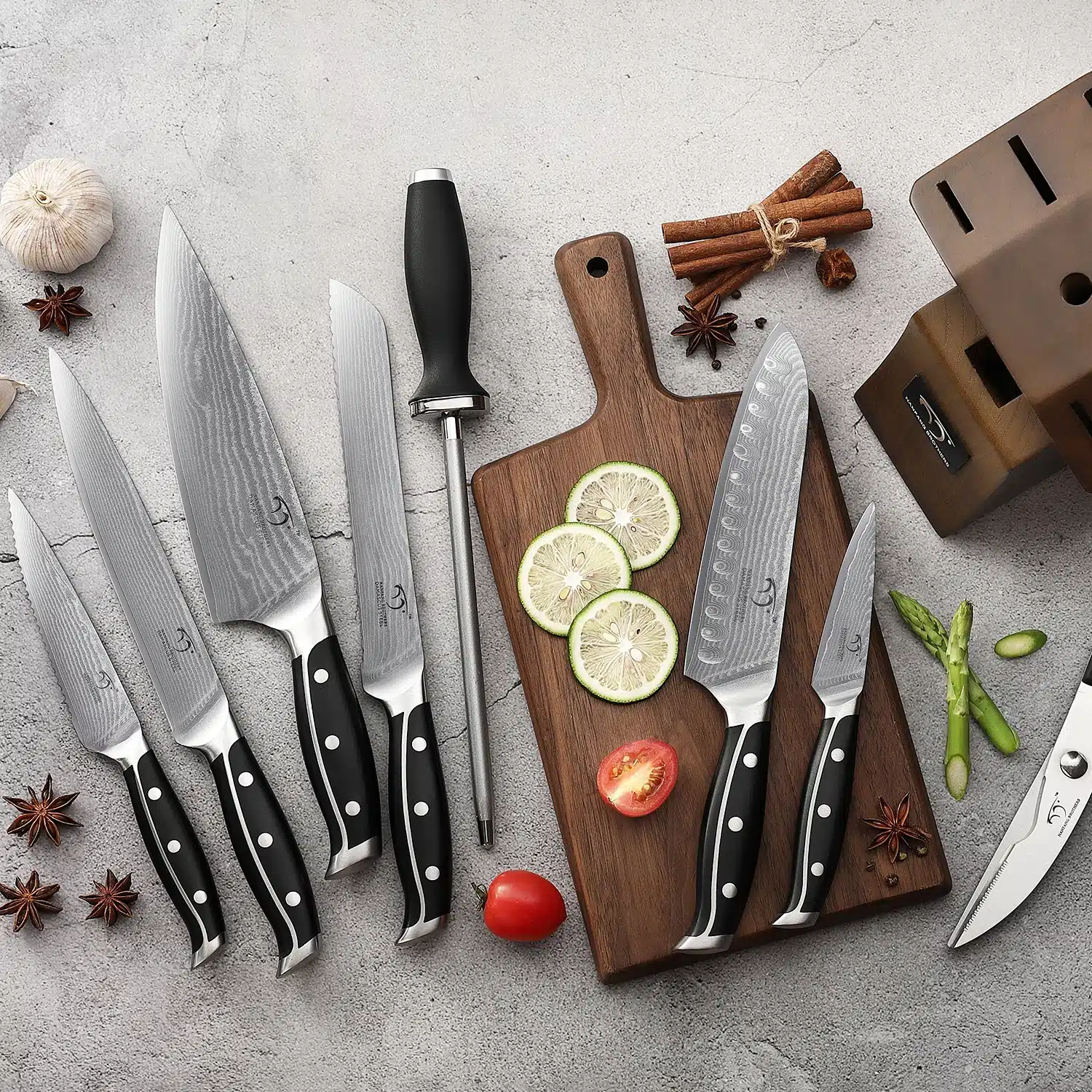
9 Pieces Luxury Set Wood Knife Holder Scissors Kitchen Knife Set for Cutting Food
For a complete starter set that balances quality and value, consider the 9 Pieces Luxury Set Wood Knife Holder Scissors Kitchen Knife Set for Cutting Food.
Frequently asked questions
What is the best type of steel for kitchen knives?
For most home cooks, high-carbon stainless steel offers the best balance of sharpness, edge retention, and rust resistance. It’s easy to maintain and performs well for daily use.
How often should I sharpen my kitchen knives?
It depends on usage. For regular home cooks, sharpening every 3-6 months is typical. Hone with a steel weekly to maintain the edge. If you notice difficulty cutting through a tomato, it’s time to sharpen.
Can I put kitchen knives in the dishwasher?
It’s not recommended. Dishwashers can dull blades, cause rust, and damage handles. Hand wash with mild soap and dry immediately to keep your knives in top condition.
What is the difference between a chef’s knife and a Santoku knife?
A chef’s knife has a curved blade for rocking motions, while a Santoku has a straighter edge with a sheepsfoot tip, ideal for push cuts. Santoku knives are often lighter and have a granton edge to reduce sticking.
