
Blog
The Ultimate TV Stand with Storage for a Clutter-Free Home
Buying Guide
Choose the Right TV Stand with Storage
A well-chosen tv stand with storage can transform your living space, hiding cables and housing devices while showcasing your TV. Here’s what to consider before you buy.
Why a TV Stand with Storage Is a Smart Choice
In today’s homes, the television is often the focal point of the living room. But without proper organization, the area around it can quickly become a mess of cables, remotes, gaming consoles, and streaming devices. A dedicated tv stand with storage offers a clean, integrated solution. It not only elevates your TV to an optimal viewing height but also provides compartments to keep everything tidy. Whether you have a small apartment or a spacious family room, this piece of furniture can reduce visual clutter and make your entertainment zone more functional.
Key Factors to Consider When Shopping for a TV Stand with Storage
Before you start browsing, think about your specific needs. The right tv stand with storage should fit your TV size, room dimensions, and daily habits. Here are the most important factors:
- TV Size and Weight Capacity: Always check the maximum screen size and weight rating. Most stands list compatible TV sizes (e.g., 32-45 inches). Ensure your TV falls within that range, and that the stand can support its weight, especially if you have a heavier older model.
- Storage Needs: Count your devices. Do you have a soundbar, game console, cable box, or media player? Look for open shelves, closed cabinets, or adjustable dividers. A mix of open and closed storage offers flexibility.
- Room Size and Layout: Measure your wall or corner space. The stand should be at least as wide as your TV, ideally a few inches wider for stability. Also consider depth: you need room for cables and ventilation behind the TV.
- Cable Management: Look for cutouts or channels at the back to route wires. Some stands include removable back panels for easy access. Proper cable management keeps the setup looking neat.
TV Stand Styles: Matching Your Decor
Your tv stand with storage should complement your existing furniture and aesthetic. Here are popular styles:
Mid-Century Modern
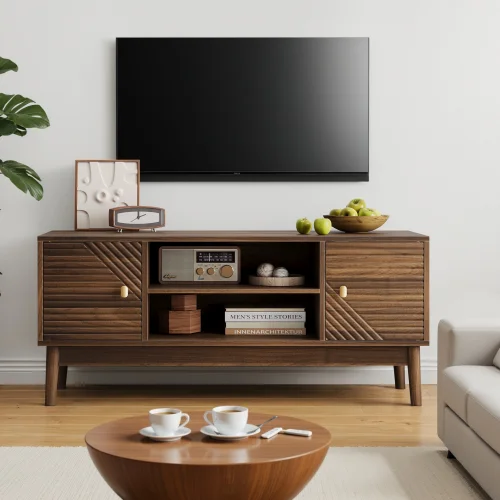
Characterized by clean lines, tapered legs, and warm wood tones, mid-century modern designs add a retro yet timeless feel. They often feature hairpin legs or angled wooden legs, and the storage is minimalist—maybe a couple of drawers or a shelf. This style works well in living rooms with a mix of vintage and contemporary pieces.
Industrial
Industrial stands combine metal frames with reclaimed wood or dark finishes. They often have exposed hardware, pipe shelves, and a rugged look. Storage tends to be open, with wire baskets or cubbies. Perfect for lofts or modern urban homes.
Traditional
Traditional units are more ornate, with wood carvings, raised panel doors, and darker stains like cherry or mahogany. They usually have multiple cabinets and drawers, offering ample concealed storage. Ideal for classic or formal living rooms.
Minimalist
Minimalist stands are sleek and simple, often in white, black, or light wood. They have clean surfaces, handle-less drawers, and focus on functionality. Great for small spaces or contemporary interiors.
Materials and Build Quality
The material of your tv stand with storage determines its durability, weight, and appearance. Common options include:
- Solid Wood: Strong, long-lasting, and can be refinished. Teak, oak, walnut, and pine are common. Solid wood is heavier and more expensive but offers a premium feel.
- Engineered Wood (MDF, Particleboard, Plywood): More affordable and lighter. MDF with a veneer can look like real wood. Check the quality of the finish and joints. Higher-density boards are more durable.
- Metal and Glass: Often used in modern designs. Metal frames provide strength, while glass shelves create an airy look. However, glass can show fingerprints and requires careful cleaning.
- Combination: Many stands use a mix, such as a wood frame with metal legs or a metal frame with wood shelves. This can offer the best of both worlds in terms of style and sturdiness.
Measuring and Fitting Your TV Stand
Proper measurement prevents frustration. Use a tape measure to determine:
- TV Width and Height: Even if the stand says it fits your TV size, measure the actual width of your TV. The stand should be at least as wide, and ideally wider, to distribute weight and look balanced.
- Stand Height: The ideal viewing height is eye level when seated. Typically, the center of the TV should be around 42 inches from the floor. Measure from the floor to the top of the stand and add the height of the TV base.
- Room Clearance: Leave at least 2-3 inches on each side of the TV for ventilation. Also ensure the stand doesn’t block doors or walkways.
- Wall Mount Option: Some stands are designed to be used with a wall-mounted TV, providing storage underneath. If you plan to mount, choose a stand that is low-profile and complements the floating TV.
Organizing Your Entertainment Area
A tv stand with storage is only effective if you use its compartments wisely. Here are tips for organization:
- Zone Your Devices: Put frequently used items like remotes and game controllers in open shelves or drawers. Less used items like DVD players or manuals can go in closed cabinets.
- Use Cable Management Tools: Cable ties, sleeves, and clips keep cords together and out of sight. Route cables through the stand’s designated openings.
- Add Baskets or Bins: If your stand has open cubbies, use woven baskets to hide small items while maintaining a cohesive look.
- Leave Space for Ventilation: Electronic devices generate heat. Ensure there’s airflow around components, especially gaming consoles and receivers.
For more on organizing media spaces, see this Wikipedia article on home theater setups.
Final Thoughts on Choosing Your TV Stand with Storage
Investing in a tv stand with storage is about more than just holding your TV—it’s about creating a harmonious and functional living space. By considering size, style, material, and your personal storage needs, you can find a stand that not only looks great but also simplifies your daily life. Take your time, measure carefully, and choose a piece that you’ll enjoy for years to come.
Goldoma 43.31 Inch Mid-Century Modern TV Stand for 32-45 Inch TVs with Storage
For a balanced option, consider the Goldoma 43.31 Inch Mid-Century Modern TV Stand for 32-45 Inch TVs with Storage, which combines clean design with practical compartments.
Frequently asked questions
What size TV stand do I need for a 55-inch TV?
For a 55-inch TV, look for a stand that is at least 50 inches wide, though 55-60 inches is ideal for stability. Ensure the stand’s weight capacity exceeds your TV’s weight.
Should I mount my TV or use a stand?
Using a stand offers flexibility if you move or rearrange furniture. Mounting saves floor space and provides a cleaner look. Both can work with a tv stand with storage underneath.
How do I hide cables from my TV stand?
Use cable management channels built into the stand, or add adhesive cable clips and raceways. Bundle cords with zip ties and route them through the stand’s back openings.
Is solid wood better than MDF for a TV stand?
Solid wood is more durable and can be refinished, but it’s heavier and pricier. MDF with a good veneer offers a similar look at a lower cost, but is less moisture-resistant.
