
Blog
The Ultimate Guide to Choosing a White Writing Desk
Buying Guide
Find Your Perfect White Writing Desk Today
A white writing desk can transform your workspace, offering a clean and inspiring surface for your daily tasks. In this guide, we’ll walk you through everything you need to consider to make the right choice.
Why Choose a White Writing Desk?
A white writing desk is more than just a piece of furniture; it’s a statement of clarity and focus. The color white has a unique ability to make a room feel more spacious and airy, which can be particularly beneficial in a home office or study area. It reflects light, brightening up even the darkest corners, and provides a neutral backdrop that allows your creativity to flourish. Whether you’re working on a novel, managing finances, or studying for exams, a white desk can help create an environment that promotes concentration and calm.
White also offers incredible versatility. It pairs well with virtually any color scheme, from bold and vibrant to soft and muted. You can easily change the look of your office by adding colorful accessories, plants, or artwork, and your white desk will always complement them. Moreover, white desks are timeless; they don’t go out of style, making them a wise long-term investment.
Styles of White Writing Desks
White writing desks come in a variety of styles to suit different tastes and interior designs. Here are some popular options:
- Modern Minimalist: Clean lines, simple shapes, and a clutter-free design characterize this style. Often made of metal or engineered wood, these desks focus on functionality and sleek aesthetics.
- Traditional Elegance: With ornate details, carved legs, and a classic silhouette, these desks add a touch of sophistication to any room. They are often made of solid wood with a white painted finish.
- Scandinavian: Combining functionality with natural elements, Scandinavian desks feature light wood accents and a clean white top. They emphasize simplicity and coziness.
- Industrial: These desks often combine metal frames with white wood or MDF tops, creating a rugged yet modern look. They are sturdy and durable, perfect for a loft or studio.
- Floating or Wall-Mounted: For small spaces, a floating white desk can be a space-saving solution. These are attached to the wall, freeing up floor space and creating a minimalist look.
When choosing a style, consider your existing decor and the atmosphere you want to create. A white writing desk can be the centerpiece of your office, so pick a style that reflects your personality and meets your practical needs.
Materials: Wood, Metal, and More
The material of your white writing desk affects its durability, appearance, and price. Here’s a breakdown of common materials:
- Solid Wood: Desks made from solid wood are sturdy and can last for decades. They often feature a white painted finish that can be repainted or refinished if needed. The natural grain may show through, adding warmth. However, solid wood can be heavy and more expensive.
- MDF (Medium-Density Fiberboard): This engineered wood product is smooth, uniform, and less expensive than solid wood. It takes paint well, making it a popular choice for white desks. MDF is resistant to warping, but it can be damaged by moisture, so use a coaster.
- Particleboard: Similar to MDF but with larger wood chips, particleboard is even more affordable but less durable. It’s often used in budget-friendly desks. Ensure it has a good laminate coating to protect it.
- Metal: Metal frames or legs provide excellent stability and a modern look. They are often paired with wood or MDF tops. Metal is durable and easy to clean, but it can be cold to the touch and may scratch.
- Glass: A white glass desk top can look very chic, but it’s prone to smudges and scratches. It’s also heavier and more fragile.
Consider your budget and how much wear and tear the desk will receive. If you plan to use it daily for heavy work, investing in a solid wood or high-quality MDF desk might be wise.
Size and Shape: Finding the Right Fit
The size and shape of your white writing desk should depend on your available space and how you intend to use it. Measure your room carefully, leaving enough space for a chair and movement. Here are some considerations:
- Length: A desk should be at least 30 inches wide for a comfortable workspace. If you have multiple monitors or spread out papers, consider a longer desk (60 inches or more).
- Depth: A depth of 24 inches is standard, but if you need more surface area for writing or crafts, look for 30 inches or more.
- Height: Standard desk height is around 29-30 inches. However, if you are taller or shorter, you may need an adjustable desk. Some desks offer adjustable legs to customize the height.
- Shape: Rectangular desks are the most common and versatile. L-shaped desks provide more surface area and can fit into corners, while U-shaped desks offer maximum workspace. Corner desks are great for small spaces.
Think about your workflow. If you need to have reference materials open, a larger surface is beneficial. If you’re short on space, a compact desk with built-in storage might be the answer.
Storage Solutions: Drawers and Shelves
Storage is a crucial aspect of any writing desk. Keeping your workspace organized helps maintain focus and productivity. White writing desks often come with various storage options:
- Drawers: One or more drawers can store stationery, documents, or personal items. Look for smooth-gliding drawers with sturdy hardware.
- Shelves: Some desks have a hutch or shelf above the work surface for books, decorative items, or a monitor. This saves space and keeps essentials within reach.
- File Storage: If you need to store hanging files, look for a desk with a file drawer that accommodates letter-size folders.
- Cubbyholes: Open cubbies provide easy access to frequently used items like notebooks and tablets.
Consider what you need to store. If you have a lot of office supplies, prioritize desks with ample storage. If you prefer a minimalist look, a desk with just one drawer might suffice.
Ergonomics and Comfort
Your health and comfort are paramount when spending long hours at a desk. An ergonomic setup can prevent strain and injury. Here are some tips:
- Desk Height: When seated, your elbows should be at a 90-degree angle, and your feet flat on the floor. If the desk is too high or low, you may need an adjustable chair or desk.
- Monitor Placement: The top of your monitor should be at or slightly below eye level. You may need a monitor stand to achieve this.
- Keyboard and Mouse: Your keyboard and mouse should be at a height that allows your wrists to remain straight. A keyboard tray can help.
- Chair: Invest in a good ergonomic chair that supports your lower back and encourages good posture.
Some white writing desks offer adjustable features like height-adjustable legs or a tilting surface. These can be beneficial if you share the desk or have specific needs.
Caring for Your White Writing Desk
White furniture requires a bit of extra care to keep it looking pristine. Here are some maintenance tips:
- Regular Dusting: Use a soft, dry cloth to dust your desk weekly. This prevents buildup that can dull the finish.
- Clean Spills Immediately: White surfaces can stain easily, so wipe up any liquids right away with a damp cloth and mild soap.
- Avoid Harsh Chemicals: Use gentle cleaners and avoid abrasive pads that can scratch the surface.
- Use Coasters and Mats: Place coasters under drinks and a desk pad under your keyboard to prevent scratches and stains.
- Protect from Sunlight: Prolonged exposure to direct sunlight can cause yellowing or fading. Position the desk away from windows or use blinds.
With proper care, your white writing desk will remain beautiful for years to come.
Where to Place Your White Writing Desk
The location of your desk can significantly impact your productivity and the overall feel of the room. Here are some placement ideas:
- Home Office: A dedicated room allows you to close the door and focus. Place the desk against a wall or in the center of the room to create a command center.
- Bedroom: A white writing desk can serve as a vanity or study area. Place it near a window for natural light, but avoid direct glare on your screen.
- Living Room: If space is limited, a sleek white desk can blend into the living room decor. Choose a style that complements your furniture.
- Small Nook: Utilize an underused corner or alcove by fitting a compact desk. This can create a cozy workspace without taking up too much space.
Consider the flow of the room. Make sure the desk doesn’t block pathways and that you have easy access to power outlets.
Conclusion
Choosing the right white writing desk is a personal decision that depends on your style, space, and needs. By considering the factors outlined in this guide, you can find a desk that not only looks great but also enhances your productivity and comfort. Remember to measure your space, think about storage, and prioritize ergonomics. With the right desk, you’ll create a workspace that inspires you every day.
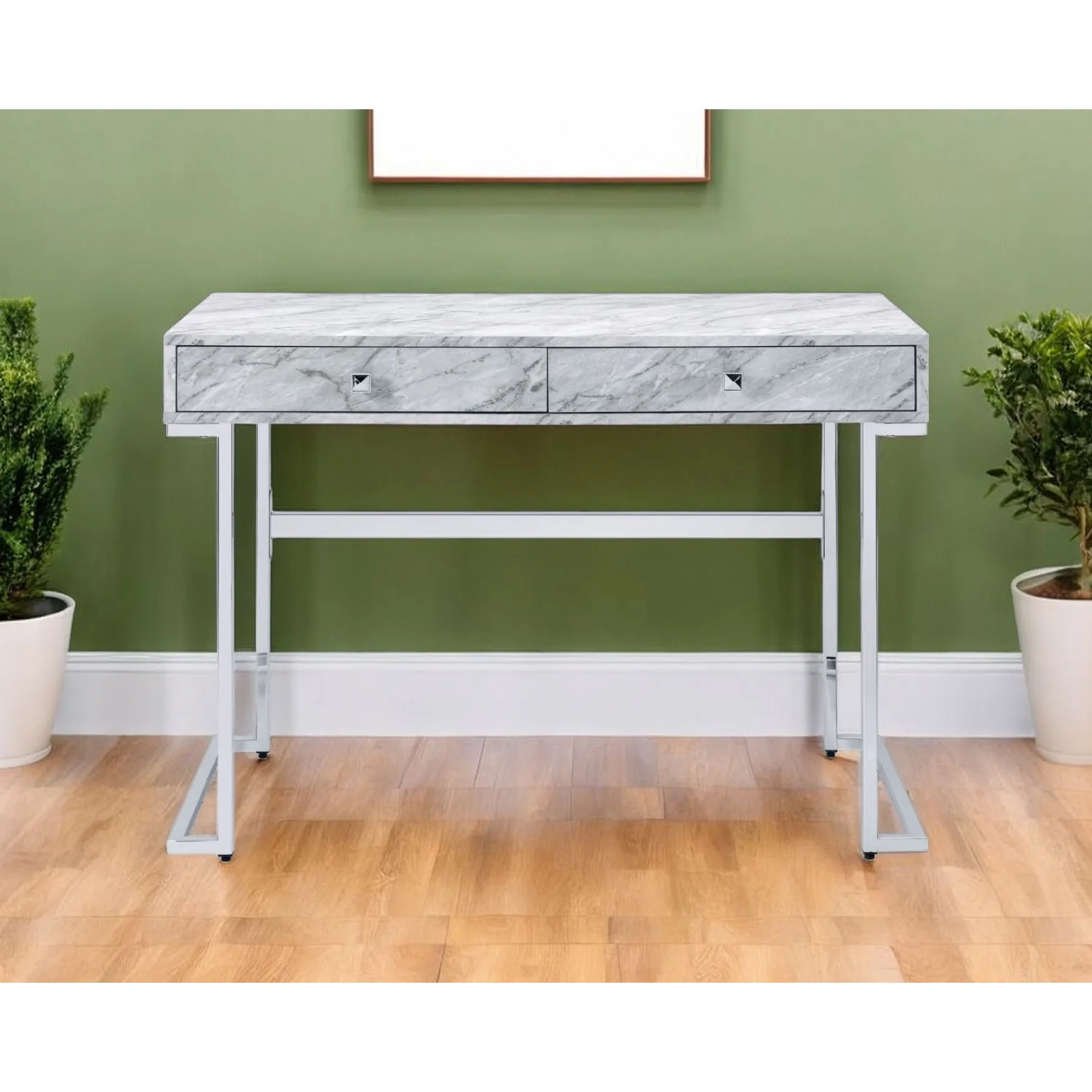
If you’re looking for a versatile and practical option, the 42″ White Writing Desk Two Drawers Simple Design Office Computer Table Adjustable Extendable Wooden Metal Material Shelf offers a sleek design with useful features. It’s a great choice for those who value both form and function.
42″ White Writing Desk Two Drawers Simple Design Office Computer Table Adjustable Extendable Wooden Metal Material Shelf
For a stylish and functional option, consider the 42″ White Writing Desk Two Drawers Simple Design Office Computer Table Adjustable Extendable Wooden Metal Material Shelf, which combines clean aesthetics with practical features.
Frequently asked questions
What is the standard height for a white writing desk?
The standard height for a writing desk is typically around 29 to 30 inches (73-76 cm). This height is comfortable for most adults when paired with a standard office chair. However, if you are taller or shorter, you may need an adjustable desk or a custom height to ensure proper ergonomics.
How do I clean a white writing desk without damaging it?
To clean a white writing desk, start by dusting with a soft, dry cloth. For smudges or spills, use a damp cloth with a mild soap or a mixture of water and vinegar. Avoid abrasive cleaners or scouring pads, as they can scratch the surface. Always dry the desk thoroughly afterward to prevent water spots.
Can a white writing desk fit in a small room?
Yes, a white writing desk can fit in a small room if you choose the right size. Look for compact models with a smaller footprint, such as a corner desk or a wall-mounted floating desk. White also helps make the room feel more spacious, so it’s a great color choice for tight spaces.
What are the benefits of a white writing desk over other colors?
A white writing desk offers several benefits: it brightens the room, makes the space feel larger, and provides a neutral backdrop that matches any decor. White also tends to hide dust better than dark colors, and it can be easily repainted if you want a different look. Additionally, white surfaces reflect light, which can reduce eye strain.
