
Blog
The Ultimate Outdoor Patio Heater Buying Guide
Buying Guide
Find Your Perfect Outdoor Patio Heater
An outdoor patio heater can transform your backyard into a year-round retreat, but with so many options, how do you choose? This guide will help you navigate the key factors to find the best fit for your needs.
Why You Need an Outdoor Patio Heater
Imagine enjoying your favorite book on a crisp autumn evening or hosting a lively dinner party as the temperatures drop. An outdoor patio heater extends the usability of your outdoor space, allowing you to make the most of your investment. Whether you have a spacious deck or a cozy balcony, the right heater can create a warm and inviting atmosphere.
Beyond comfort, an outdoor patio heater can also protect your outdoor furniture from moisture damage by keeping the area dry. It’s a practical addition that adds value to your home.
Types of Outdoor Patio Heaters
There are several types of outdoor patio heaters, each with its own advantages. The most common are:
- Propane Heaters: These are portable and powerful, making them a popular choice. They come in various styles, including freestanding, tabletop, and wall-mounted models.
- Electric Heaters: These are easy to operate and require no fuel. They are often more energy-efficient and can be mounted on walls or ceilings, saving floor space.
- Natural Gas Heaters: If you have a gas line, these provide a permanent heating solution without the need to refill tanks.
- Infrared Heaters: These warm objects directly, not the air, which can be more efficient in windy conditions.
Consider the size of your space, your budget, and your aesthetic preferences when choosing a type.
Key Features to Consider
When shopping for an outdoor patio heater, pay attention to the following features:
- BTU Output: BTU (British Thermal Units) measures heat output. For a typical patio, look for a heater with 30,000 to 50,000 BTUs. Larger spaces may require more.
- Heat Coverage: Check the manufacturer’s specification for the area the heater can cover. This will help you determine if it’s suitable for your space.
- Fuel Type: Propane heaters are convenient but require tank refills. Electric heaters are low-maintenance but may have higher operating costs.
- Safety Features: Look for tip-over switches, automatic shut-off, and cool-to-touch surfaces, especially if you have children or pets.
- Mobility: If you plan to move the heater around, consider a model with wheels or a lightweight design.
- Style: From sleek modern to classic mushroom shape, the design should complement your outdoor decor.
Safety Tips for Using Patio Heaters
Safety should always be a top priority. Here are some essential tips:
- Always place the heater on a flat, stable surface.
- Keep it away from flammable materials, such as curtains, furniture, and plants.
- Never leave a lit heater unattended.
- Follow the manufacturer’s instructions for refueling and maintenance.
- Check for gas leaks periodically, especially if you smell gas.
- Store propane tanks in a well-ventilated area.
By following these guidelines, you can enjoy your heater with peace of mind.
Propane vs. Electric: Which is Right for You?
Choosing between propane and electric depends on your lifestyle and needs. Propane heaters are ideal for those who want powerful heat and portability. They are perfect for camping trips, outdoor parties, or areas without access to electricity. However, they require storing and refilling propane tanks, which can be a hassle.
Electric heaters are convenient and environmentally friendly, especially if you use renewable energy. They are easy to install and operate, but they need a power source, which may limit their placement. Additionally, electric heaters may have lower heat output compared to propane models.
Infrared Heaters: A Modern Option
Infrared heaters are gaining popularity for their efficiency. They emit infrared radiation that heats objects and people directly, providing instant warmth. This can be more effective in windy conditions because the heat is not carried away by the air. They are available in both electric and propane versions.
Maintenance and Care
To ensure your outdoor patio heater lasts for years, regular maintenance is key. Clean the reflector and burner to prevent soot buildup. Check the gas lines for cracks or wear. For electric heaters, inspect the cords and plugs for damage. In harsh weather, cover your heater or store it indoors to protect it from the elements.
Budgeting for Your Heater
Outdoor patio heaters range from under $100 for portable models to over $1,000 for high-end units. Set a budget before you start shopping. Keep in mind that propane heaters may have lower upfront costs but ongoing fuel expenses. Electric heaters may have higher upfront costs but lower operating costs. Consider the long-term value when making your decision.
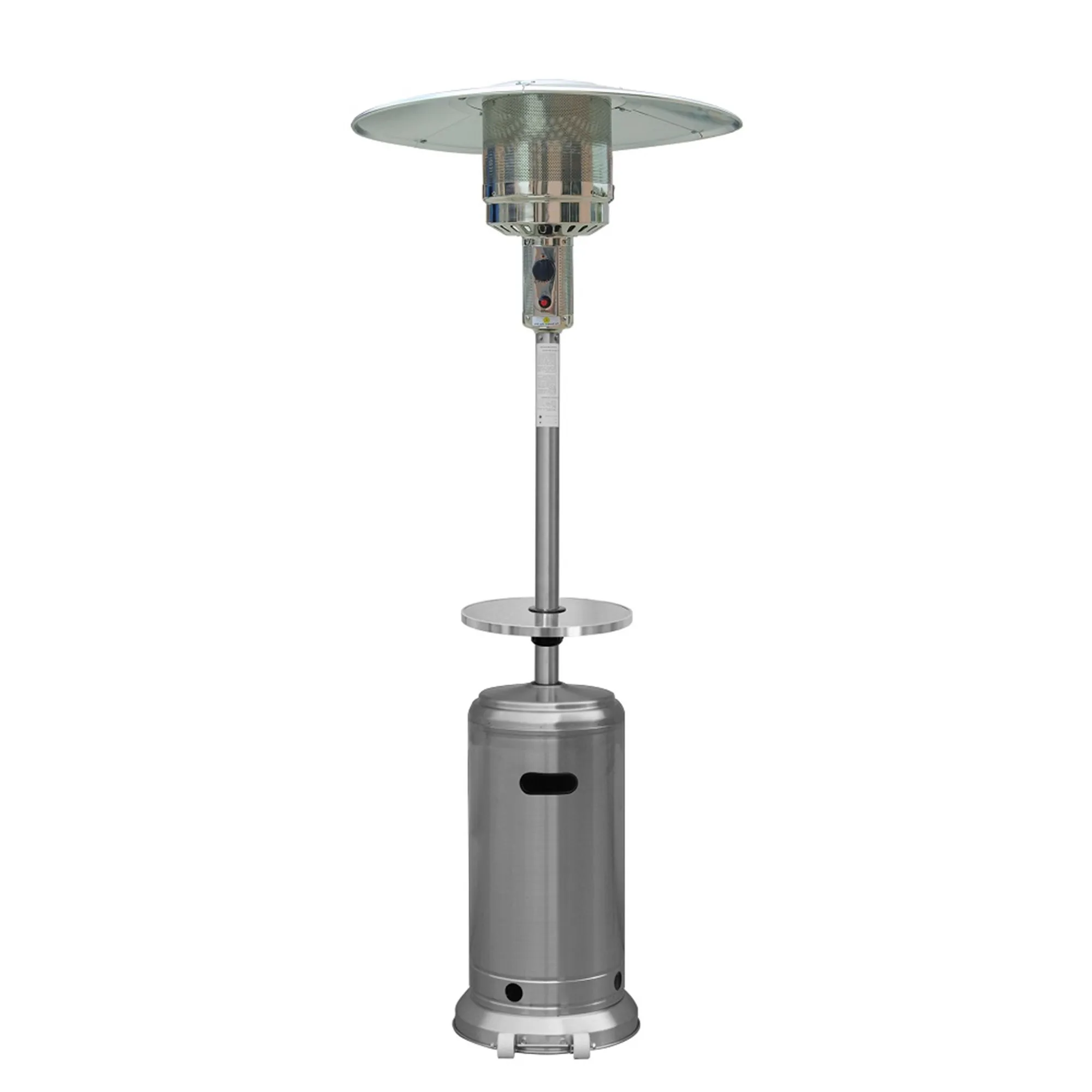
For those seeking a reliable and stylish propane option, the Silver Steel Propane Patio Heater offers a classic mushroom design and robust heat output, perfect for camping or backyard gatherings.
Final Thoughts
Choosing the right outdoor patio heater doesn’t have to be overwhelming. By considering the type, features, safety, and budget, you can find a heater that enhances your outdoor living experience. Remember to prioritize safety and maintenance to ensure years of warmth and enjoyment.
Silver Steel Propane Patio Heater BTU Standing Cylindrical Pole Outdoor Mushroom Shape Gas for Camping Parties
For a dependable and stylish choice, consider the Silver Steel Propane Patio Heater – it combines a classic mushroom silhouette with efficient heating, ideal for camping or backyard parties.
Frequently asked questions
What size outdoor patio heater do I need?
The size depends on the area you need to heat. As a general rule, a heater with 30,000 to 50,000 BTUs can cover a space of about 100 to 200 square feet. Measure your patio and check the manufacturer’s coverage specifications.
Can I use an outdoor patio heater in a covered area?
Yes, but you must ensure proper ventilation. Propane and gas heaters produce carbon monoxide, so they should only be used in open or well-ventilated areas. Electric heaters are safer for covered areas but still require airflow.
How long does a propane tank last on a patio heater?
On a standard 20-pound propane tank, most heaters will run for about 8 to 10 hours on high heat. However, this varies with BTU output and the heater’s efficiency. Higher BTU heaters will consume fuel faster.
Are outdoor patio heaters safe to leave on overnight?
It is not recommended to leave any heater unattended, including overnight. Always turn off the heater when you go to bed or leave the area. Modern heaters have safety features, but it’s best to follow the manufacturer’s instructions.
