
Blog
Live Edge Desk Buying Guide: Find Your Perfect Slab
Buying Guide
The Live Edge Desk: Nature Meets Workspace
A live edge desk brings the organic beauty of the outdoors into your home office, and with the right knowledge, you can find the perfect one for your space.
What Makes a Live Edge Desk Special?
A live edge desk is more than just a piece of furniture; it’s a statement. The natural, uncut edge of the wood retains the tree’s original silhouette, with bark, curves, and imperfections that tell a story. Unlike mass-produced desks with straight, uniform edges, each live edge desk is unique, offering a one-of-a-kind connection to nature. This organic touch can warm up any room, from a minimalist studio to a rustic cabin, and adds character that evolves as the wood ages.
When you choose a live edge desk, you’re embracing the beauty of imperfection. The grain patterns, knots, and even small cracks are not flaws but features that make your desk truly yours. It’s a conversation starter, a piece of art that you can work on, and a daily reminder of the natural world outside your window.
Choosing the Right Wood Species
The type of wood you select for your live edge desk affects not only its appearance but also its durability and maintenance. Here are some popular options:
- Oak: Strong, durable, and with a prominent grain, oak is a classic choice that takes finishes well. It’s ideal for a busy workspace that sees daily use.
- Walnut: Rich, dark chocolate tones with a straight grain make walnut a favorite for modern interiors. It’s softer than oak but still sturdy, and it polishes to a beautiful sheen.
- Cherry: With a warm, reddish hue that deepens over time, cherry wood adds a touch of elegance. It’s moderately hard and develops a lovely patina.
- Maple: Light and creamy, maple is a clean, contemporary choice. It’s hard and resistant to scratches, making it practical for heavy use.
- Reclaimed wood: For an eco-friendly option, consider a desk made from reclaimed barn wood or other salvaged timber. These pieces often have a weathered, rustic charm and a history of their own.
When comparing woods, think about the overall look you want and how much wear your desk will endure. Softer woods like cherry may show dents more easily, while harder woods like oak and maple can take more abuse. Also, consider the grain pattern: some woods have bold, dramatic grain, while others are more subtle.
Size and Shape: Finding the Right Fit
Live edge desks come in various sizes and shapes, from long, narrow slabs to wide, generous surfaces. Here’s how to choose:
- Measure your space: Before you start browsing, measure the area where the desk will go. Consider the length, width, and height, and make sure there’s enough clearance for chairs and movement.
- Consider your work style: If you use multiple monitors or need space for paperwork, a wider desk may be necessary. For a simple laptop setup, a smaller desk might suffice.
- Think about shape: Most live edge desks are rectangular or slightly irregular, following the natural contour of the wood. Some have a live edge on the front only, while others have it on both sides. Decide which look appeals to you and fits your room’s layout.
- Height matters: Standard desk height is around 30 inches, but you can find or customize desks to suit your ergonomic needs. If you’re tall, you might prefer a higher desk, and if you’re petite, a lower one might be more comfortable.
Remember, a live edge desk is a substantial piece of furniture, so it’s essential to choose a size that complements your room without overwhelming it. A good rule of thumb is to leave at least 24 inches of walking space around the desk.
Finishes and Maintenance
The finish on your live edge desk not only affects its look but also its durability and ease of care. Common finishes include:
- Oil finishes: These penetrate the wood, enhancing its natural color and grain while providing a low-sheen, satin look. They require periodic reapplication but are easy to repair.
- Polyurethane: A durable, plastic-like coating that provides a tough, water-resistant barrier. It comes in various sheens from matte to high gloss and is easy to clean.
- Wax: A traditional finish that gives a soft, natural glow. It’s less durable than other options and needs regular maintenance, but it’s easy to apply and non-toxic.
- Epoxy resin: Often used to fill cracks or stabilize the wood, epoxy can create a smooth, glass-like surface. It’s extremely durable and can be colored for a unique effect.
To keep your live edge desk looking its best, follow the manufacturer’s care instructions. Generally, you’ll want to wipe up spills immediately, use coasters for drinks, and avoid harsh chemicals. Regularly dust with a soft cloth, and depending on the finish, you may need to apply a fresh coat of oil or wax every few months.
Stability and Support: The Hidden Details
A live edge desk may be beautiful, but it also needs to be functional. Pay attention to the base or legs:
- Legs: Look for sturdy legs made of solid wood, metal, or a combination. Metal hairpin legs are popular for a modern look, while wooden legs give a more traditional feel. Ensure the legs are securely attached and can support the weight of the top.
- Cross braces: A desk with a cross brace or stretcher is more stable and less likely to wobble. This is especially important if your desk will hold heavy equipment.
- Mounting: Check how the top is attached to the base. Ideally, it should be mounted with bolts or screws that allow for wood movement, preventing cracks over time.
- Flatness: While a live edge top may have a natural curve, the surface should be flat enough for writing and using a mouse. Some desks have a slight bow, which can be annoying.
If you’re handy, you might consider buying a live edge slab and attaching your own legs. This allows you to customize the height and style, but it requires some DIY skills. Alternatively, many manufacturers offer desks with pre-attached bases, saving you the effort.
Where to Place Your Live Edge Desk
The placement of your live edge desk can impact its longevity and your enjoyment. Here are some tips:
- Avoid direct sunlight: Prolonged exposure to UV rays can fade the wood and cause it to dry out. If your desk is near a window, use curtains or blinds to filter the light.
- Control humidity: Wood expands and contracts with changes in humidity. In very dry or humid environments, you may notice slight movement. Using a humidifier or dehumidifier can help maintain a stable environment.
- Use a protective pad: If you’ll be writing or using a keyboard, a desk pad or blotter can protect the finish from scratches and stains.
- Keep it away from heat sources: Radiators, vents, and fireplaces can dry out the wood and cause cracking. Maintain a safe distance.
By placing your desk in a suitable spot, you’ll ensure it remains a beautiful and functional piece for years to come.
Eco-Friendly and Sustainable Options
Many live edge desks are crafted from sustainably harvested or reclaimed wood, making them an eco-conscious choice. When shopping, look for certifications like the Forest Stewardship Council (FSC) or ask about the wood’s origin. Reclaimed wood pieces not only reduce waste but also carry a unique history. Additionally, some artisans use locally sourced wood, minimizing transportation emissions. By choosing a live edge desk, you’re supporting a more sustainable furniture industry and bringing a piece of nature into your home. For more on sustainable forestry, you can visit the Wikipedia page on sustainable forestry.
Budgeting for Your Live Edge Desk
Live edge desks vary widely in price, from a few hundred dollars for a smaller, simpler piece to several thousand for a large, premium slab. Here’s what to consider:
- Wood type: Exotic or rare woods cost more than common species.
- Size: Larger slabs are more expensive due to the material and labor involved.
- Finish: High-quality finishes like epoxy or hand-rubbed oil add to the cost.
- Craftsmanship: Handmade, custom pieces are pricier than mass-produced options.
Set a budget before you shop, and don’t forget to factor in shipping costs if you’re buying online. While a live edge desk is an investment, it’s also a durable piece that can last a lifetime with proper care.
Final Thoughts on Choosing Your Live Edge Desk
Selecting a live edge desk is a personal journey. It’s about finding a piece that resonates with your style, fits your space, and meets your functional needs. Take your time to explore different wood types, sizes, and finishes. Visit showrooms to see and touch the wood in person, or browse online with a clear idea of what you’re looking for.
Remember, a live edge desk is not just a workspace; it’s an heirloom that can be passed down. It adds warmth and character to any room, and it’s a joy to use every day. So, consider your options, and when you find the one that speaks to you, you’ll know it.
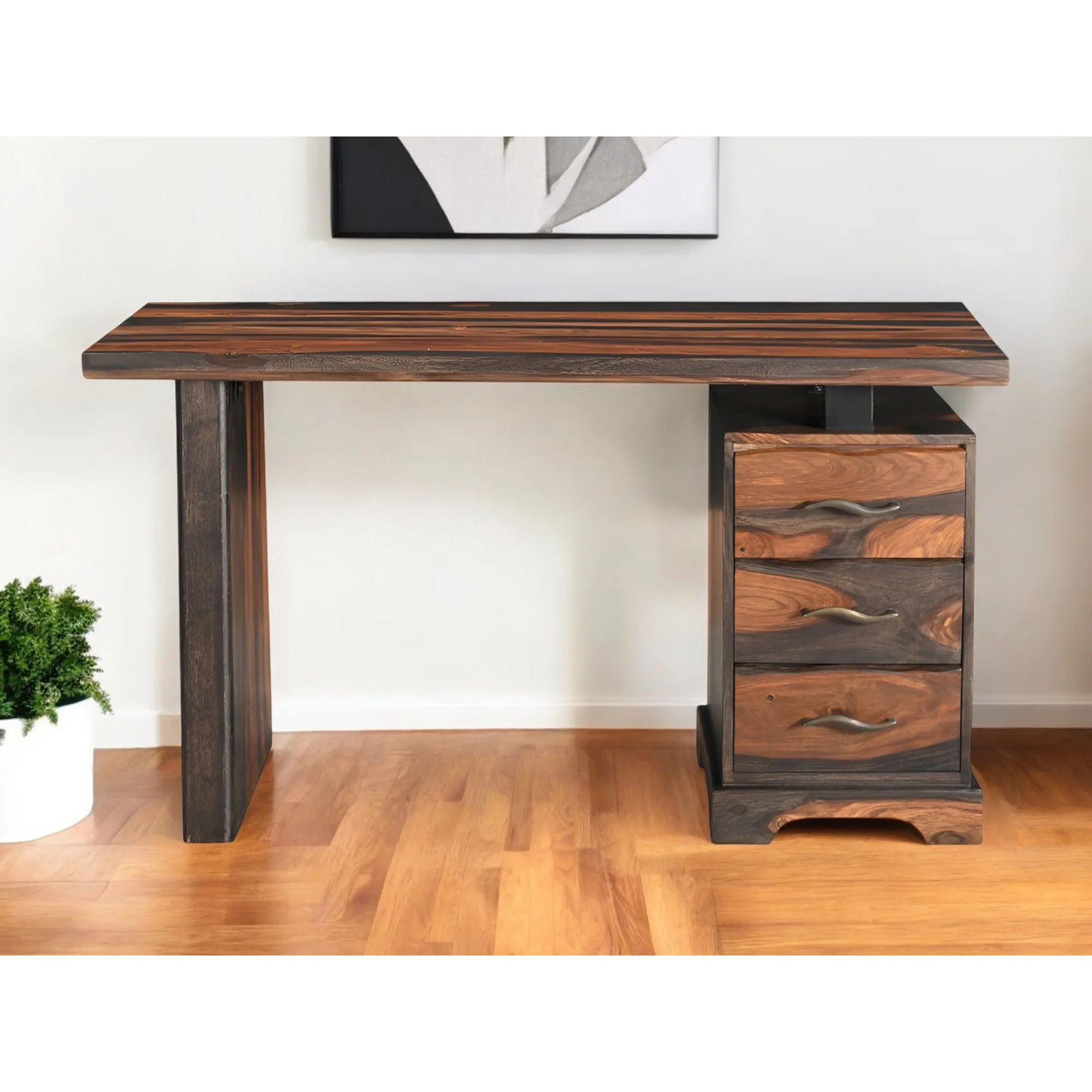
54″ Brown Live Edge Solid Wood Writing Desk with Three Drawers Modern Simple Design for Bedroom Office or School Use
If you’re looking for a ready-made option, consider the 54″ Brown Live Edge Solid Wood Writing Desk with Three Drawers, which combines functionality with the natural charm you’ve been seeking.
Frequently asked questions
What is a live edge desk?
A live edge desk is a desk made from a slab of wood that retains the natural, uncut edge of the tree, including bark, curves, and organic contours. Each piece is unique, showcasing the wood’s natural beauty.
How do I maintain a live edge desk?
Maintenance depends on the finish. For oil finishes, reapply oil every few months. For polyurethane, just clean with a damp cloth. Avoid harsh chemicals, use coasters, and keep it out of direct sunlight to preserve the wood.
Are live edge desks durable?
Yes, if properly constructed and finished. The durability depends on the wood species and build quality. Hardwoods like oak and maple are very durable, while softer woods may dent more easily. A good finish protects against moisture and wear.
Can I customize the size of a live edge desk?
Many artisans and manufacturers offer custom sizing. You can request a specific length, depth, or height. Customization may increase the cost and lead time, but it ensures the desk fits your space perfectly.
