
Blog
The Ultimate Guide to Choosing an Outdoor Propane Fire Pit
Buying Guide
Your Complete Outdoor Propane Fire Pit Guide
An outdoor propane fire pit transforms your patio into a cozy retreat, but choosing the right one involves more than just picking a style. Let’s dive into the details to help you make an informed decision.
Why Choose an Outdoor Propane Fire Pit?
Outdoor propane fire pits have surged in popularity, and for good reason. Unlike wood-burning options, they light instantly with the push of a button, produce no smoke or ash, and allow you to control the flame height with a simple dial. This makes them ideal for gatherings where you want warmth and ambiance without the hassle of tending to a fire. Plus, they’re often more environmentally friendly, emitting fewer particulates than wood smoke.
For those living in areas with burn bans or apartment balconies, a propane fire pit might be your only legal option. It’s a versatile choice that fits seamlessly into modern outdoor living spaces.
Key Features to Consider
When shopping for an outdoor propane fire pit, you’ll encounter a variety of features that can enhance your experience. Here are the most important ones to keep in mind:
- BTU Output: The British Thermal Unit (BTU) rating tells you how much heat the fire pit produces. For a standard backyard, look for at least 30,000 BTUs to warm a decent area. Higher BTUs mean more heat, but also higher fuel consumption.
- Ignition System: Electronic ignition systems offer convenience, allowing you to start the fire with a remote or a button. Manual ignition is simpler but requires a lighter or match.
- Safety Features: Look for features like automatic shut-off if the flame goes out, and a lid or cover to protect the burner when not in use.
- Portability: Some fire pits are designed to be moved easily, with wheels or lightweight materials. Consider where you’ll use it most—on a patio, deck, or camping trip.
Materials and Durability
The material of your fire pit affects both its appearance and longevity. Here’s a breakdown of common options:
- Steel: Durable and affordable, steel fire pits are a popular choice. However, they can rust over time if not treated or painted with high-heat paint.
- Cast Aluminum: This material is lightweight, rust-resistant, and often features intricate designs. It’s a great choice for coastal areas.
- Stone or Concrete: These provide a permanent, upscale look but are heavy and not portable. They are extremely durable and can withstand weather extremes.
- Glass or Ceramic: Some fire pits feature glass wind guards or ceramic accents for a modern aesthetic. These materials are heat-resistant and easy to clean.
No matter the material, always check the warranty and read reviews to ensure the fire pit is built to last.
Safety Tips for Enjoying Your Fire Pit
Safety should always be a top priority when using any fire feature. Here are essential tips to keep in mind:
- Placement: Keep your fire pit at least 10 feet away from structures, furniture, and flammable materials. Ensure it’s on a level, non-combustible surface.
- Ventilation: Never use a propane fire pit indoors or in an enclosed space. Carbon monoxide is a real danger.
- Children and Pets: Supervise children and pets at all times. Consider a fire pit with a safety screen or a cover to prevent burns.
- Propane Tank Storage: Store spare tanks upright and in a well-ventilated area, away from heat sources. Check for leaks by applying soapy water to the connection—if bubbles appear, you have a leak.
For more detailed safety guidelines, refer to the National Fire Protection Association.
Styles and Design Trends
Your fire pit should complement your outdoor décor. Here are some popular styles to consider:
- Classic Round: The traditional round fire pit fits well in any setting and encourages conversation.
- Square or Rectangular: Modern and sleek, these work well in contemporary spaces.
- Tabletop Fire Pits: These double as coffee tables, providing a surface for drinks when not in use.
- Fire Columns: Tall, cylindrical fire pits add a dramatic focal point and are perfect for smaller spaces.
Think about the overall aesthetic of your backyard. Do you prefer rustic, modern, or transitional? Choose a fire pit that enhances the space.
Fuel Efficiency and Environmental Impact
Propane is a clean-burning fuel, but it’s still a fossil fuel. To minimize your environmental footprint, consider the following:
- Use a Lid: When you’re done, cover the fire pit to keep debris out and prevent heat loss.
- Adjust Flame: Use only as much heat as you need. A lower flame uses less propane.
- Recycle Tanks: Many propane suppliers offer tank exchange programs, ensuring old tanks are recycled.
By being mindful, you can enjoy your fire pit while being kind to the planet.
Maintenance and Care
Proper maintenance extends the life of your outdoor propane fire pit. Here are simple steps to keep it in top shape:
- Clean the Burner: Regularly remove debris like leaves or spider webs from the burner ports to ensure even flames.
- Check for Leaks: Periodically inspect the gas line and connections for wear or leaks, especially after winter storage.
- Cover It: Use a weather-resistant cover when not in use to protect against the elements.
- Replace Parts: If you notice rust or damage, replace parts immediately to avoid safety hazards.
With a little care, your fire pit will provide years of warmth and enjoyment.
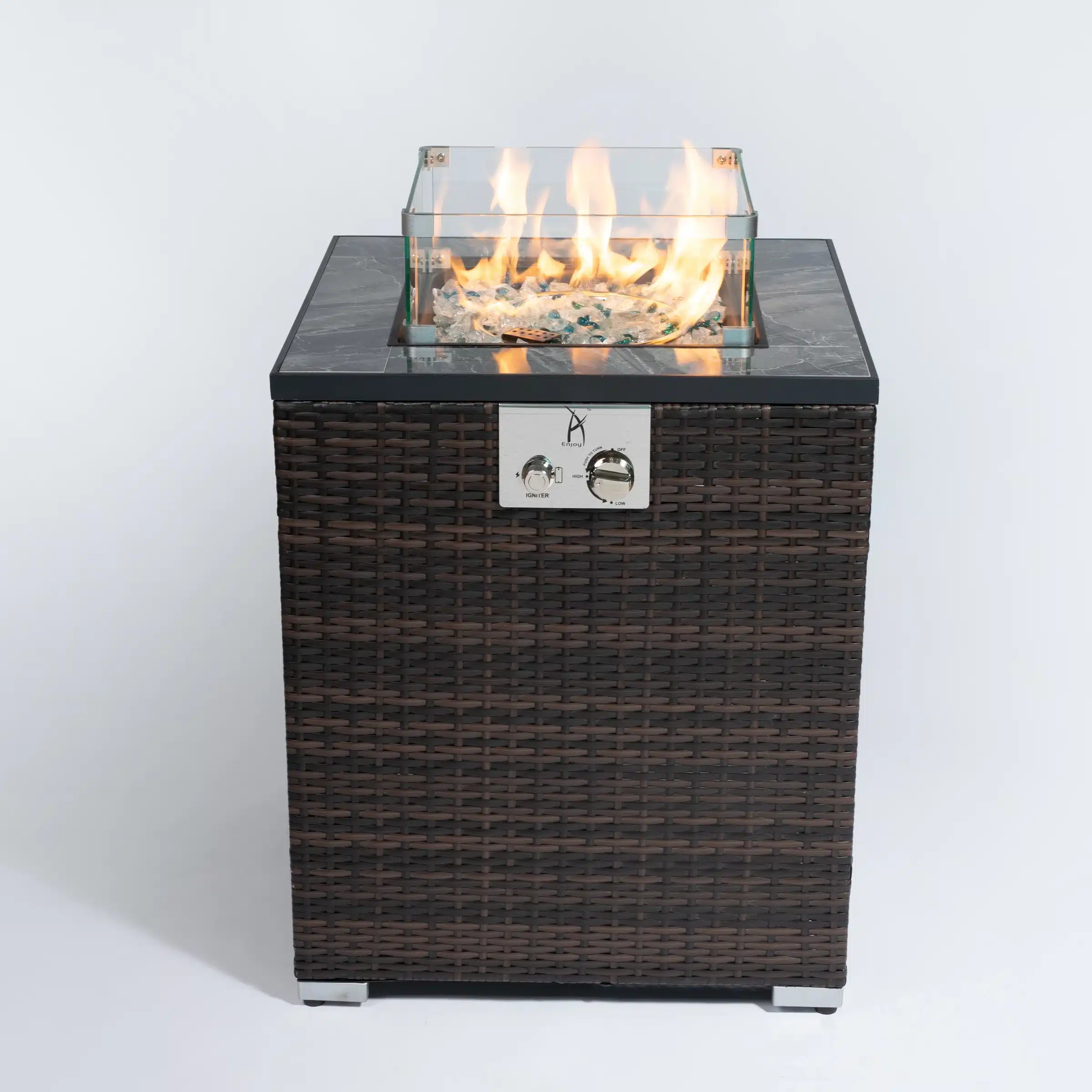
28inch Outdoor Propane Fire Pit Column with Glass Wind Guard
For a stylish and functional option, consider the 28inch Outdoor Propane Fire Pit Column with Glass Wind Guard, which combines durability with a modern design.
Frequently asked questions
What size propane tank does an outdoor propane fire pit use?
Most outdoor propane fire pits use a standard 20-pound propane tank, the same size used for gas grills. Some larger models may require a bigger tank or a natural gas conversion kit.
Can I use an outdoor propane fire pit on a wooden deck?
Yes, but you must place a protective mat or fire-resistant pad underneath to prevent heat damage and sparks. Always keep the fire pit at least 10 feet away from the house and any combustible materials.
How long does a 20-pound propane tank last on a fire pit?
On average, a 20-pound tank will last about 8-10 hours at high heat, but this varies depending on the BTU output and the flame setting. Lowering the flame can extend the burn time significantly.
Is it safe to leave a propane fire pit unattended?
No, you should never leave a propane fire pit unattended while it’s burning. Always extinguish the flame completely before leaving the area or going inside.
