
Blog
The Complete Propane Fire Pit Buying Guide
Buying Guide
How to Choose the Perfect Propane Fire Pit
A propane fire pit brings warmth and ambiance to any outdoor space, but with so many options, picking the right one can feel overwhelming. This guide walks you through every key factor—from size to safety—so you can buy with confidence.
Why Choose a Propane Fire Pit?
When you’re looking to add a cozy focal point to your patio or backyard, a propane fire pit offers unmatched convenience. Unlike wood-burning models, there’s no chopping, stacking, or ash cleanup. You simply turn a knob and enjoy instant flames. Plus, propane burns cleaner, producing less smoke and fewer particulates, which is better for you and the environment. For many homeowners, the ease of use makes a propane fire pit the obvious choice.
Selecting the Right Size for Your Space
The first step is to measure your outdoor area. A fire pit should be proportional to the space—not too small that it gets lost, nor so large it overwhelms. For a cozy corner, a 30-inch round pit works well. For larger patios, consider a rectangular or oval design that can seat more people. Think about how you’ll use it: if you gather around for conversation, a lower table-height pit (around 12-14 inches) is ideal; if you want a dining-height option, look for 24-30 inches. Always leave at least 3 feet of clearance on all sides for safety.
Understanding BTU Output: More Isn’t Always Better
BTU (British Thermal Units) measures heat output. A higher BTU rating means more heat, but it also consumes more fuel. For a typical backyard fire pit, 30,000 to 50,000 BTUs is sufficient to warm a small to medium gathering. If you live in a colder climate or have a large patio, you might want 60,000 BTUs or more. However, excessive heat can be uncomfortable if you’re sitting too close. Consider the climate and your personal comfort when choosing. Also, check the fuel efficiency—some models with lower BTUs are designed to spread heat more evenly.
Materials and Build Quality
The material of your propane fire pit affects durability, appearance, and maintenance. Common options include steel, cast iron, aluminum, and stone or concrete. Steel is sturdy and relatively affordable, but it may rust if not coated. Cast iron is extremely durable and retains heat well, but it’s heavy and can rust if exposed to moisture. Aluminum is lightweight and rust-resistant, making it easy to move. Stone and concrete offer a natural look and excellent heat retention, but they can crack in freezing temperatures. Look for a finish that matches your outdoor decor and consider weather resistance. A powder-coated finish or a cover can extend the lifespan.
Safety Features to Look For
Safety should be a top priority when choosing a propane fire pit. Key features include an automatic shut-off valve that stops gas flow if the flame goes out, a flame control knob that allows you to adjust the height, and a sturdy base to prevent tipping. Some models come with a wind guard to protect the flame on breezy days. Always check for certifications from organizations like CSA or UL, which indicate the product meets safety standards. Additionally, consider whether the fire pit has a lid or cover to protect it when not in use.
Fuel Type: Propane vs. Natural Gas
While this guide focuses on propane fire pits, it’s worth understanding the difference. Propane is stored in a portable tank, which you can refill or exchange. This makes it flexible—you can move the fire pit around your yard. Natural gas, on the other hand, is connected to your home’s gas line, so it’s permanent and never runs out, but it requires professional installation. If you value mobility and easy setup, propane is the way to go. Just remember to keep a spare tank on hand for longer evenings.
Accessories and Maintenance Tips
To get the most from your propane fire pit, consider accessories like a weather-resistant cover, a wind guard, and a lava rock or glass bead set to enhance the flame appearance. Maintenance is straightforward: regularly check the gas lines for leaks, clean the burner and the area around it, and always store the tank away from the pit when not in use. With proper care, a propane fire pit can last for many years. Learn more about fire pit history and safety from Wikipedia.
Making the Final Decision
Now that you know what to look for, it’s time to choose. Start by setting a budget—fire pits range from under $200 to over $2,000. Decide on the size and style that fits your space. Read reviews to see how well a model holds up over time. And don’t forget to factor in the cost of propane and accessories. With these considerations in mind, you’ll find a propane fire pit that brings warmth and joy to your outdoor living area for years.
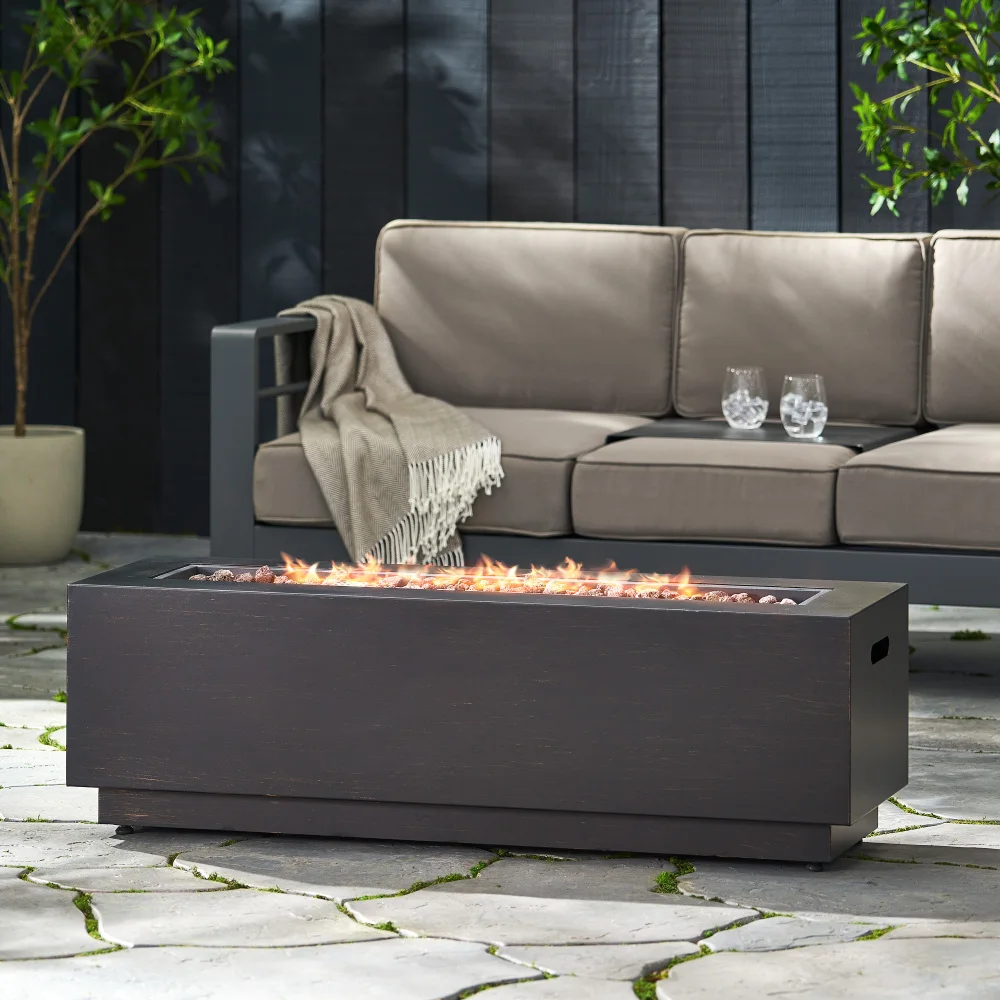
40″ Outdoor 50, BTU Rectangular Iron Propane Fire Pit, Dark Grey (Tank Cover not Included)
For a spacious, durable option, consider the 40″ Outdoor 50, BTU Rectangular Iron Propane Fire Pit in Dark Grey—it combines generous heat with a classic look.
Frequently asked questions
How much space do I need around a propane fire pit?
It’s recommended to keep at least 3 feet of clearance on all sides from furniture, structures, and flammable materials. Always follow the manufacturer’s guidelines for your specific model.
Can I use a propane fire pit on a wooden deck?
Yes, but you should place a protective pad or heat shield underneath to prevent heat damage. Also, ensure the deck is well-ventilated and the fire pit is stable.
How long does a 20-pound propane tank last?
At a moderate heat setting (around 40,000 BTUs), a 20-pound tank typically lasts 8-12 hours. Higher settings will consume fuel faster.
Is it safe to leave a propane fire pit unattended?
Never leave a lit fire pit unattended. Always turn it off and disconnect the tank when you’re done. Keep children and pets supervised at all times.
